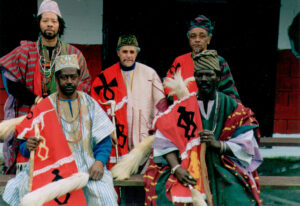
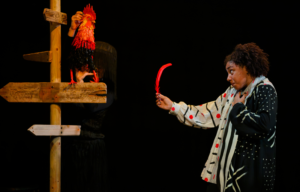
Yorùbá families and culture enthusiasts in London will gather at Marcus Garvey Library on Saturday 24 October for a Black History Month programme exploring language, identity and the meanings carried by personal names.
Haringey Council’s current event listing places the free gathering at the library from 1pm to 7pm and describes it as a celebration by the Yoruba community. The organiser’s current Eventbrite listing identifies Èdè Mi as the presenter and gives the same date and venue.
The programme is built around the question Kíni Ìtumọ̀ Orúkọ Rẹ?, meaning “What is the meaning of your name?” Event material says the theme will encourage participants to look beyond everyday use and consider the family histories, circumstances, hopes and cultural knowledge held inside Yorùbá names.
The focus gives Black History Month a close, personal entry point. Instead of approaching history only through famous figures and major public events, the gathering begins with the words by which people are known within families, schools, workplaces and communities.
Research on Yorùbá naming practices supports that approach. A study published in the South African Journal of Cultural History found that personal names can reflect the context of a child’s birth and carry implications for the person’s place in society and relationship with the community.
Other scholarship has examined names as cultural indicators rather than arbitrary labels. A person’s name may preserve a family experience, mark an order of birth, express gratitude, carry a prayer or recall events surrounding the child’s arrival. Names can therefore retain information that may disappear when pronunciation, tone marks or the fuller form are lost.
A study in the journal Names identified social functions ranging from love, joy and encouragement to caution, nostalgia and remembrance. It also noted that some Yorùbá personal names can be used as greetings. The meaning of a name therefore depends not only on a short English translation but also on who gave it, the situation it records and the relationships in which it is spoken.
Pronunciation and written tone marks are also important. A 2026 paper on marking contour tones in Yorùbá warns that conventional spellings without adequate tonal information can obscure the intended meaning of some personal names and, in particular cases, suggest the opposite meaning. A programme that invites people to ask about their names can recover both the story and the sound.
That connection between language and memory is particularly relevant for families raising children outside Yorùbá-speaking communities. A name may be used every day while its full pronunciation, spelling or story is known only to older relatives. A community event creates space for those accounts to be spoken across generations rather than remaining private or being gradually forgotten.
Èdè Mi’s programme is presented as an accessible gathering for people with different levels of familiarity with the language. Families, adults who want to recover cultural knowledge and visitors seeking an introduction to Yorùbá heritage can take part without being expected to arrive as fluent speakers or specialists.
The choice of Marcus Garvey Library also places the event within an established public learning space in Tottenham. Libraries can bring cultural work beyond private associations and ticketed gala venues, giving residents a familiar setting in which to encounter language, books, community history and conversation.
The event arrives during a busy October for Yoruba organisations in Britain. London programmes this month include festivals, performances, exhibitions and community gatherings concerned with music, dress, history and identity. The Black History Month event adds language and naming to that calendar and places intergenerational knowledge at the centre.
There is an important practical note for anyone planning to attend. Some earlier third-party listings name Bernie Grant Arts Centre and give different hours. The current Haringey Council listing and current organiser ticket page place the event at Marcus Garvey Library from 1pm on 24 October. Prospective visitors should use the council or organiser page to confirm the latest details before travelling.
Marcus Garvey Library is inside the Tottenham Green Leisure Centre complex on Philip Lane, London N15. Haringey Council lists the programme as free and suitable for people aged 16 and over, with the session scheduled to end at 7pm. The organiser’s booking page should be checked for any advance registration requirement.