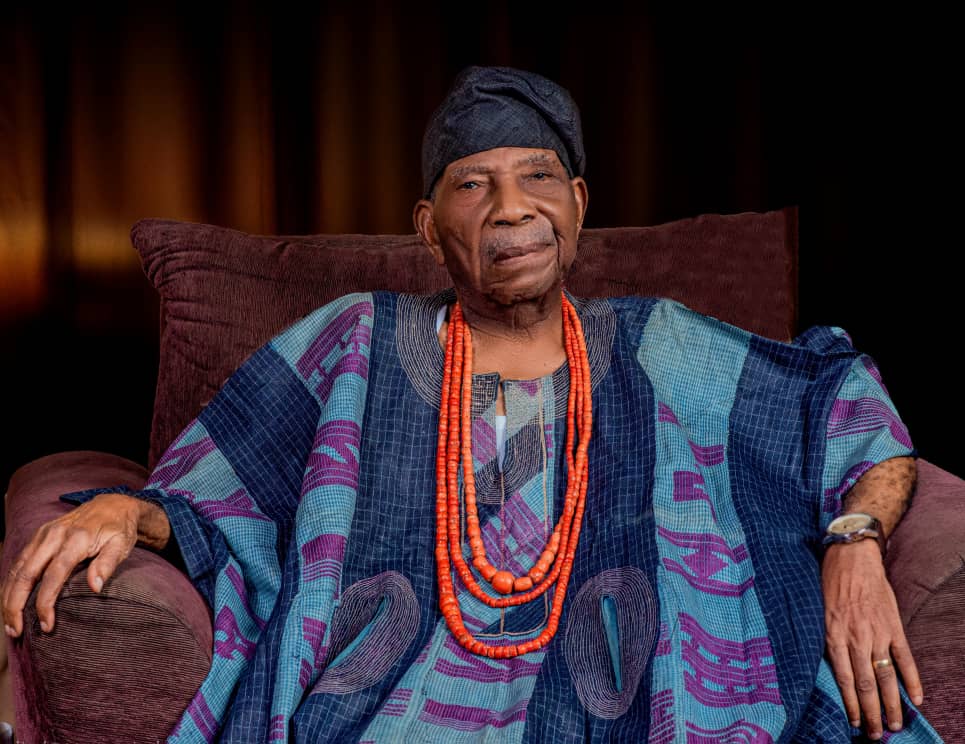
Pa Reuben Famuyide Fasoranti, the Afenifere leader, educationist and veteran of Nigeria’s democratic struggle, has died at the age of 100, ending a public life that connected the political generation of Chief Obafemi Awolowo with contemporary Yoruba affairs.
Ondo State Governor Lucky Aiyedatiwa announced his death in a statement issued on Tuesday, 20 October 2026. The governor described the elder statesman as a respected source of guidance whose service extended from Ondo State to Yorubaland and the wider country.
Fasoranti’s son, Dr Taiwo Fasoranti, who is Secretary to the Ondo State Government, said his father died peacefully in his room at about 4pm. He said the family was grateful for his longevity and the influence he had on other people’s lives.
Sympathisers and political associates visited the family residence in Akure following the announcement. His death came five months after his centenary birthday on 11 May, when political leaders and admirers celebrated his contributions to education and public affairs.
Aiyedatiwa extended condolences to the Fasoranti family, Akure Kingdom and the people of Ondo State. He said the deceased would be remembered for his principled interventions on justice and governance, as well as the counsel he offered successive generations of leaders.
President Bola Tinubu also paid tribute in a statement personally signed on Tuesday, recalling Fasoranti’s service as a teacher, principal, finance commissioner and Afenifere leader.
“Our nation will sorely miss his voice of wisdom, moral authority, and fatherly counsel,” Tinubu said.
The President recalled visiting Fasoranti in Akure in 2022 to discuss his presidential ambition, and said the elder statesman had prayed that he would live to see him become President. He offered condolences to the family, the people of Ondo State and Afenifere.
Born on 11 May 1926, Fasoranti built his early career in education. He attended University College, Ibadan, now the University of Ibadan, and became a teacher and school administrator before his political activities brought him wider national recognition.
His work in education included teaching at Ondo Boys’ High School and establishing schools in Akure. These included Omolere Nursery and Primary School, Akure High School and St Frances’ Academy in Igoba, which he founded in memory of his late wife.
Fasoranti belonged to the political tradition associated with Awolowo, participating in the Action Group during the First Republic and later the Unity Party of Nigeria. His political career developed alongside the educational work with which he remained closely identified.
Between 1979 and 1983, he served as Commissioner for Finance under Governor Michael Adekunle Ajasin in the old Ondo State. His responsibilities placed him in the administration overseeing the state’s finances during the Second Republic, before military rule returned.
He subsequently became a prominent figure in Afenifere, the pan-Yoruba socio-political organisation, and opposed military dictatorship. His public interventions addressed democratic government, Yoruba interests and the organisation of the Nigerian federation.
After the death of Pa Abraham Adesanya, Fasoranti emerged as a leader of Afenifere. He remained an influential elder within the organisation through disagreements over its leadership and political direction, and was associated with its advocacy for restructuring and greater equity.
In 2021, he handed acting leadership responsibilities to Chief Ayo Adebanjo while retaining his position as substantive national leader. His later years continued to attract visits and consultations from political figures seeking his views on Yoruba and national affairs.
His family life was marked by significant losses. His wife died in 1991, while his daughter, Funke Olakunrin, was killed by gunmen on the Ondo-Ore road in July 2019. Her death prompted national condemnation and renewed concern about the safety of road travellers.
Former Secretary to the Government of the Federation, Oba Olu Falae, the Olu of Iluabo, remembered Fasoranti as a patient mediator. He said their association had lasted more than six decades and recalled his willingness to resolve disputes in community, religious and political settings.
Falae also recalled that, as principal of Oyemekun Grammar School, Fasoranti allowed pupils from poor families to complete their education on credit. He described his death as a substantial loss to Akure, Ondo State and the Yoruba people.
Taiwo Fasoranti said he would particularly miss his father’s calmness during difficult periods and his ability to communicate firmly without raising his voice. The family urged admirers to honour him through education and service to their communities.
The tributes brought together the different institutions that shaped his century-long life: the classroom, government, the pro-democracy movement and Yoruba political organisation. His schools and former pupils remain part of the educational legacy being recalled alongside his public leadership.