Former South African president Thabo Mbeki has denied ordering or approving any attempt to block investigations and prosecutions arising from crimes committed under apartheid, as a judicial inquiry examines why hundreds of cases referred for action after the Truth and Reconciliation Commission produced so few convictions.
Mbeki, who succeeded Nelson Mandela in 1999 and served as president until 2008, gave evidence in Johannesburg on Monday, 19 October. In a written statement to the inquiry, he said: “I did not direct, authorise, or approve the suppression” of criminal investigations or prosecutions.
He argued that the National Prosecuting Authority should account for its own decisions on cases handed over after the Truth and Reconciliation Commission completed its work. The prosecuting authority is constitutionally independent, and Mbeki rejected suggestions that his administration had reached secret arrangements to protect former apartheid security officers.
The inquiry is investigating claims that political influence within democratic South Africa delayed or prevented action on serious offences committed during white minority rule. Families of people who were killed or disappeared, together with survivors, have spent years pressing the state to explain why many matters identified by the truth commission did not advance through the courts.
About 300 cases were referred for further investigation and possible prosecution, but only a small number resulted in successful prosecutions. That gap has become a central issue in South Africa’s unfinished effort to secure accountability for killings, torture, abductions and other grave abuses.
The Truth and Reconciliation Commission, chaired by Archbishop Desmond Tutu, was established after the end of apartheid to document violations committed by the state and by organisations involved in the struggle against it. Perpetrators could apply for amnesty if they made full disclosure and showed that their acts were politically motivated. Cases involving people who did not apply, were refused amnesty or failed to disclose fully were expected to be considered for prosecution.
President Cyril Ramaphosa announced the judicial inquiry in April 2025 after settlement discussions connected with a court case brought by 25 relatives and survivors. The applicants alleged that successive governments failed to pursue political killings and disappearances and sought damages from the state. At the time, the Presidency said allegations of improper influence over the handling of apartheid-era crimes had persisted across previous administrations and required an authoritative investigation.
Mbeki told the inquiry that meetings held with former military and police officers were intended to encourage their participation in the truth process, not to guarantee protection from prosecution. He also disputed interpretations of a 2003 parliamentary speech that critics have cited in support of claims that political leaders favoured reconciliation at the expense of criminal accountability.
The former president’s appearance is significant because families have placed his administration at the centre of their demand for answers. Their case does not depend only on whether a written order existed. It also raises questions about informal pressure, institutional choices and prolonged inaction after prosecutors received matters that the truth commission believed required further attention.
One of the best-known unresolved episodes is the 1985 murder of the Cradock Four, anti-apartheid activists Fort Calata, Matthew Goniwe, Sicelo Mhlauli and Sparrow Mkonto. They were abducted and killed by members of the apartheid security forces. Officers who sought amnesty for the killings were refused it, yet no one was prosecuted. A renewed inquest and testimony from former security officials have returned the case to public attention.
Other survivors and relatives have sought answers in cases involving people from different communities, including the 1993 Highgate Hotel massacre. Their legal action reflects a broader concern that time is steadily narrowing the possibility of conventional criminal trials as witnesses and suspects grow older or die.
The commission’s task is separate from deciding guilt in individual murder or torture cases. Its focus is whether improper interference hindered investigators or prosecutors, who exercised that influence and how state institutions responded. Its findings could inform further criminal inquiries, institutional reform and the government’s response to families who say they were denied both justice and a complete account of what happened.
Mbeki’s evidence places responsibility firmly on prosecutors, while the inquiry must now test that account against records and testimony from other officials. Former president Jacob Zuma is among the figures expected to give evidence as the hearings continue.
For families who have waited through more than three decades of democracy, the proceedings represent another attempt to establish why the truth commission’s referrals did not produce the accountability they were promised. The inquiry will continue hearing evidence before reaching findings on whether political interference contributed to that failure.
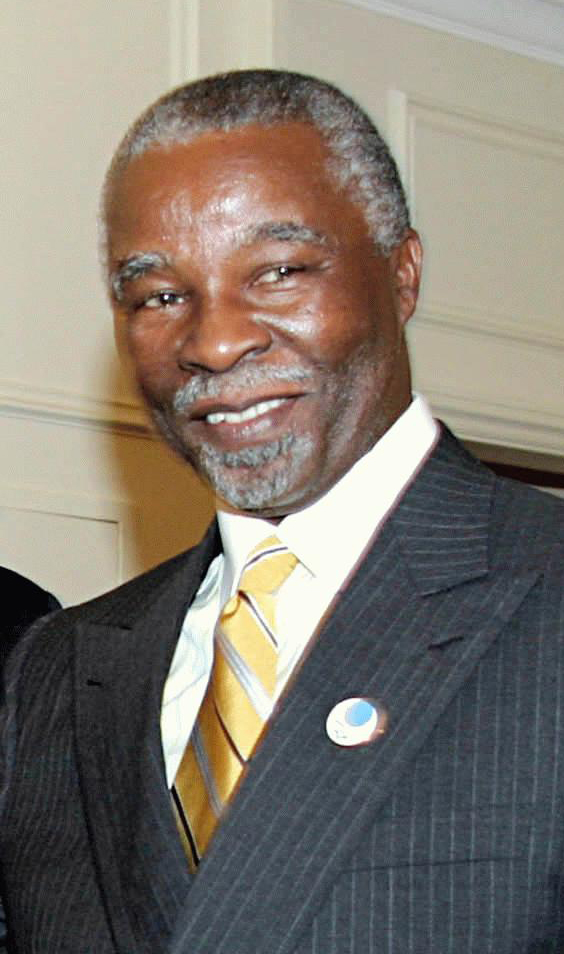
Image: Antônio Milena/Agência Brasil. Source. Licence. Archival photograph from 31 May 2003, not the 2026 inquiry. Display versions may be resized or cropped.