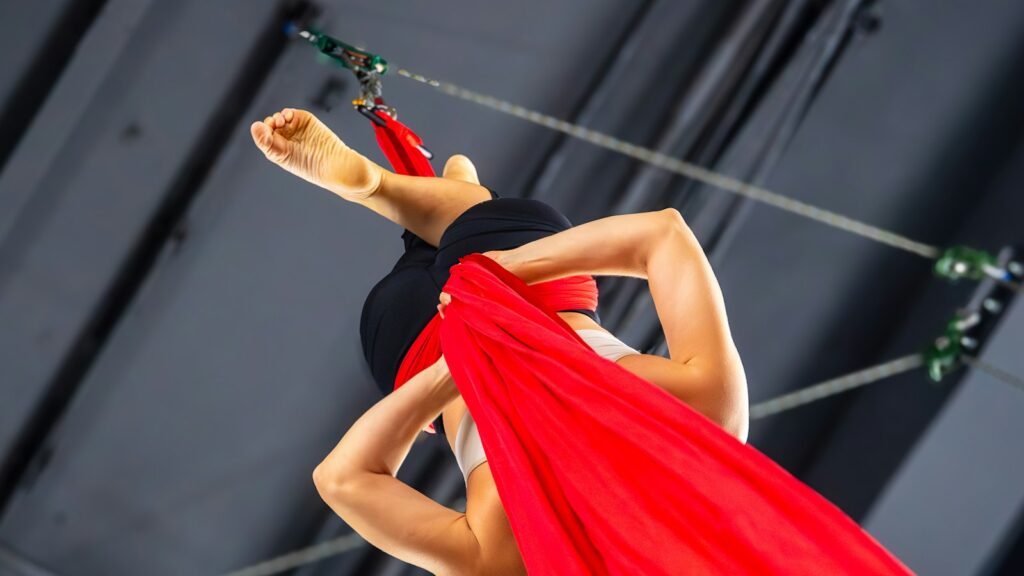
A Johannesburg circus programme is turning overlooked township talent into professional careers, giving young performers a route from community dance and informal training to paid work under the stage lights. At The Cirk, an animal-free circus company in South Africa’s largest city, acrobatics, theatre and dance have become more than entertainment. They are tools for confidence, discipline and economic opportunity.
The programme brings together The Cirk and Jozi Circus School, which supports performers from under-resourced communities with training and practical help. Participants learn aerial work, choreography, stagecraft and the physical conditioning required for professional productions. Some go on to teach, while others secure performance work with production companies or join The Cirk’s own shows.
For 29-year-old Brian Ngobese, the pathway began in Alexandra, one of Johannesburg’s most densely populated townships. He grew up around street and social dance before expanding into contemporary and hip-hop styles. A 2019 audition for a Joburg Theatre production introduced him to circus almost by accident. A short engagement became a career when The Cirk invited him to stay and train.
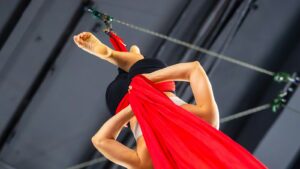
Jozi Circus School helped Ngobese with training and transport, removing two of the obstacles that often prevent talented people from sustaining opportunities away from home. He now combines dance with aerial acrobatics, appearing in productions that require strength, flexibility and the ability to tell a story while suspended above the stage.
Michelle Fok, an organiser of the social programme, said South Africa has abundant creative ability but too few reliable routes into professional circus. Her assessment was simple: “We just need a platform to launch.” The programme seeks to provide that platform by linking training directly to performances and paid work, rather than treating development as a short-lived workshop with no next step.
The need is substantial. South Africa continues to face severe youth unemployment, with many young adults unable to find a first foothold in the labour market. The contrast is especially visible around Alexandra, which sits only a short distance from Sandton, one of Africa’s wealthiest business districts. For young performers, the gap between talent and opportunity can be measured in transport costs, access to coaching and the absence of a professional network.
Circus training demands patience. Performers may spend years developing the control needed for aerial hoops, silks and other apparatus. The discipline also offers transferable strengths: teamwork, reliability, physical awareness, creative problem-solving and the confidence to perform under pressure. Those qualities matter whether a participant remains on stage, moves into teaching or builds a career elsewhere in the creative economy.
Ngobese’s journey has also created an unexpected partnership with fellow Alexandra dancer Zenzele Letsoela. Letsoela, 38, trained in ballet and pantsula, the fast-paced township dance form rooted in South African urban culture. Moving into aerial performance forced him to work around a fear of heights, yet audiences see a composed artist who can remain in character while lifted above the stage.
The company’s productions show how local movement traditions can reshape a global art form. South African performers bring rhythms, gestures and storytelling influences drawn from the country’s many cultures. That creative identity gives the work a distinctive character, while the absence of animals keeps the focus firmly on human skill, imagination and theatrical design.
The social model is intended to become increasingly self-sustaining through training, productions and other circus work. Its reach, however, remains limited. Organisers say the programme can fully support only four participants a year, meaning promising applicants must still be turned away. That constraint highlights both the programme’s value and the scale of the unmet demand.
The Johannesburg initiative sits within a wider African conversation about how cultural industries can create livelihoods. Music, film, fashion, dance and live performance already carry African creativity to global audiences, but talent development often depends on personal money, private connections or luck. Structured programmes can turn that uncertain journey into a clearer pipeline from learning to employment.
Podium News has previously examined how institutions can widen opportunity for young Africans, including the debate surrounding the future of Oprah Winfrey’s South African girls’ academy. The circus programme offers another example of what long-term investment in skills can achieve when training is connected to real work.
For Ngobese, the result is visible each time he rises above the stage. His story is not simply about escaping hardship or finding applause. It is about a young artist being given the support to convert ability into a profession, and then showing others from the township that an unconventional career can be real.
Readers who know of African organisations creating genuine pathways into the arts are invited to share their stories with Podium News, helping us spotlight programmes that turn talent into lasting opportunity.