Democrats have won control of both chambers of the United States Congress in the 2026 midterm elections, according to projections reported by the Associated Press on Wednesday, 4 November, delivering a major setback to President Donald Trump and the Republican Party. The change in congressional control follows a series of Democratic victories in Senate contests and Republican-held House districts, although election officials must still complete the formal certification of individual results.
The projected outcome means Democrats are positioned to control both the House of Representatives and the Senate when the new Congress convenes in January 2027. It would give the opposition party control of congressional committees, legislative scheduling and a substantial part of the federal government’s oversight machinery. Republicans retain the presidency, creating a divided government in which major legislation will generally require negotiation between the parties.
The Associated Press reported Democratic gains across several states that had previously favoured Republicans. In Texas, Democrat James Talarico defeated Republican Ken Paxton in the Senate contest, a notable change in a state where Republicans had maintained a lengthy hold on the seat. The party also registered important Senate victories in South Carolina and Ohio. These are seat changes, distinct from Democratic incumbents retaining their existing seats.
In Georgia, Senator Jon Ossoff won re-election, holding a Democratic seat rather than flipping a Republican one. Former North Carolina governor Roy Cooper won the state’s Senate contest, giving Democrats a Republican-held seat. Podium News has separately covered both results. In Maine, Democrat Troy Jackson defeated Republican incumbent Susan Collins, another significant Republican-to-Democratic change, according to the Associated Press.
The Senate results are especially consequential because senators vote on senior executive appointments, federal judges and treaties, as well as legislation. A Democratic majority could block presidential nominees and set the agenda for committee investigations. The House has its own oversight and spending powers, including a central role in federal appropriations.
The vote took place amid concerns about living costs, the economy and the United States’ war with Iran. The Associated Press reported that those issues contributed to dissatisfaction with the Republican administration. Different states and districts also had their own local contests and political circumstances, making it important not to attribute every result to a single national issue.
Democrats also won important governorships, including a victory in Texas, where Gina Hinojosa defeated Republican incumbent Greg Abbott. Governorships are separate from congressional seats, but they affect state policy and can influence how election laws, education and other public services are administered.
For Nigerians and other Africans living in the United States, the change in congressional leadership could affect the debate over immigration, visas, employment, education and relations with African countries. However, the election results do not themselves change immigration law, visa eligibility or any individual immigration status. Any future policy change would require a specific administrative or legislative action.
Congress also has a role in foreign assistance, trade policy and scrutiny of American engagement with African governments. The precise direction of those policies will depend on the incoming congressional leadership, committee decisions and negotiations with the White House. Claims that particular visa rules or aid programmes have already changed as a result of the election would be premature.
The projected winners must still pass through the states’ official canvassing and certification procedures. A news organisation’s race call is an assessment that a candidate has won, not a formal state certification. Closely contested races may continue to be counted even after the overall balance of congressional power becomes clear.
The next Congress is due to take office in January 2027. Until then, the existing Congress remains in place, and the administration continues to exercise its executive powers. The midterm results nevertheless establish a significant political change, with Democrats set to take charge of both chambers after two years of Republican control.
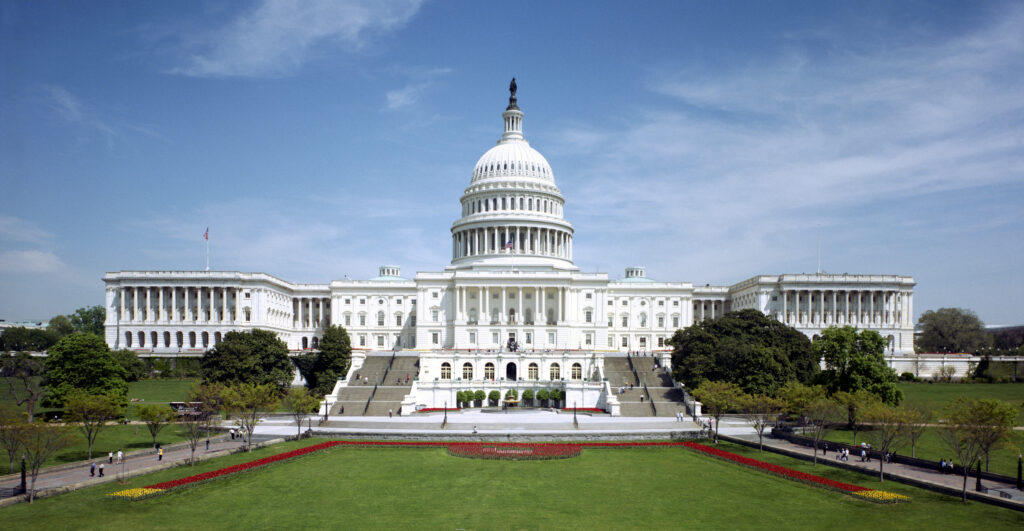
Image credit: Architect of the Capitol, archival photograph of the United States Capitol, 1997. Public domain in the United States. Source: Wikimedia Commons.