Democrat Keisha Lance Bottoms has been projected the winner of Georgia’s governorship, defeating Republican businessman Rick Jackson and becoming the first Black woman elected governor of a US state. The result marks a Democratic gain in a state where Republicans have held the governor’s office since 2003.
The Associated Press called the race for Bottoms following Tuesday’s midterm election. Jackson conceded, acknowledging the voters’ decision. The outcome is an election projection rather than final state certification, which follows the completion of official canvassing procedures.
Bottoms, a former mayor of Atlanta, will succeed Republican Governor Brian Kemp, who could not seek another consecutive term. Her victory follows an expensive campaign in which Jackson, a businessman, committed substantial personal resources to his candidacy. The result represents a change of party control of the governorship, not merely a Democratic hold.
During the campaign, Bottoms advocated expanding Medicaid, increasing the minimum wage to $15 an hour and raising public-sector pay. She also called for changes to Georgia’s abortion restrictions and proposed pausing additional data-centre development and some surveillance-camera installations. These remain campaign proposals, not policies already enacted.
The former Atlanta mayor’s victory has national significance because no Black woman had previously won a US governorship. Black women have long held elected offices in Congress, state legislatures and city governments, but the governorship milestone had remained unbroken. Bottoms will enter office with a historic mandate and the practical task of securing legislative support for her programme.
Georgia’s state legislature may constrain some of those ambitions. Republicans could retain control of at least one legislative chamber, meaning major changes to spending, taxation and state law would require negotiation. The governor’s executive powers and authority over state agencies nonetheless give the office considerable influence over implementation and administration.
The election also highlighted the political importance of metropolitan Atlanta, whose diverse electorate has helped make Georgia increasingly competitive in national contests. Bottoms previously served as Atlanta’s mayor from 2018 to 2022 and worked in the administration of President Joe Biden. Her experience in city government was central to her campaign’s argument that she could manage a large and politically divided state.
Georgia voters also returned Democratic Senator Jon Ossoff to Washington in a separate election. That Senate result does not itself determine control of the state government. The two outcomes concern different offices, with distinct powers and terms.
For African and Nigerian communities living in Georgia, decisions on healthcare, education, employment and state administration will remain important areas to watch. The governor does not control federal immigration law, although state decisions on public services and cooperation with federal authorities can affect immigrant communities. Any specific policy consequences will depend on decisions taken after Bottoms assumes office.
The wider 2026 midterm elections produced substantial Democratic gains nationally, with the Associated Press projecting Democratic control of both chambers of Congress. Georgia’s gubernatorial change forms part of that broader result, but the state’s own legislative balance will shape how much of Bottoms’ agenda can be delivered.
Bottoms is expected to take office in January 2027. Until then, Kemp remains governor and the transition will focus on preparing the incoming administration. Official election certification will follow the state’s prescribed process.
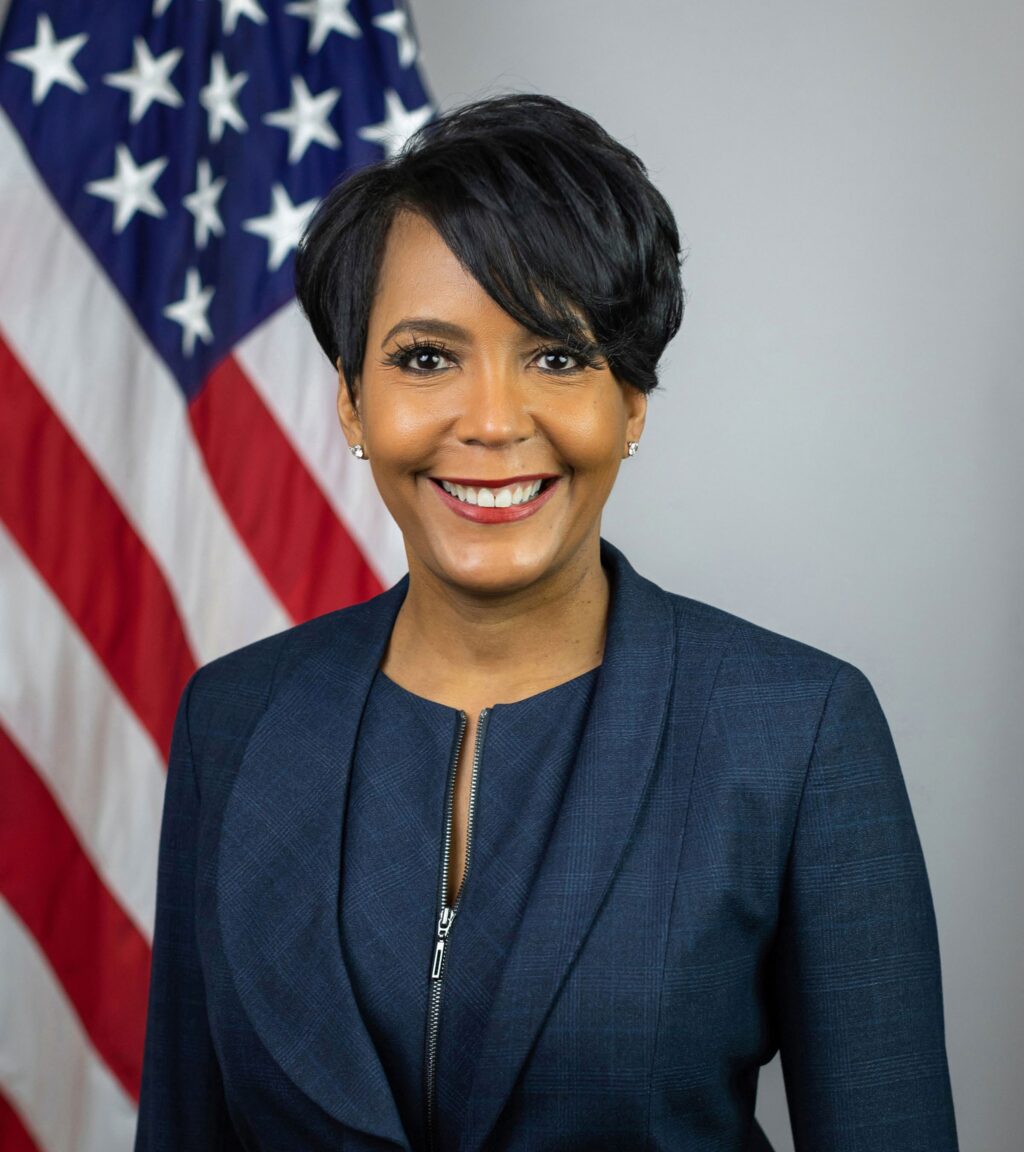
Image: Official 2022 portrait of Keisha Lance Bottoms, Executive Office of the President of the United States, public domain, via Wikimedia Commons.