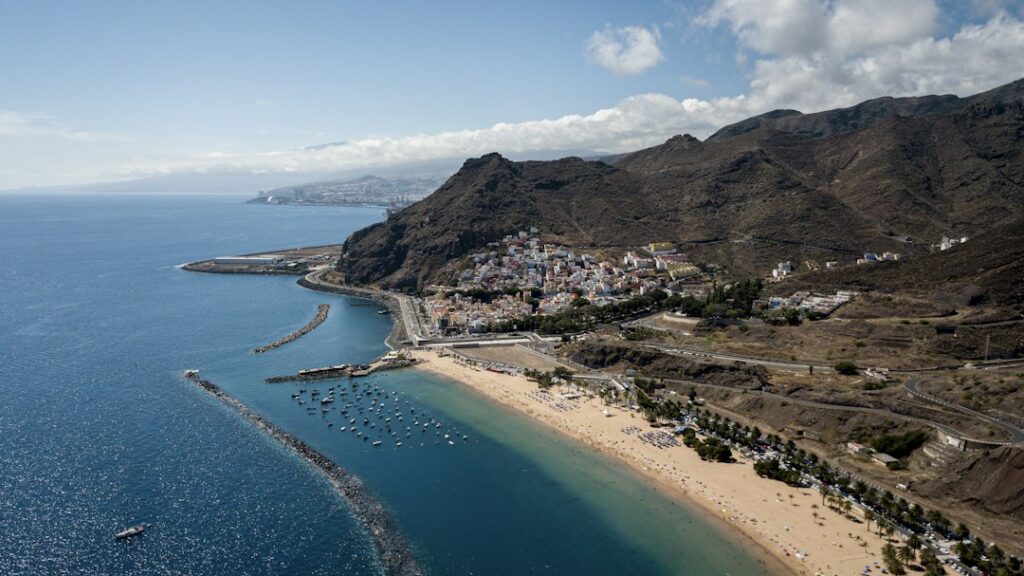
Illustrative photograph of Tenerife coastline, not a scene of the 14 November 2026 migrant rescue. Photograph: Maxim Berg/Unsplash, used under the Unsplash License.
Spanish maritime rescue teams brought 1,488 migrants ashore in the Canary Islands on Saturday, 14 November 2026, the highest number recorded in a single day since 2020, as renewed crossings from West Africa put pressure on reception facilities in the Atlantic archipelago.
According to figures attributed to Spain’s maritime rescue service and reported by Reuters on Sunday, the people were rescued from 14 boats. Twelve of the vessels reached El Hierro, while one arrived at Gran Canaria and another at Tenerife.
The figure exceeded the previous single-day record of 1,461 arrivals on 7 November 2020. It describes people rescued on Saturday alone, rather than the total for the weekend or the whole month.
The largest of Saturday’s boats carried 240 people, including 12 women and 36 children, according to the rescue figures cited in the reporting. Most of those rescued were reported to be from Senegal, The Gambia and Guinea.
The increase is especially significant for El Hierro, one of the smaller Canary Islands, where sudden large arrivals create immediate demands for emergency accommodation, medical screening, transport and reception staff. Spain’s Territorial Policy Minister, Ángel Víctor Torres, was expected to visit the island on Sunday to discuss the situation.
Al Jazeera, drawing on agency reporting and Spanish rescue-service figures, also reported that more than 9,000 people had arrived in the Canary Islands since the beginning of November and that authorities had declared a migration emergency. That wider monthly figure should not be confused with Saturday’s 1,488 rescues.
The Canary Islands are Spanish territory off the north-western coast of Africa. People travelling from West African countries sometimes attempt the long Atlantic passage in crowded wooden fishing boats, known as pirogues or cayucos, in the hope of reaching European territory.
The journey can be extremely dangerous. Long distances, changing weather, rough seas and limited safety equipment can turn an already difficult crossing into a life-threatening emergency. Rescue figures count people who have been reached by authorities and do not establish the number of people who may have attempted the journey without being detected.
The latest arrivals follow an increase in crossings since October. Reuters noted, however, that the January-to-31-October total was 5.5 per cent below the corresponding period in 2025. That distinction is important: a sharp rise over several days does not by itself mean that the year-to-date total is at a record high.
The migration route also has direct relevance for African families and diaspora communities. Many of those undertaking the journey come from countries with established communities abroad, but the available rescue statistics do not establish the individual circumstances, intentions or immigration status of every passenger.
Spanish officials face both an immediate humanitarian response and longer-term decisions about reception capacity and the management of arrivals. The reported visit by Torres is part of that response; this report does not assume any policy decision was taken during the visit.
At the time of the cited reports, authorities had confirmed the Saturday rescue total and the distribution of boats across the islands. Further figures covering subsequent arrivals, transfers and reception arrangements may change as the emergency response continues.
Sources: Reuters, 15 November 2026; Al Jazeera reporting drawing on Reuters and Associated Press, 15 November 2026. Featured photograph: Tenerife coastline, Maxim Berg/Unsplash, contextual image only; it does not depict the rescues.