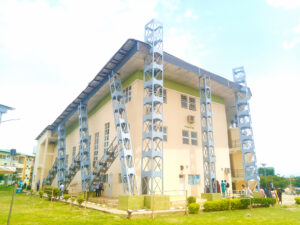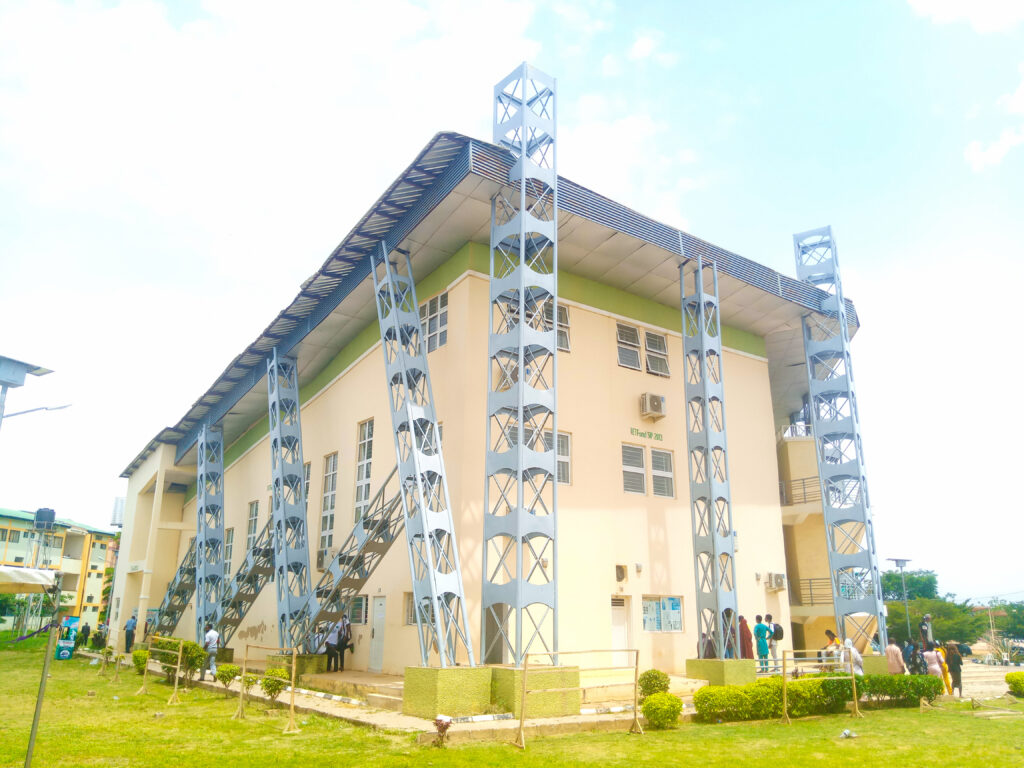
Kaduna State University campus entrance. Archive photograph by Anasskoko, 7 July 2021, via Wikimedia Commons, licensed under CC BY-SA 4.0. The photograph does not depict the November 2026 industrial action.
Non-teaching staff unions at Kaduna State University (KASU) have suspended their seven-day warning strike for 30 days and directed members to return to work immediately, creating a fresh window for negotiations with the university management and Kaduna State Government.
The Joint Action Committee (JAC), representing the university branches of the Senior Staff Association of Nigerian Universities (SSANU), the Non-Academic Staff Union of Educational and Associated Institutions (NASU), and the National Association of Academic Technologists (NAAT), announced the decision after an emergency congress on Monday, 16 November 2026.
In a statement jointly signed by JAC Chairperson Comrade Sa’adiyya Abubakar Mustapha and Secretary Comrade Dahiru Musa, the committee said the suspension was intended to promote industrial harmony and allow constructive engagement, meaningful dialogue and concrete steps towards resolving the outstanding issues.
“The suspension takes immediate effect.”
The unions said implementation of the 2026 Consolidated Non-Teaching Tools Allowance agreement, known as CONTTA, remained a major issue in contention. They also acknowledged the intervention of the university management, Governing Council, a newly constituted joint committee and other stakeholders in Kaduna State.
Work resumes, but dispute remains open
The JAC directed all SSANU, NASU and NAAT members at the university to resume work immediately. The 30-day suspension is not a final settlement of the dispute, and the committee has not announced that the outstanding demands have been resolved.
The warning strike followed a seven-day ultimatum issued by the unions on 2 November to the Kaduna State Government and relevant university authorities. The committee said the ultimatum concerned the non-implementation of the CONTTA agreement and other staff welfare issues.
In its earlier notice, the JAC also listed the implementation and payment of an approved wage award, group life insurance for staff, the Federal Government’s N70,000 monthly transport support for workers for six months, and respect for university autonomy. The committee presented the demands as matters requiring engagement with the state government and university management.
The CONTTA issue had been raised by the unions before the warning strike. In a communiqué issued after a meeting on 31 August, the JAC urged Governor Uba Sani and the university management to implement the 2026 agreement for eligible KASU staff. The unions argued that agreements reached between government and recognised staff associations should be honoured.
Management had urged dialogue
On 13 November, KASU management said the university remained open and academic activities were continuing despite the industrial action. Vice-Chancellor Professor Abdullahi Ibrahim Musa said students should continue attending lectures and participating in scheduled academic activities.
Management acknowledged the unions’ concerns, particularly over the CONTTA agreement, but asked them to embrace dialogue while the state government, university management and council worked on the outstanding matters. It said it was committed to maintaining industrial harmony and protecting the interests of staff and students.
The unions’ latest decision gives the parties a defined period to move from statements and meetings to agreed actions. The university’s non-teaching staff provide administrative, technical and other support services that are essential to daily operations, even when academic activities continue during an industrial dispute.
The next test will be whether the state government and university authorities can provide clear commitments on the CONTTA agreement and the wider welfare issues before the 30-day suspension expires. Until the parties announce a settlement, the industrial dispute remains unresolved.