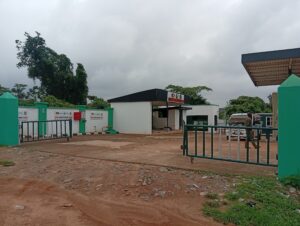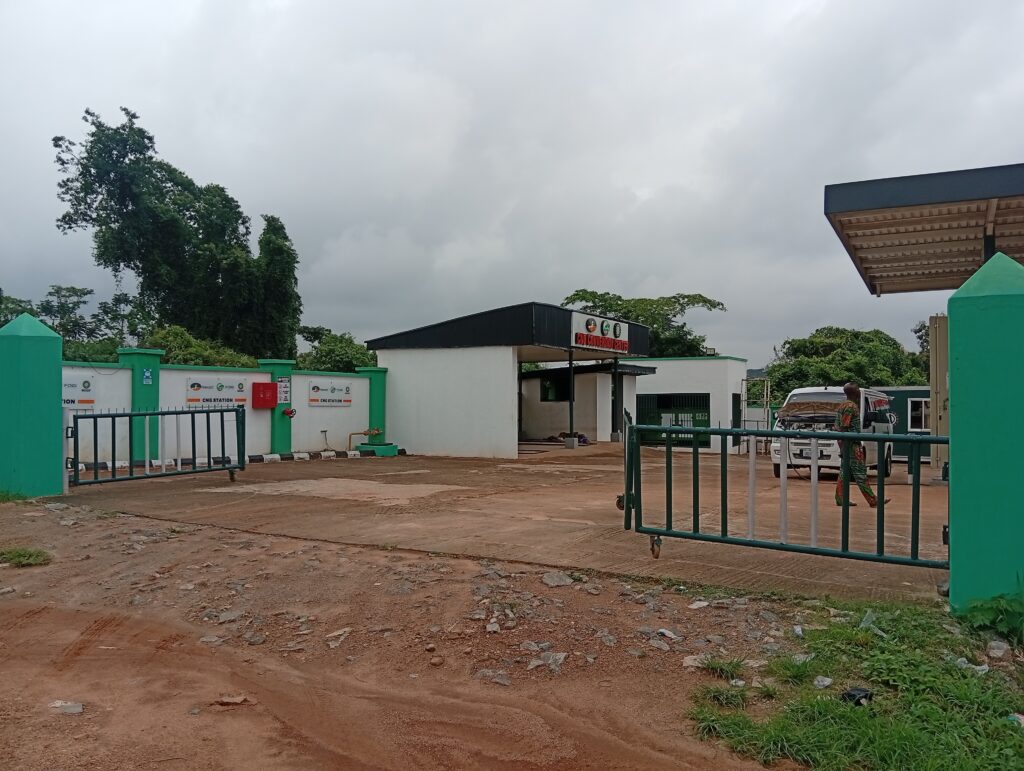
File photograph of the Obafemi Awolowo University CNG station in Ile-Ife, opened in 2026. Photograph: Wikimedia Commons, CC0 1.0. This is not one of the four university stations inaugurated on 17 November 2026.
The Federal Government has inaugurated Compressed Natural Gas (CNG) daughter stations at four federal universities in a new phase of its campus transport programme, with officials saying the facilities could supply fuel for about 540 vehicles a day across the four locations.
The stations are at the University of Uyo in Akwa Ibom State, the University of Calabar in Cross River State, the University of Nigeria, Nsukka, in Enugu State, and the Federal University of Petroleum Resources, Effurun, in Delta State. The inaugurations took place on Tuesday, 17 November 2026, with the University of Uyo hosting the central event.
Minister of State for Petroleum Resources (Gas), Ekperikpe Ekpo, said the facilities were intended to give students, university staff and surrounding communities access to cleaner and more economical mobility. He said the initiative would also create opportunities for universities to develop research capacity and practical skills in CNG technologies.
“The benefits of adopting CNG for mobility are practical and immediate,” Ekpo said.
Four sites, estimated capacity of 540 vehicles a day
Oluwole Adama, Executive Director of the Midstream and Downstream Gas Infrastructure Fund (MDGIF), said the four stations in Uyo, Calabar, Enugu and Warri could fill about 540 vehicles daily. He described the capacity as a potential benefit for students, commercial transport operators and people living around the campuses.
The figure is a stated daily capacity, not a record of vehicles already served. Actual use will depend on the availability of gas, the number of vehicles converted to CNG, the stations’ operating hours and the ability of campus and community transport operators to access the facilities.
Fola Akinnola, Chief Executive Officer of FEMADEC Energy Limited, said the four daughter stations were designed to bring CNG refuelling closer to university communities and reduce daily fuel expenditure for campus shuttle operators, lecturers, students and residents. He described the installations as the result of collaboration between the gas infrastructure fund, the Presidential Initiative on Compressed Natural Gas and Electric Vehicles, the universities and their host states.
Part of the 20-university programme
The new facilities form part of the Federal Government’s 20 Universities CNG Ecosystem Initiative and the Special Palliative Relief on University Transportation (SPROUT) Programme. The programme is intended to cushion the transport impact of the removal of the petrol subsidy by expanding access to gas-powered mobility around tertiary institutions.
President Bola Tinubu approved the SPROUT programme, while the Presidential Initiative on Compressed Natural Gas and Electric Vehicles and the MDGIF have been central to the wider infrastructure rollout. In May 2026, Tinubu commissioned four other MDGIF-supported CNG projects in Lagos, Abuja and Owerri, including a university-based daughter station and conversion centre at the Federal University of Technology, Owerri.
That earlier FUTO facility was presented as the flagship of the 20-university initiative and included a vehicle conversion workshop and training centre, alongside CNG-powered buses and tricycles for campus transport. The November inaugurations extend the programme to four additional university communities.
Ekpo thanked the governors of Akwa Ibom, Cross River, Enugu and Delta states for supporting the projects. He also acknowledged the Minister of Education, the vice-chancellors and governing councils of the four universities, as well as host communities, for providing the conditions needed for the stations to be delivered.
Delivery must translate into reliable service
Adama said about 50 more projects were expected to be nearing commissioning by the end of 2026. That is a forward target, not a completed delivery figure, and the pace of expansion will need to be matched by dependable gas supply, trained technicians, maintenance arrangements and strong safety controls.
CNG can reduce fuel costs for vehicles that are properly converted, but the savings available to students and transport operators will depend on conversion costs, the price and availability of gas, and how easily vehicles can reach the stations. Universities will also need clear operating arrangements so that the facilities serve campus users and nearby communities safely and consistently.
The four inaugurations add capacity to the Federal Government’s gas-mobility programme. Their longer-term value will be measured by how many vehicles are actually refuelled, whether transport costs fall for users, and whether the facilities remain reliable beyond the commissioning ceremonies.