Twenty people have been killed and five others injured in a multiple-vehicle crash on the Hawan Kibo to Jos route in Plateau State, according to the Federal Road Safety Corps.
The collision occurred at about 3.32 pm on Friday, 2 October, after Sopp Water Falls in Riyom Local Government Area. Four vehicles were involved: a heavy-duty Howo Sino truck, a Toyota Corolla, a Toyota Hummer passenger bus operated by Yankari Express and a motorcycle.
The FRSC said 25 people were caught in the crash, comprising 23 men and two women. All 20 people who died were men. The five survivors, three men and two women, were taken to Ryom General Hospital and Vom Christian Hospital for treatment.
The bodies of the deceased were deposited at the mortuary of Jos University Teaching Hospital. Rescue personnel also cleared the wreckage and restored traffic on the affected section of the highway.
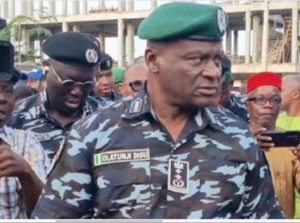
Preliminary findings identified brake failure and loss of control as the likely causes. The Corps Marshal, Shehu Mohammed, has directed the crash investigation team to establish the full circumstances, with particular attention to the reported mechanical failure.
That investigation will be important because the collision involved a commercial passenger vehicle, a heavy truck, a private car and a vulnerable road user on a motorcycle. It must determine which vehicle first lost control, whether it had been properly maintained and whether any preventable safety failure contributed to the scale of the tragedy.
Twenty families thrown into grief
The casualty figure is more than a traffic statistic. Each victim left relatives, friends and communities facing a sudden loss, while the injured survivors and their families now confront medical treatment and an uncertain recovery.
Mohammed captured that human cost in his response to the crash: “Behind every number is a name, a home, a family and a future.”
The immediate priorities are the care of the injured, identification of the deceased and timely communication with their families. Authorities should also ensure that relatives are given clear information about hospital and mortuary procedures, particularly where victims were travelling between states.
Official findings should be released publicly when the investigation is completed. That would allow transport operators, regulators and road users to understand whether the suspected brake failure resulted from neglected maintenance, defective components, excessive loading or another factor.
Roadworthiness must be enforced, not merely advised
The Hawan Kibo corridor is a major route linking Plateau State with Abuja and other parts of north-central Nigeria. Its bends, gradients and heavy traffic mean that a mechanical failure can quickly become catastrophic, particularly when a large vehicle is descending a slope.
Drivers are routinely advised to inspect tyres, brakes, lights and steering systems before beginning a journey. Such advice is essential, but commercial road safety cannot depend only on individual judgement. Operators and regulators share responsibility for ensuring that buses and trucks are fit for service.
Transport companies should maintain verifiable inspection records, remove unsafe vehicles from their fleets and protect drivers who report mechanical defects. Heavy-duty vehicles need particular scrutiny because their weight and stopping distance can turn a single failure into a collision involving several road users.
Enforcement agencies also need sufficient personnel, equipment and legal support to identify dangerous vehicles before they enter busy highways. Checks should be consistent rather than concentrated around festive travel periods or after a major crash.
Where a route has a history of severe collisions, road design must also be examined. Warning signs, safe speed limits, protective barriers, escape areas for vehicles with failed brakes and clearer lane markings can reduce the consequences of human or mechanical error. A serious investigation should therefore consider the road environment alongside the condition of the vehicles.
A preventable public-safety crisis
Nigeria’s road crashes repeatedly expose the interaction between vehicle defects, speeding, poor driving decisions, dangerous road conditions and weak enforcement. The exact contribution of each factor varies from incident to incident, which is why evidence-led investigations matter.
Premature conclusions can obscure responsibility. In this case, brake failure and loss of control remain preliminary findings. Investigators should inspect the vehicles, review any available witness accounts and determine whether the truck and passenger bus complied with required maintenance and operating standards.
Accountability should follow if negligence or regulatory failures are established. It is not enough to mourn victims, clear the road and wait for the next disaster. Lessons from fatal collisions must lead to measurable changes in inspections, fleet management and highway engineering.
The FRSC has urged commercial drivers and heavy-duty vehicle operators to prioritise roadworthiness, maintenance, speed management and responsible driving. Its corps marshal also reminded motorists that no journey is so urgent that it should end in death.
For the families affected in Plateau, that warning comes after an irreversible loss. The duty now is to support them, care for the survivors and ensure that the investigation produces action capable of preventing another community from receiving the same devastating news.
What should change? Share your experience of road safety and commercial vehicle standards in Nigeria, and tell us which enforcement or infrastructure improvements deserve urgent attention.