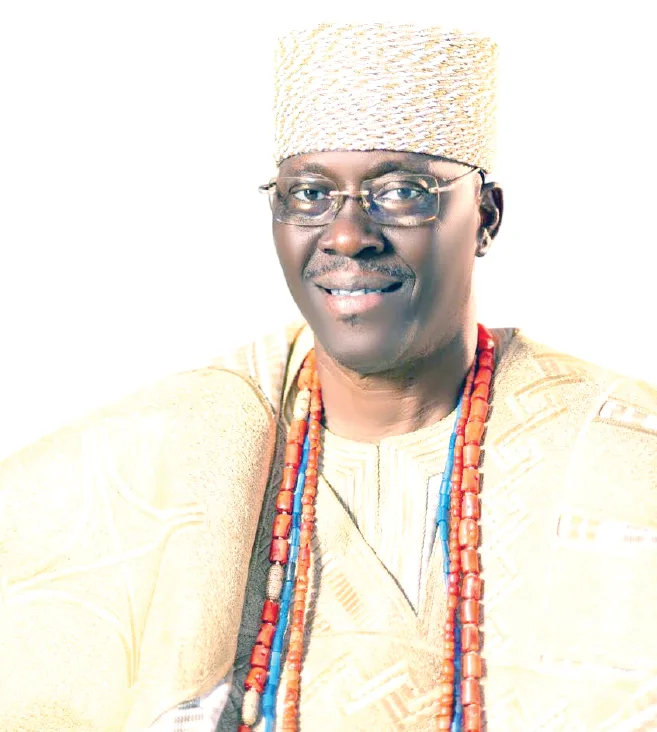
The Oluoke of Okeigbo Kingdom in Ondo State, Oba Akintoye Adeoye, has called for a better-informed understanding of Yoruba customs, arguing that Christian faith and the traditional responsibilities of a monarch need not be treated as automatic opposites.
In an interview published on Sunday, 18 October, the 18th Oluoke reflected on the coronation rites he underwent, his work as a lawyer and pastor, and the demands of serving a community whose people practise different faiths. His remarks offer a timely view of how some contemporary Yoruba rulers are navigating continuity, belief and public service.
Oba Adeoye said his study of African Traditional Religion during his Higher School Certificate programme and theological education helped him approach palace rites with knowledge rather than fear. He observed that “many aspects of African tradition have been demonised without sufficient understanding”.
That distinction matters in a region where Christianity, Islam and indigenous belief have long existed alongside one another, sometimes within the same extended family. The Oluoke’s position is not that every inherited practice should escape examination. Rather, he argues that judgments should follow an understanding of a custom’s origins, meaning and purpose.
For a traditional ruler, the question extends beyond private conviction. A monarch represents the whole community, not one religious group. Oba Adeoye put the principle plainly: “I am not the father of Christians alone.” He said the palace therefore has a duty to encourage tolerance, peaceful coexistence and mutual respect.
The king’s own path to the throne crosses several institutions that shape modern Nigerian life. He trained in law at Obafemi Awolowo University, Ile-Ife, attended the Nigerian Law School and was ordained a pastor in 1997. He also studied theology at Life Theological Seminary of the Foursquare Gospel Church.
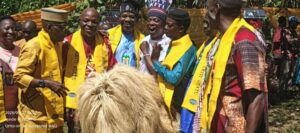
On 4 November 2025, Governor Lucky Aiyedatiwa presented him with the staff of office as Oluoke of Okeigbo. An account of his coronation published by HouseKia also recorded the cultural rites, traditional music and community pageantry that accompanied his installation.
Oba Adeoye traces his lineage to the Aare Kugbaigbe Ruling House. In his account, Aare Kugbaigbe was a warrior from Ehindi in Ile-Ife and one of Okeigbo’s founders. The monarch said the history preserved in family names and oríkì, the Yoruba praise poetry through which lineages remember identity and achievement, helped connect him to those roots.
His reflection also carries a warning about how cultural memory can weaken when it is left to chance. Although his parents showed a deep attachment to Okeigbo, he said they did not deliberately teach their children much about community and lineage history. He has consequently made a conscious effort to ensure that his own children understand their heritage.
That lesson reaches beyond a royal household. Yoruba history is often transmitted through oral forms, family narratives, festivals, titles, songs and praise poetry. When those forms are neither taught nor documented, younger generations may inherit the symbols of identity without the knowledge that gives them meaning.
The Oluoke also described customs governing royal conduct. Among them, he said, are expectations that a king should keep his head covered, avoid eating or drinking openly in public, and exercise care in making pronouncements. Such rules differ from one kingdom to another, and some have origins that are no longer clearly remembered. His approach suggests that preserving dignity and asking historical questions can proceed together.
Beyond cultural interpretation, the monarch presented kingship as a practical responsibility. He said the palace is working with primary and secondary schools to improve educational standards, while 50 scholarships have been provided for Okeigbo indigenes at the Ondo State Technical College in the current academic session.
He also said mothers who give birth at Okeigbo Health Centre receive N30,000 each, an intervention intended both to support families and encourage use of the facility. Agriculture, youth development and improved local services are among the other areas he identified for attention.
These initiatives illustrate the continuing relevance of traditional institutions when palace authority is directed towards mediation, cultural stewardship and community mobilisation. The legitimacy of a modern monarch is tested not only by lineage or ceremony, but also by whether the institution can help people solve present-day problems.
Oba Adeoye’s account does not settle every debate about faith and tradition, nor does it erase the need to scrutinise practices that may conflict with law, dignity or individual rights. It does, however, make a case for replacing reflexive dismissal with study, dialogue and context.
For Okeigbo and the wider Yoruba world, the challenge is to preserve what carries history and communal value while giving each generation the knowledge and freedom needed to understand it. Readers with documented Okeigbo histories, photographs or oral traditions are invited to share them with Podium News for future heritage coverage.