Women cotton farmers in Zimbabwe’s Shamva district are using sewing, garment repairs and collective savings to build a second source of income as unreliable rainfall, production costs and delayed payments make farming increasingly uncertain.
The women grow cotton in Mashonaland Central, where the crop is commonly described as “white gold”. For households with limited access to other income-generating work, cotton can pay for food, school costs and the inputs required for another planting season.
Yet the value of a harvest is exposed to several risks before it reaches a farmer’s hands. Seed, fertiliser, chemicals and labour must be paid for, while rainfall can arrive too early, too heavily or fail during a crucial stage of crop development. Farmers must then find buyers, accept grading decisions and wait for payment.
Brenda Dzuda, a 48-year-old widow who farms four hectares in Shamva, told journalist Shorai Murwira of Bird Story Agency that cotton remained an important source of household income for women in the area. She said changing weather patterns, seed quality and prices were making that work harder to sustain.
Dzuda reported selling cotton at 24 US cents a kilogram. She questioned how the price reflected international market conditions and said farmers could also lose value when their crop was assigned a lower grade.
Cotton Company of Zimbabwe, known as COTTCO, said producer prices were benchmarked against international market fundamentals in consultation with regulators. The company grades cotton from A to D using fibre maturity, cleanliness, colour and the amount of unwanted material in the crop.
Farmers receive an initial base payment at the lowest grade, with 70 per cent paid in United States dollars and 30 per cent in Zimbabwe Gold currency. COTTCO said initial payments for the past season had been completed and it was raising funds for additional amounts due to farmers whose cotton qualified for higher grades.
The company also said it supplied certified seed, including drought-tolerant and early-maturing varieties, through the government’s Presidential Input Programme. Other support included fertiliser, herbicides, chemicals, mechanised tillage and advice on moisture conservation and pest management.
Those measures do not remove the pressure created by unpredictable weather or the period between harvesting and payment. About 60 kilometres from Dzuda’s farm, 74-year-old Getrude Motsi had sacks of cotton stored at her home while she waited to sell the crop.
Motsi, who has grown cotton since 2014, told Murwira that worsening weather and delayed payments had weakened the security she previously associated with the crop. Until the cotton is sold and the money arrives, months of work remain tied up in stored sacks.
Zimbabwe Women in Cotton has responded by helping members move beyond the sale of raw cotton. The organisation approached First Lady Auxillia Mnangagwa in 2022 and received sewing machines. A sewing project began in February 2023.
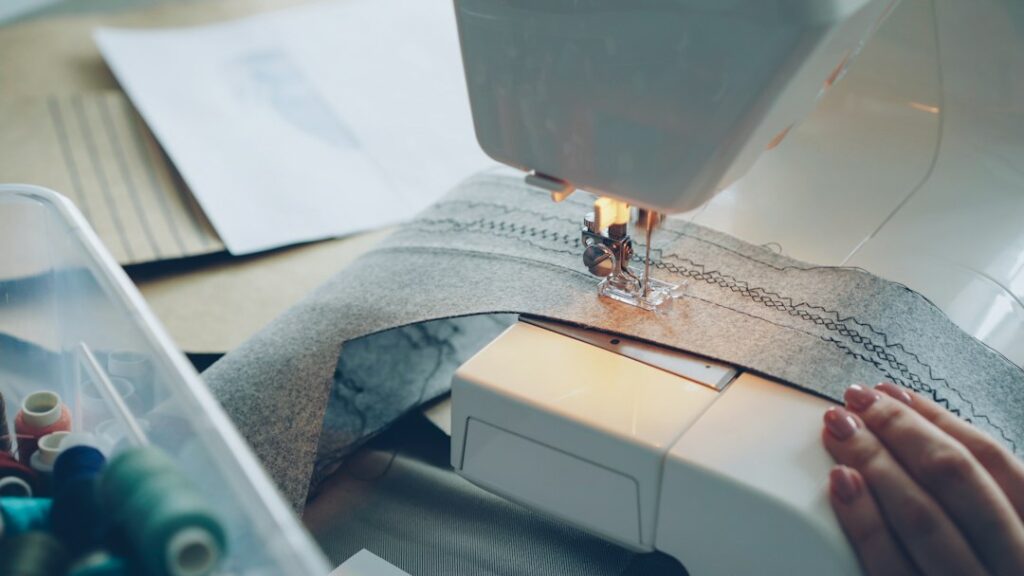
Sixty women in Shamva now participate, according to project trainer Happiness Marape. They meet on different days so members can share access to the machines, taking orders for school uniforms and other garments while also repairing clothes for people in their communities.
The work provides income outside the farming season and during periods when crops perform poorly. It also moves the women further along the cotton value chain, from producing a raw agricultural commodity towards earning from finished goods and services.
Members contribute part of their sewing income to collective savings. The fund can be used for household expenses or lent to participants who need money for farming inputs. That creates a local source of credit in a sector where delayed crop payments can disrupt preparations for the next season.
Patience Zhakata, national chairperson of Zimbabwe Women in Cotton, said women’s dependence on cotton was also shaped by limited access to other productive assets and income. The group wants small processing enterprises capable of extracting more value from cotton and its by-products.
Cotton can feed several industries beyond fibre for clothing. Cottonseed is processed into edible oil, while the remaining material can be used in livestock feed and other products. Zimbabwe’s cotton output has recently shown signs of recovery, although production remains well below the country’s historical peak.
By mid-June 2026, farmers had marketed more than 5.08 million kilograms of seed cotton, compared with 310,625 kilograms over the corresponding period in 2025. The Agricultural Marketing Authority projected production of 38,500 tonnes for the season, about 33 per cent above the previous year’s estimated 29,000 tonnes.
The Shamva sewing project remains small beside the national cotton industry, and it cannot settle disputes over prices, seed quality or payment delays. It nevertheless gives participating women earnings that are not wholly dependent on rainfall and crop grading.
For farmers such as Dzuda and Motsi, that additional income can help bridge the period between planting, harvesting and payment. The women continue to grow their “white gold”, but sewing uniforms and repairing garments now allow part of their livelihood to continue when the fields or the market do not deliver.