Uganda is requiring citizens returning from the Democratic Republic of Congo to undergo 21-day quarantine at their own expense. Health Minister Chris Baryomunsi announced the requirement on Sunday as the country reinforced border measures against Ebola.
The measures announced on 25 October also cover transit through Uganda by people with a history of travel to Congo. NTV Uganda reported that the ministry had prohibited such transit by any means of transport, including chartered flights.
Non-essential travellers who are Congolese nationals will be returned to their country at their own expense, according to the ministry’s announcement reported by NTV. The returnee quarantine requirement concerns Ugandan citizens coming home after travel to Congo.
Officials have intensified screening at Entebbe International Airport and land crossings. People entering Uganda by air, land or water must complete a passenger locator form. The screening requirement includes diplomats and United Nations personnel.
The restrictions reinforce controls introduced earlier in the regional outbreak. Uganda has continued to allow essential movements, including humanitarian workers and truck drivers, subject to screening and other public-health requirements.
Baryomunsi also said all 60 contacts identified in Uganda in connection with Kenya’s first Ebola patient had completed their 21-day monitoring period and been discharged. None developed symptoms during follow-up. The contacts included border personnel, hotel workers and transport operators.
The minister said Uganda had recorded no confirmed cases since its government declared the outbreak over on 28 July. The health ministry’s July announcement recorded 20 infections, with 18 recoveries and two deaths, following an outbreak declared on 15 May.
That earlier outbreak involved people who crossed from Congo and health workers who cared for infected patients. Uganda’s ministry said continued transmission across the border left a high risk of reintroduction even after local transmission had been interrupted.
The latest precautions come as investigators continue examining how the patient being treated in Nigeria contracted Ebola. She had travelled from Uganda, but the location and route of her infection remain unresolved.
Switzerland’s foreign ministry told the Associated Press that the woman, who is married to a Swiss diplomat based in Nigeria, had not visited Congo. Ugandan authorities are reviewing her movements with Nigerian officials and international partners.
Nigeria’s health ministry said on 23 October that genomic analysis found the virus in its patient genetically related to the virus identified in a Kenyan case. Health Minister Muhammad Ali Pate stressed that genetic similarity alone did not establish direct transmission between the patients.
The analysis was conducted by the Nigeria Centre for Disease Control and Prevention and the Institute of Genomics and Global Health at Redeemer’s University in Ede, Osun State. Further investigation is required to establish whether the cases are epidemiologically linked.
The World Health Organisation says Ebola’s incubation period ranges from two to 21 days. Infection spreads through direct contact with infected blood or other bodily fluids, or contaminated materials. People do not transmit the disease before symptoms appear.
The regional outbreak is caused by Bundibugyo virus, for which no licensed vaccine or specific treatment is currently available. WHO says early supportive care, including rehydration and treatment of symptoms, can improve survival.
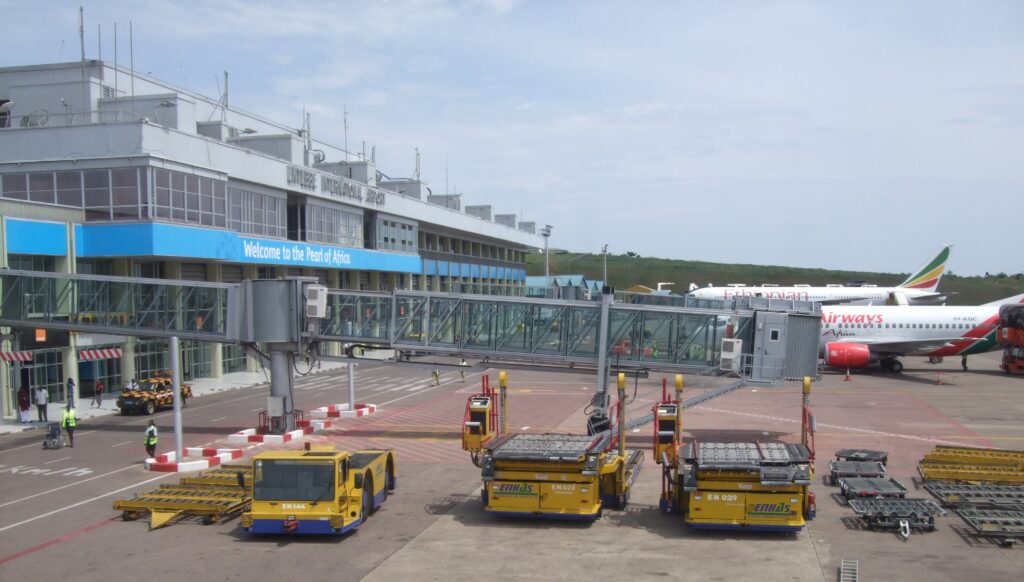
Archive photograph: Entebbe International Airport in September 2009, by Katanasov. Source and public-domain declaration. Display and social versions may be cropped or resized. This image does not show the October 2026 screening measures, patients or quarantine facilities.