Senegal’s PASTEF parliamentary group has rejected the government’s revised budget for 2026 in committee. It demanded changes to spending priorities and greater disclosure of public debt. A full National Assembly vote is scheduled for Tuesday, 27 October.
The Finance and Budgetary Control Committee rejected the bill and two government amendments on Friday, 23 October. The committee decision leaves the legislation facing further scrutiny in plenary; it is not a final rejection by the entire Assembly.
In a statement dated 23 October, the PASTEF-Les Patriotes group said it would not approve the proposal in its present form. It accepted the need to revise the budget in response to economic pressures, but disputed the government’s choices and the information provided to parliament.
The group called for reconsideration of cuts affecting health, education, vocational training, water supply, infrastructure and industry. It said adjustment should fall first on non-essential expenditure.
It also sought protection for households and businesses against higher energy prices. Its demands included lower taxation on petroleum products and reduced electricity supply and production costs alongside any reduction in energy subsidies.
PASTEF requested the agreements and financing details for 120 billion CFA francs linked to the World Bank’s Contingent Emergency Response Project. It also asked for debt-audit reports and explanations of the projected deficits for 2026 and 2027.
The proposed budget records a sharp rise in energy support. Its explanatory memorandum puts subsidies at 790.3 billion CFA francs, compared with 250 billion in the original 2026 budget. It attributes the increase partly to higher international oil prices.
The same document proposes reducing investment expenditure by 555 billion CFA francs. That comprises 315.7 billion from domestically financed investment and 239.3 billion from externally financed projects.
The government forecasts economic growth of 2.7 per cent for 2026, down 2.3 percentage points from its original projection. The memorandum links that downgrade to the global energy crisis and an expected rainfall shortfall associated with El Niño.
It raises the projected deficit from 5.4 per cent to 7.6 per cent of gross domestic product. In cash terms, the draft puts the shortfall at about 1,735.2 billion CFA francs, against 1,245.1 billion originally envisaged.
The draft cites Article 47 of Senegal’s budget framework, which requires revisions when revenues or the original financial balance change substantially.
Senegal’s public finances have faced scrutiny since an audit exposed previously underreported obligations. At a March 2025 briefing, the International Monetary Fund said the Court of Auditors had confirmed underreporting of debt and deficits between 2019 and 2023.
The IMF said resolving the misreporting was a precondition for discussions on future financial assistance. That statement concerned the earlier accounting revelations, rather than the parliamentary committee’s decision on this budget.
The committee is chaired by Alphonse Mané Sambou. SeneNews reported that Finance Minister Cheikh Diba and Budget Minister Bassirou Sarr attended to defend the bill, while the Takku Wallu parliamentary group abstained and one unaffiliated deputy supported it.
PASTEF’s group said it remained available for discussions with the government before the plenary session. Its statement called for a transparent, sustainable budget that preserved purchasing power and public investment.
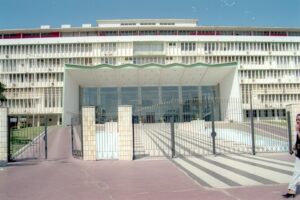
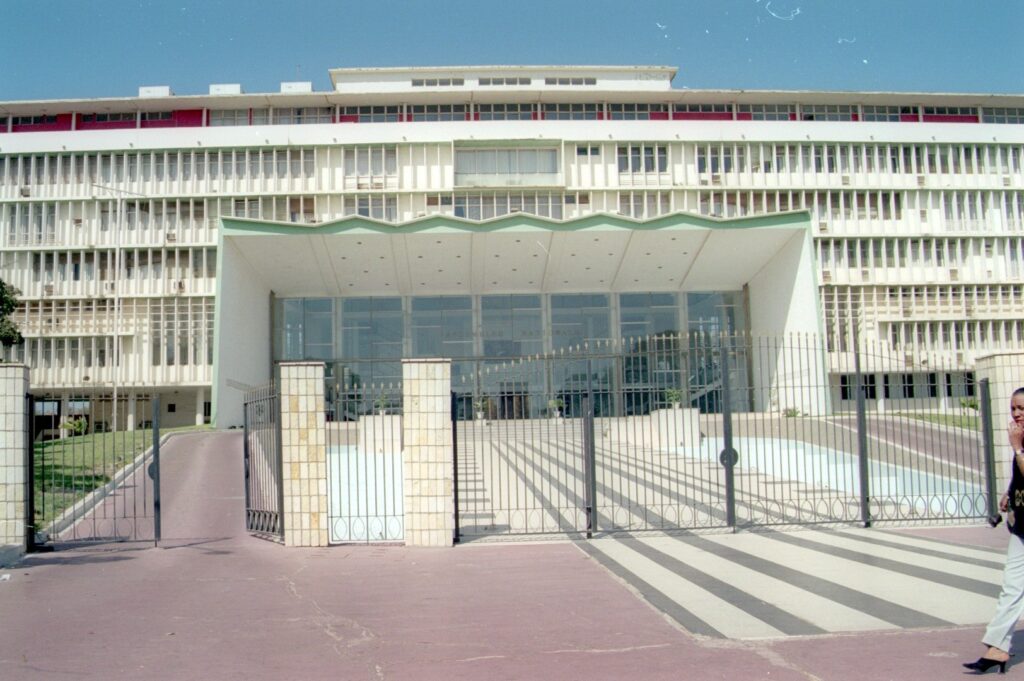
Archive photograph of Senegal’s National Assembly in Dakar, uploaded 1 January 2005, by Bernard bill5. Not a photograph of the current committee meeting. Source, CC BY-SA 3.0. Prepared images are cropped and resized; photographic adaptations retain that licence.