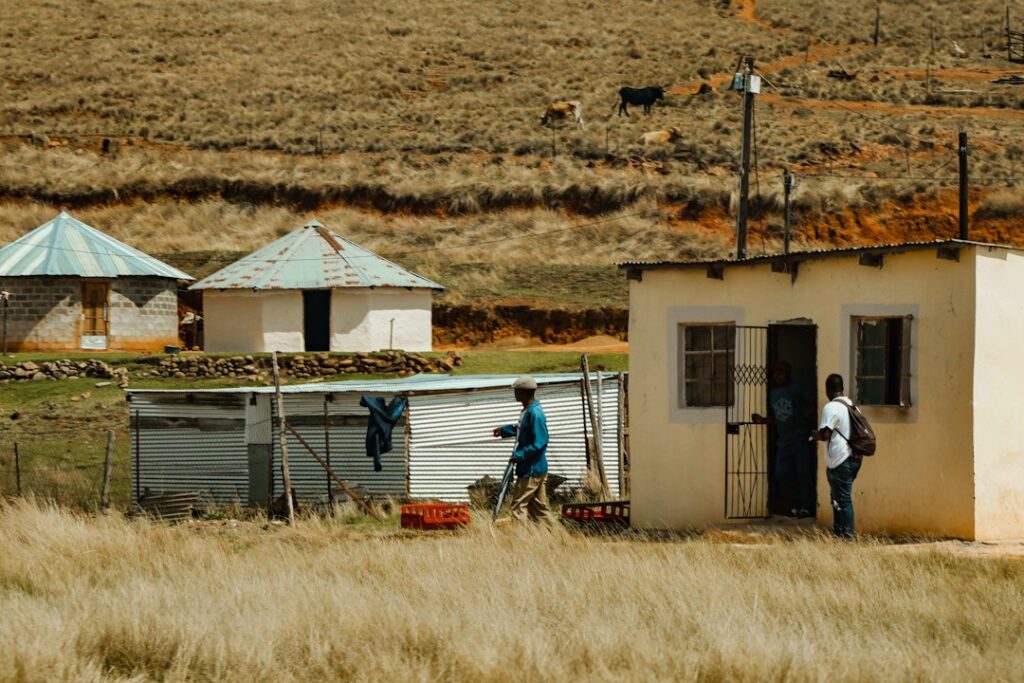
Illustrative landscape photograph of solar panels in Africa. Photographer: Jennifer Coffin-Grey / Unsplash. The location is not identified as Nigeria; this image does not depict the REA-Jaiz Bank signing or a project financed by this agreement.
Nigeria’s Rural Electrification Agency (REA) and Jaiz Bank have signed a memorandum of understanding for a N100 billion financing facility to support renewable energy developers, taking the agency’s reported local financing arrangements for the sector to N450 billion.
The agreement is intended to improve access to domestic capital for companies developing electricity projects in underserved communities. Under the arrangement, Jaiz Bank will support the financing needs of renewable energy developers, while the REA will facilitate the relevant grant agreements.
The agency’s Managing Director, Abba Aliyu, said the partnership would strengthen the pool of local financial institutions supporting decentralised energy projects. He welcomed Jaiz Bank as a new participant alongside Lotus Bank, FCMB, Stanbic IBTC and Alpha Morgan.
“Access to financing is key to reaching this N450bn milestone,” Aliyu said at the signing.
The N450 billion figure was announced by the REA in connection with the new agreement. It describes the agency’s local financing arrangements and facilities. The announcement does not establish that the entire amount has already been drawn down or converted into completed electricity connections.
How the financing arrangement will work
The REA said the Jaiz Bank facility would support the financing requirements of renewable energy developers, including companies working to expand electricity access in areas that are underserved by the national grid.
The agency will facilitate the grant agreements associated with eligible projects. The combination of bank financing and REA-backed grants is intended to help developers address funding constraints as they move projects towards implementation.
The partnership adds Jaiz Bank to a group of Nigerian financial institutions that have entered financing arrangements with the REA. The agency identified Lotus Bank, FCMB, Stanbic IBTC and Alpha Morgan as existing partners.
The agreements form part of a wider effort to mobilise domestic capital for distributed renewable energy. The REA is the Federal Government agency responsible for extending electricity access to unserved and underserved communities. Its programmes include the Distributed Access through Renewable Energy Scale-up (DARES) project, which has World Bank support.
The new facility is not a government grant to households and should not be confused with a completed power project. It is a financing arrangement intended to support developers. Actual connections depend on projects progressing through the relevant financing, grant and implementation stages.
Projects cited by the agency
Aliyu said the REA’s work involved both raising finance and delivering electricity infrastructure. He cited recently commissioned projects at the Federal University of Lafia, Oke-Oyi in Kwara State, and communities in Kano State.
The projects included a 1.6-megawatt interconnected mini-grid at the Federal University of Lafia, a 581-kilowatt-peak installation at Oke-Oyi, and a combined 265-kilowatt-peak capacity at Ballagaza and Marayar Rogo in Warawa Local Government Area of Kano State.
The projects were commissioned by the Minister of Power, Joseph Tegbe. They are separate examples of the agency’s work and were not identified as projects financed by the new Jaiz Bank facility.
The REA said the bank partnership would help developers overcome funding constraints and move proposed electricity projects towards implementation. Jaiz Bank’s Managing Director, Haruna Musa, described reliable electricity as important to economic growth and said the facility could help extend access to communities that remain underserved.
A larger funding task remains
Nigeria continues to face a substantial electricity access and reliability challenge. The REA’s work includes grid extension, mini-grids and standalone solar systems, with private developers and financial institutions playing a role in delivering projects beyond the reach of conventional grid infrastructure.
The N100 billion agreement is therefore an additional financing channel rather than evidence that the national electricity gap has been closed. The REA’s reported N450 billion total is a measure of local financing arrangements, not a statement that N450 billion has already been spent on completed infrastructure.
The agreement also reflects collaboration between a federal implementing agency and a domestic bank, building on earlier arrangements with other Nigerian lenders. Its practical value will be measured by the projects that secure financing, reach construction and deliver reliable electricity to households, businesses and public institutions.
The REA and Jaiz Bank have set out the financing roles under the memorandum. The next test will be how quickly eligible developers can use the facility and associated grants to move projects into delivery.
Illustrative image: solar panels in an African landscape. Photographer: Jennifer Coffin-Grey / Unsplash. The location is not identified as Nigeria; the image does not depict the REA-Jaiz Bank signing or a project financed by this agreement.