President Bola Tinubu has received the Constitution (Sixth Alteration) Bill that would allow Nigeria’s 36 states to establish their own police services and will review it with the Attorney-General of the Federation, Lateef Fagbemi, before signing, the President’s Chief of Staff, Femi Gbajabiamila, said on Wednesday, 18 November.
The bill was formally transmitted to Tinubu by his Special Advisers on Senate and House of Representatives Matters, Senator Basheer Lado and Dr Wasiu Olanrewaju-Smart. Its arrival at the Presidency follows approval by all 36 State Houses of Assembly and a Senate resolution directing the Clerk to the National Assembly to send the measure to the President for assent.
Gbajabiamila, who also chairs the Presidential Working Group on State Police, said: “Tinubu will review the Constitution Alteration Bill in consultation with the Attorney-General of the Federation.” He said the President would then assent to it at a formal signing ceremony. The statement did not give a date for that ceremony.
The development moves the proposal into the presidential stage of the constitutional process. It does not, by itself, mean that state police services have been established or can begin operating.
How the bill reached the Presidency
The proposal is the Constitution of the Federal Republic of Nigeria (Sixth Alteration) Bill, 2026. It seeks to amend the 1999 Constitution to provide for State Police Services as part of Nigeria’s national policing structure.
The Senate passed the measure on 24 June 2026, while the House of Representatives approved it on 23 July. It was then sent to the 36 state legislatures for consideration under Section 9(2) of the Constitution.
The Clerk to the National Assembly, Kamoru Ogunlana, announced on 16 November that all 36 assemblies had approved the amendment. That is 12 more than the minimum of 24 state assemblies, or two-thirds of the federation, required under the constitutional provision.
On Wednesday, Senate Leader Opeyemi Bamidele moved a motion asking the Senate to direct the Clerk to transmit the verified bill to Tinubu for assent. The Senate adopted the motion. It also urged the Executive to forward a separate National Policing Bill to the National Assembly for legislative scrutiny and passage.
The Senate’s action followed the completion of the state approval stage. The formal delivery to Tinubu, confirmed later on Wednesday by Gbajabiamila, is a further procedural step and should not be confused with the earlier announcement that the bill was ready for transmission.
A second bill is still being prepared
Gbajabiamila said the Presidential Working Group on State Police, supported by the Policy Advisory Committee, had conducted stakeholder engagements and consultations across the country while developing a draft National Policing Bill.
That draft has been submitted to the Federal Ministry of Justice for legislative drafting validation. Once the validated version is returned, the working group will review it and present it, together with its report, to the President for consideration.
The distinction between the two measures is important. The Constitution (Sixth Alteration) Bill provides the proposed constitutional basis for State Police Services. The separate National Policing Bill is intended to provide the legislative and operational framework for the new arrangement.
The National Policing Bill is therefore not at the same stage as the constitutional amendment. The Presidency’s statement places the draft at the Ministry of Justice for validation, while the Senate has asked the Executive to send the completed bill to lawmakers for consideration.
The work that remains
The proposed change has involved the National Assembly, the 36 state legislatures and the Presidency. The Senate and House of Representatives passed the constitutional amendment, state assemblies considered it, and the National Assembly’s administrative office verified the state resolutions before transmission.
Tinubu’s support has also been part of the process. In its resolution on Wednesday, the Senate acknowledged his backing for the proposal. Gbajabiamila said the President appreciated the contributions of the Senate President, the Speaker of the House of Representatives, lawmakers, the Clerk to the National Assembly, state governors and the 36 state assemblies.
The next immediate step is the President’s review and assent. The separate National Policing Bill must also complete its validation process and be considered by the National Assembly before the proposed system has its full legislative framework.
The announcement is therefore a significant procedural advance, but it is not the start of state police operations. The constitutional amendment has reached the President, while the supporting legislation remains under preparation.
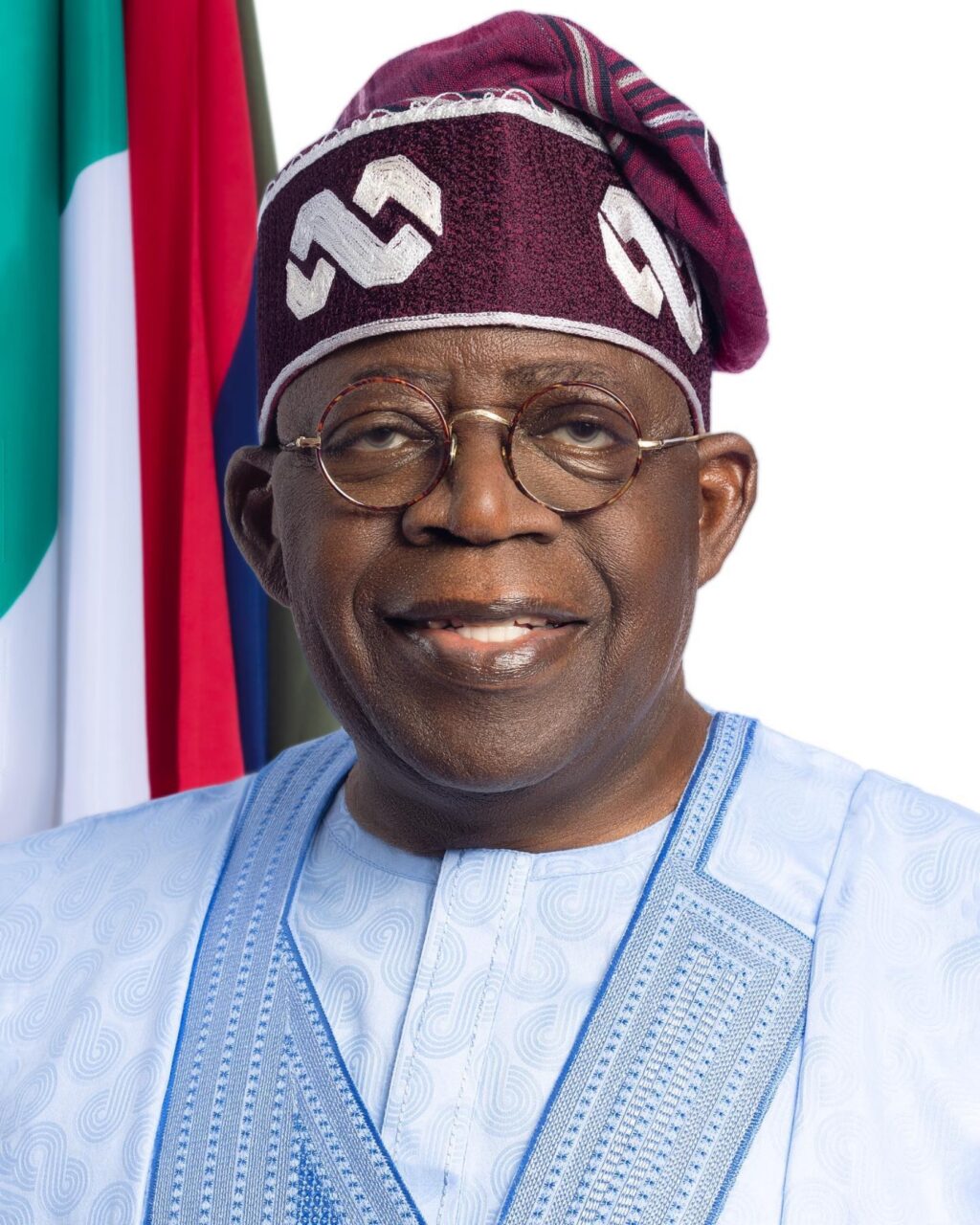
Archive portrait of President Bola Tinubu, photographed by Nosa Asemota on 29 May 2023. Licensed under CC BY-SA 4.0 via Wikimedia Commons. The photograph does not depict the 18 November 2026 transmission.