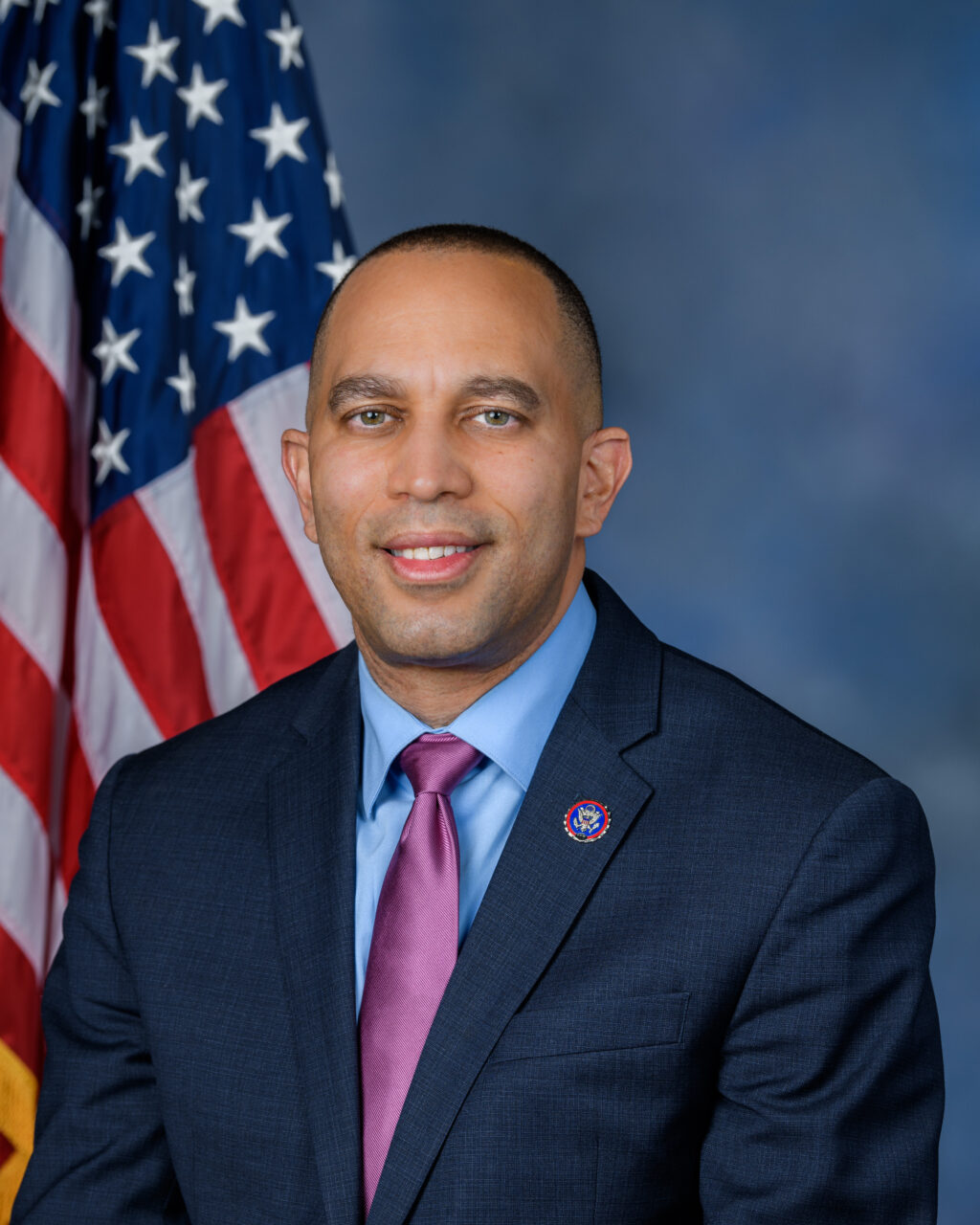
Official portrait of Hakeem Jeffries, photographed in 2021. Source: Office of Representative Hakeem Jeffries via Wikimedia Commons. Public-domain US government photograph.
Democrats have nominated Hakeem Jeffries to become Speaker of the US House of Representatives, giving the New York Democrat a clear route to a historic leadership role when the new Congress meets in January.
Jeffries secured 251 votes to 11 in a closed-door ballot of the incoming House Democratic Caucus on Wednesday, 18 November. He ran without an opponent. The nomination does not make him Speaker: the full House must elect its presiding officer when the 120th Congress convenes on 3 January 2027, and a candidate needs at least 218 votes.
If elected, Jeffries would become the first Black lawmaker to hold the speakership. The office is one of the most powerful positions in Washington, with responsibility for the House’s legislative agenda and a place third in the line of succession to the presidency, after the Vice-President.
The result follows the Democrats’ return to control of the House in the 3 November midterm elections. Reuters reported that the party was expected to enter the new Congress with at least 257 seats, although several races were still being counted. The incoming majority gives Jeffries a strong starting position, but the 11 votes against his nomination show that he will have to manage competing demands inside his own party.
Seven incoming progressive Democrats who opposed him said in a joint statement that discussions with the leader had produced progress but that “there is still work to be done” to secure commitments on the direction of the party. They cited Medicare for All, the treatment of immigrants by Immigration and Customs Enforcement, campaign finance and US policy towards Gaza.
The dissenters said their conversations with Jeffries had been conducted in good faith and would continue. The statement named no rival candidate and said discussions would continue, while making clear that some newly elected members want the leadership to reflect the positions they took to voters.
Jeffries had spent the days before the ballot meeting with the different groups in the caucus and speaking to members-elect. Before the vote, he said he was not taking the outcome for granted. Asked about the discussions, he told reporters: “I embrace those conversations.”
The nomination was unopposed, but the vote exposed a debate about how Democrats should use their new majority. Some progressives want a more assertive approach on healthcare, immigration enforcement and the conflict in Gaza. Other members have emphasised affordability, oversight of the Trump administration and the need to show that the party can govern after its election gains.
Jeffries has led House Democrats since 2023, taking over after Nancy Pelosi stepped aside from the party leadership following the 2022 midterm defeat. Pelosi, Steny Hoyer and James Clyburn had formed the previous generation of senior Democratic leaders. Their departure opened the way for Jeffries and a younger leadership group, although Clyburn remains an influential figure and was among those who nominated Jeffries on Wednesday.
The caucus also nominated its wider leadership team. Katherine Clark is set to become majority leader and Pete Aguilar majority whip, while Ted Lieu was chosen as caucus chair. If the House confirms the nominations in January, Clark would be the first woman to hold the majority leader’s position and Aguilar the first Latino majority whip.
The formal Speaker election will be a separate test. Members of the House, rather than the Democratic caucus alone, choose the Speaker. Jeffries will need 218 votes on the floor, and the result will depend on the final composition of the chamber and whether the incoming majority remains united when lawmakers take their seats.
The Republicans have also begun choosing their leadership for the new Congress. They nominated Judiciary Committee chairman Jim Jordan to lead their conference after Mike Johnson said he would not seek to lead the party in the minority. The change means the January contest will take place against a new balance of power on both sides of the House.
The Speaker’s role extends beyond party management. The office controls much of the House’s legislative timetable, has a central part in deciding which bills reach the floor and represents the chamber in dealings with the President and the Senate. The position also carries constitutional significance because the Speaker is third in the line of succession to the presidency.
For Jeffries, the caucus vote is therefore a major step, not the final one. His nomination gives Democrats a candidate to lead their incoming majority, while the opposition from seven progressives sets out some of the policy questions he will face before and after the full House votes in January. The next formal decision belongs to all members of the House when the new Congress opens on 3 January.