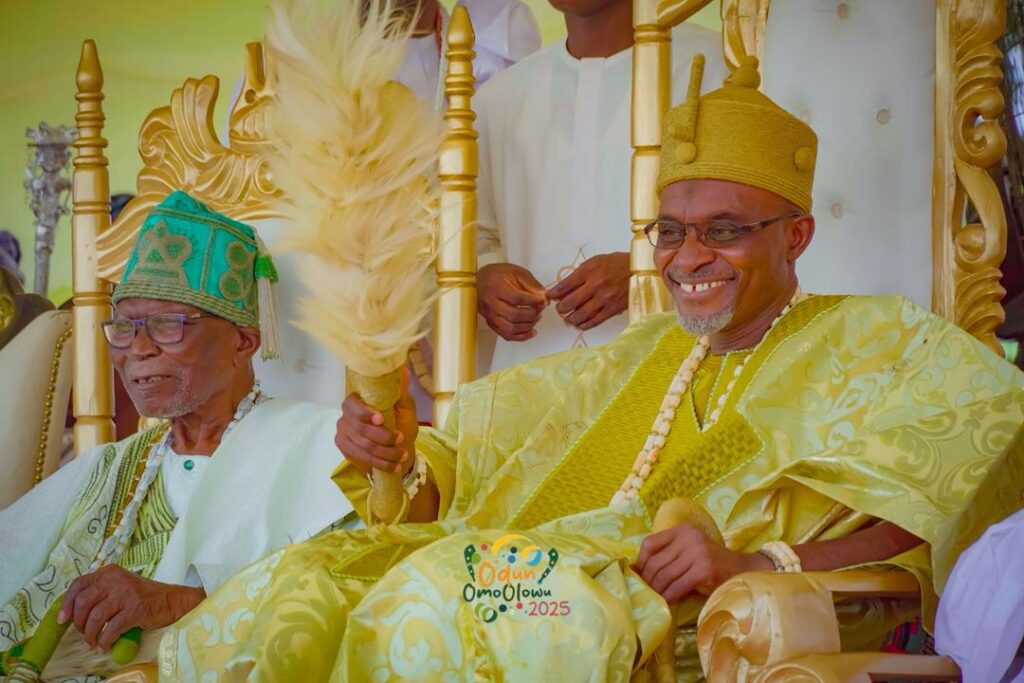
Owu sons and daughters at home and abroad are being invited back to Abeokuta as Odun Omo Olowu 2026 opens on Monday, 19 October, beginning a 13-day celebration of heritage, unity and community development that will continue until 31 October.
The Owu Palace has announced “Awakening to Action: Strengthening the Owu Legacy” as the theme of this year’s festival. Alayeluwa Oba Saka Adelola Matemilola, Oluyalo Otileta VII, the Olowu of Owu, described heritage as a responsibility shared across generations and called on royal fathers, high chiefs, Owu people and friends of the kingdom to participate.
“Heritage is a trust placed in our hands,” the monarch said in his official welcome message. He urged Owu people, wherever they live, to remember their connection to home and contribute to the development of the kingdom.
A homecoming rooted in harvest and identity
Odun Omo Olowu is the principal annual festival of the Owu people. Its name speaks directly to its homecoming purpose, bringing together those regarded as sons and daughters of the Olowu and strengthening relationships between the palace, Owu townships and communities in the diaspora.
The official history published by Owu Kingdom connects the celebration to the period after the yam harvest. Traditionally, the festival calendar is fixed in consultation with the Olowu before preparations pass to designated traditional custodians. Its core observances have included an opening watch-night, a day of rest, new-yam rites and the outing of the Otomporo masquerade.
Those historical practices explain why the festival is more than a social gathering. It is a public expression of continuity, gratitude and belonging. However, visitors should not assume that every traditional element described in the historical record will follow the same sequence in 2026. The Palace has confirmed the overall dates and theme but has not yet published a complete day-by-day programme, event times or venue list on its official website.
From celebration to practical action
This year’s theme places unusual emphasis on what happens after the drums, costumes and homecoming celebrations. The Palace says the festival should encourage stronger community institutions, opportunities for young people, support for enterprise and the preservation of Owu cultural identity.
That message reflects recent work around the palace. In the weeks before the festival, the League of Olori Owu and the Oba Matemilola Oluyalo Otileta VII Foundation held a girls’ rights and education programme in Papalanto. The Palace also established a committee to improve the quality and reliability of official publications and progress reports across the kingdom.
Other recent initiatives have included support for enterprise and skills development, youth engagement, the installation of a new Baale for Owu Banjoko and discussions about creating a display and sales space for adire fabrics and apparel within the Palace. Taken together, the programmes show how a traditional institution can use a cultural festival to connect memory with present-day social and economic needs.
The Palace has also strengthened its digital presence, using its official website to document Owu history, royal engagements and development activities. For Owu people living outside Abeokuta or Nigeria, this offers a more direct link to verified information and reduces dependence on unconfirmed social-media messages.
What visitors should know
The festival will run in Owu Kingdom, Abeokuta, from 19 to 31 October. The Palace invitation is addressed to Owu sons and daughters, royal fathers, chiefs, friends of the kingdom and well-wishers, indicating that the celebration is intended as a broad community homecoming rather than a closed palace occasion.
Anyone planning to attend should confirm the venue and start time for each activity through the official Owu Kingdom website or an authorised Palace announcement before travelling. This is especially important because an earlier third-party report gave a different commencement date, while the Palace’s newer announcement consistently states 19 to 31 October.
Visitors should also plan for movement within Abeokuta, allow time for possible traffic around major gatherings and respect any instructions issued by traditional custodians or event organisers. Photography may be restricted during sacred or ceremonial moments, so permission should be requested rather than assumed.
Why the festival matters
Odun Omo Olowu demonstrates how festivals can preserve history while supporting contemporary development. The celebration gives families an opportunity to pass names, stories, praise poetry, customs and community memory to younger generations. It also creates activity for transport providers, food vendors, textile makers, performers, photographers, hospitality businesses and other local enterprises.
Its diaspora dimension is equally important. Earlier in 2026, Owu indigenes held a separate Odun Omo Olowu celebration in London, strengthening the link between the kingdom and descendants living abroad. The Abeokuta programme now offers another point of reconnection, bringing cultural belonging and practical community responsibility into the same conversation.
For the Palace, the central message is that heritage should produce service, unity and measurable progress. For residents and visitors, the coming days offer an opportunity to encounter Owu history not as a distant account, but as a living tradition carried by people, institutions and collective action.
Podium News will continue to monitor official Palace channels for the detailed 2026 programme, including venue and timing updates. Prospective visitors should consult those verified announcements before setting out and support local cultural and creative businesses responsibly during the festival.