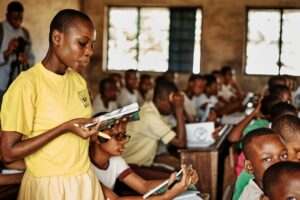
Nigeria has launched a ₦2 billion school-retention programme for 100,000 learners alongside the distribution of two million packs of sanitary towels and learning materials to girls in public basic education schools across the country.
The linked interventions were unveiled in Abuja on Monday, 12 October, as part of activities marking the 2026 International Day of the Girl Child. They are intended to reduce financial and menstrual-health barriers that can keep children, particularly girls in rural and low-income communities, away from the classroom.
Under the first phase of the Learners Retention Support Programme, each selected beneficiary is expected to receive ₦20,000. The Universal Basic Education Commission said the ₦2 billion allocation would support attendance and retention among 100,000 learners facing financial pressure.
The menstrual-health intervention, called Flow with Confidence 2.0: Keeping Every Girl in School, covers all 36 states and the Federal Capital Territory. UBEC said the sanitary products would be distributed with school bags, shoes, exercise books, mathematical sets and writing materials.
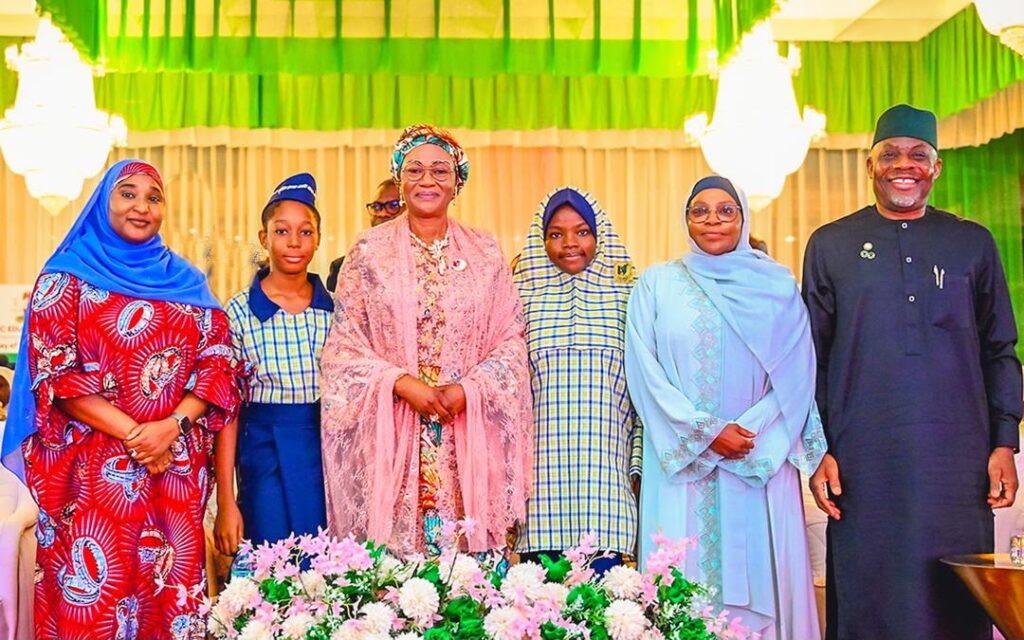
First Lady Oluremi Tinubu, who launched the programmes at the State House Conference Centre, said no girl should lose the opportunity to learn because her family could not afford sanitary products or basic educational materials.
She said the intervention was designed to address a practical problem faced by girls who miss lessons during menstruation, especially in rural communities where families may struggle to meet recurring household and school costs.
From a campaign to an annual commitment
The new distribution expands an initiative launched by the Renewed Hope Initiative in October 2025. According to officials, that first phase provided a one-year supply of disposable sanitary pads to 370,000 schoolgirls in rural communities.
The significant development in the second phase is the Federal Ministry of Education’s stated intention to make menstrual-health support part of the public basic education system rather than treating it as a single ceremonial distribution.
Education Minister Tunji Alausa said UBEC would include sanitary-product support in its annual budgets. He also said the World Bank-supported Adolescent Girls Initiative for Learning and Empowerment would continue menstrual-hygiene assistance during the life of that project.
If implemented consistently, the approach could provide a more reliable response than occasional donations. Menstruation is a recurring need, and school attendance cannot be protected by supplies that arrive once but are not replenished.
UBEC Executive Secretary Aisha Garba said the programme’s message was that no girl should have to choose between dignity and education. She urged state governments, State Universal Basic Education Boards, community leaders and development partners to ensure that the materials reached the intended pupils.
The distribution challenge will be considerable. Two million packs must move through federal and state systems to schools across urban centres, remote rural communities and areas affected by insecurity. Public reporting on allocations, delivery dates and beneficiaries will be necessary to establish whether the intervention reaches the girls for whom it was designed.
Why retention matters
Getting a child enrolled is only the beginning of education policy. Families must also be able to keep that child in school through periods of financial stress, health challenges and social pressure.
For girls, missed lessons can accumulate until a temporary absence becomes disengagement and, eventually, permanent withdrawal. UBEC Governing Board Chairman Tanko Al-Makura linked repeated absence and school dropout with the risk of early marriage, particularly in households where girls’ education is treated as less urgent when money is scarce.
The latest intervention arrives as communities and civic organisations continue to find local ways of returning girls to education. Podium News recently reported on a Kaduna classroom initiative for married adolescent girls, showing how flexible learning arrangements can reopen opportunities after formal education has been interrupted.
The national programme addresses an earlier point in that cycle. By helping with menstrual products, school materials and direct financial pressure, it seeks to prevent avoidable absence before a learner drops out.
The public-interest test, however, will be implementation. Officials have not yet published detailed beneficiary-selection criteria for the ₦20,000 support, a state-by-state allocation schedule or the timetable for completing distribution. Clear rules will be important to prevent political patronage and ensure that the poorest learners are not displaced by better-connected applicants.
Accountability must accompany distribution
Mrs Tinubu called on state first ladies, education commissioners and SUBEB chairmen to ensure transparency. Traditional rulers, religious leaders and parents were also asked to challenge menstrual stigma and support girls who need help.
Those commitments should be followed by accessible records. UBEC and state boards could publish the number of schools served, packs delivered and learners supported in each state. Schools should also have confidential ways for pupils and parents to report shortages, exclusion or demands for unofficial payment.
Quality matters alongside quantity. Products must be safe, suitable and supplied in amounts that provide meaningful support. Learning materials should match the ages and needs of recipients, while the cash component should reach verified beneficiaries through traceable channels.
Schools also need usable toilets, water and safe disposal facilities. Sanitary products can help a girl attend class, but they cannot remove the full barrier if her school lacks the privacy and hygiene infrastructure required to manage menstruation safely.
The programme is therefore best judged as part of a wider retention strategy, not simply by the number of packs handed over at a launch event. Its success will be reflected in attendance, reduced dropout and the confidence of girls who can continue learning without shame or preventable interruption.
Nigeria has committed resources and national reach to the problem. The next responsibility belongs to UBEC, state education authorities and local communities: make every allocation visible, deliver every promised item and show that practical support can keep more children in school.
Parents, teachers and education advocates should monitor the rollout in their states and report gaps through their State Universal Basic Education Boards.