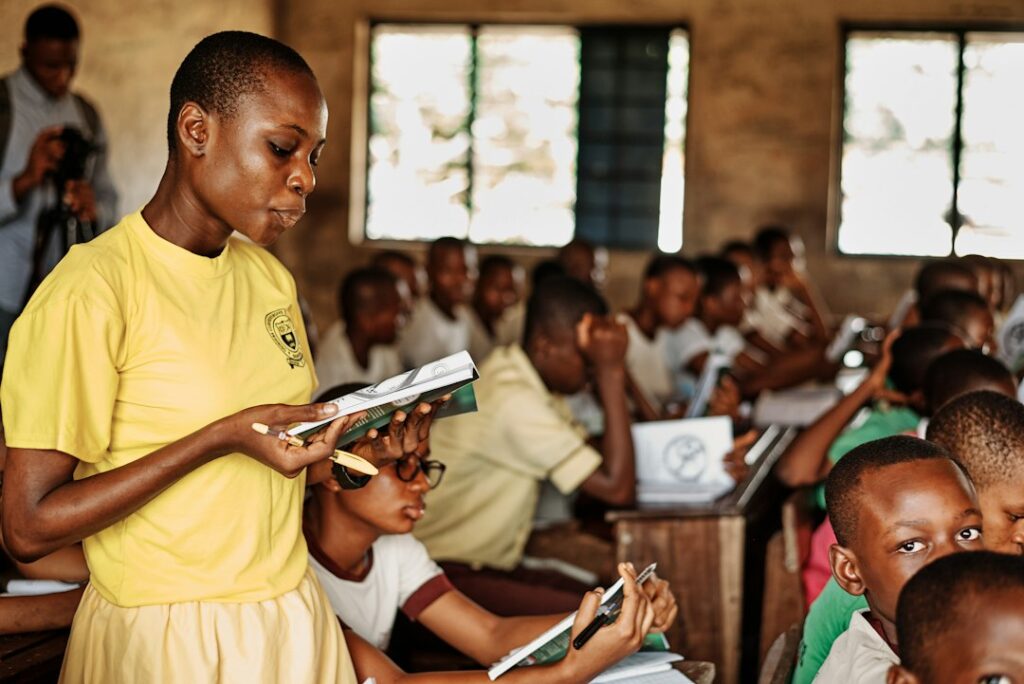
A small community learning programme in northern Kaduna is giving married adolescent girls and young mothers a route back into education after early marriage, teacher shortages and family expectations ended their formal schooling.
The classes in Bugau, Damau ward of Kubau Local Government Area, bring learners together four times a week for lessons in Hausa and English literacy. Sessions run from 8.30am to 10am, a timetable designed to fit around childcare, trading and household responsibilities.
The initiative grew from the efforts of three married adolescent girls who had themselves left school. After receiving literacy and education training from Participatory Communication for Gender Development Initiative, known as PAGED Initiative, they began visiting homes and encouraging other married women to return to learning.
Their work secured support from husbands, a local teacher and the traditional leader of Bugau. What began as a grassroots response to lost educational opportunity has become a practical example of how a community can reopen a door that many girls believed had closed permanently.
Learning that changes daily life
For the women attending, progress is measured in ordinary tasks that carry unusual significance. Learners who could not previously identify English letters can now spell their names. Others say they can write shopping lists, recognise telephone numbers and help their children with schoolwork.
One participant, 21-year-old Habiba Ibrahim, told the News Agency of Nigeria that she completed primary school but was prevented by local customs from proceeding to secondary education. After joining an adult literacy class, she said her ability to read and write Hausa had improved.
Another learner said women who could not read once depended on younger relatives to identify telephone numbers and explain who had called. Acquiring basic literacy has reduced that dependence and strengthened their confidence in handling daily tasks.
The effect could extend beyond the classroom. Mothers are often the first people children turn to for homework support, school attendance and encouragement. A literate parent is better placed to follow a child’s progress and to challenge the idea that education is less valuable for girls.
A problem larger than one village
The Bugau programme operates against a difficult state-wide picture. The 2021 Nigeria Multiple Indicator Cluster Survey, conducted by the National Bureau of Statistics as part of UNICEF’s global programme, found that 45.3 per cent of women aged 20 to 49 in Kaduna had entered marriage or a union before their eighteenth birthday. It reported that 18.3 per cent had done so before turning 15.
A 2026 Kaduna State mapping exercise, cited in the News Agency of Nigeria’s report, identified 187,719 children aged three to 17 who were out of school across the state’s 23 local government areas. Boys represented 57 per cent and girls 43 per cent. The exercise found that 60.2 per cent had never enrolled, while 39.8 per cent had enrolled and later dropped out.
More than half of the children identified were in Kaduna North Senatorial Zone. The figures show why a village literacy class matters, but also why isolated community action cannot carry the burden alone. Early marriage, distance to schools, shortages of teachers, poverty and social expectations can reinforce one another, leaving girls with few realistic ways to continue their education.
The young women who helped establish the Bugau class described schooling that had already become fragile before marriage. One said teachers travelled into her village only occasionally and eventually stopped coming. Others reached junior secondary school before marriage ended their attendance.
Space and teachers remain scarce
Demand has exposed the programme’s limitations. The traditional leader initially allowed lessons to be held in his home, but the space became too small as more women joined. The class then moved between religious and government school premises, where access was restricted by regular school schedules and holidays.
Community leaders are now considering how to secure exercise books, writing materials, books and a whiteboard. They also want more than one teacher so learners can receive stronger support across different subjects.
These are modest requirements, yet they will decide whether the programme becomes durable or remains a short-lived intervention. A secure classroom, predictable access to trained teachers and basic learning materials would give the women continuity. Links to recognised adult education or second-chance schooling could also help learners progress beyond basic literacy.
Government agencies and education partners should treat initiatives such as Bugau’s as a bridge into the formal system, not a substitute for it. Community trust can bring learners through the door, while public policy can provide trained staff, safe facilities, flexible timetables and pathways to recognised qualifications.
A second chance worth protecting
The most important achievement in Bugau is not simply that married teenagers are sitting in a classroom. It is that learners who were once told education had little value for them have organised, recruited their peers and won local backing for a different future.
Their progress also challenges the assumption that marriage or motherhood must permanently end a girl’s education. With flexible support and a safe learning environment, second-chance education can improve independence, family wellbeing and children’s prospects.
Readers, community organisations and education authorities can support credible second-chance programmes by providing learning materials, trained teachers and safe, dependable classroom space. The Bugau learners have already supplied the determination. The next task is to ensure that determination has somewhere permanent to grow.