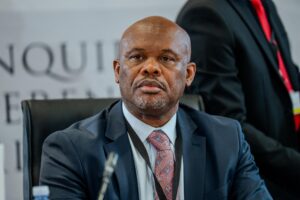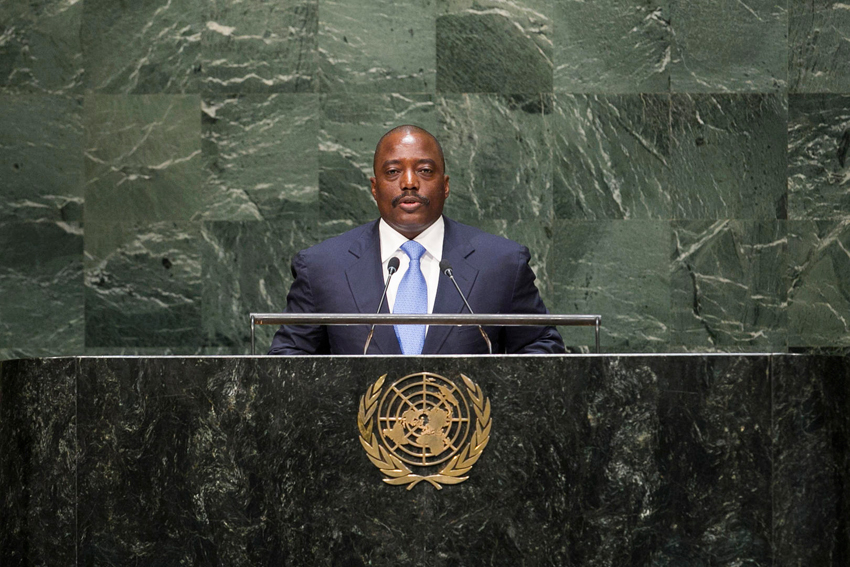
Former Democratic Republic of Congo president Joseph Kabila has launched a new political and military coalition incorporating leading figures from the M23 insurgency, escalating his confrontation with President Félix Tshisekedi and placing further pressure on already fragile peace efforts in eastern Congo.
The Front for the Refoundation of the Nation, known by its French initials FRN, was announced on Monday, 12 October, at Kabila’s residence in Goma. The eastern city is held by the M23 movement after rebels captured it during a major offensive last year.
Kabila will lead the new organisation. Its four deputy leaders are Corneille Nangaa, Bertrand Bisimwa, Freddy Kaniki and Sultani Makenga, all prominent figures within the coalition that has been fighting Congolese government forces.
The announcement formalises Kabila’s most direct role yet in the rebellion. Congolese authorities had accused the former president of supporting the AFC-M23 alliance for months, allegations he previously denied. The FRN now absorbs leaders from that alliance into a structure headed openly by Kabila.
A new challenge to Tshisekedi
Claude Ibalanky, an adviser to the new coalition, said the FRN was created to coordinate groups opposed to the Tshisekedi government and restore what its founders described as the foundations of a functioning republic. He said the coalition intended to end what it called tyranny, including through the use of force.
The Congolese government did not immediately issue a formal response to the launch. The development nevertheless represents a significant political and security challenge because it joins a former head of state with an armed movement that controls important territory in one of Africa’s most strategically sensitive regions.
Kabila governed Congo from 2001 until 2019. He came to power at the age of 29 after the assassination of his father, Laurent-Désiré Kabila, and remained in office for two years beyond the formal end of his constitutional mandate after elections were delayed.
Félix Tshisekedi succeeded him following the disputed December 2018 election. Their relationship later deteriorated as Tshisekedi removed Kabila’s allies from the ruling coalition and consolidated control of state institutions.
Nangaa, one of the FRN’s new deputies, previously headed Congo’s electoral commission during the 2018 vote. He later became the leader of the Congo River Alliance, the political organisation associated with M23.
Peace talks face another obstacle
The formation of the FRN could complicate negotiations intended to end the conflict. Under pressure from the United States, the Congolese government and AFC-M23 representatives entered direct talks in Doha. Fighting has continued despite diplomatic efforts and several ceasefire initiatives.
The shift from the AFC-M23 label to a coalition led by Kabila may require mediators to reconsider who speaks for the armed movement and whether earlier undertakings still apply. It also turns the dispute more clearly into a contest over national political power, rather than a conflict presented only around security grievances in the east.
Yvon Muya, a researcher at the University of Ottawa, said the announcement signals a direct confrontation between Kabila and Tshisekedi. He warned that the integration of AFC-M23 leaders into a new formation could jeopardise the Doha process and increase the risk of military escalation.
M23 is one of about 100 armed groups operating in eastern Congo, a mineral-rich area bordering Rwanda. The United Nations, the United States and Congolese authorities accuse Rwanda of supporting and exercising influence over the rebels. Rwanda denies backing the insurgency.
The former president’s new role also follows serious legal and diplomatic action against him. A Congolese military court sentenced Kabila to death in absentia last year after convicting him of treason, war crimes and crimes against humanity over alleged support for the AFC-M23 rebellion. Kabila denied the accusations and described the case as politically motivated.
In April, the United States imposed sanctions on him for what Washington described as material support to armed groups destabilising eastern Congo.
Civilians remain caught in the conflict
The political struggle is unfolding within one of the world’s gravest humanitarian emergencies. The United Nations refugee agency says 6.9 million people are internally displaced across the Democratic Republic of Congo, including more than five million in eastern provinces.
Successive offensives have forced families to flee repeatedly, disrupted farming and trade, and limited access to food, health care and education. Armed control of roads and mining areas has also exposed civilians to extortion, forced recruitment and violence.
The launch of another coalition does not by itself change conditions for those communities. Its consequences will depend on whether it leads to renewed fighting, shifts the balance of power or creates a new political channel for negotiations.
There is also a risk that rival leaders will focus on control of territory and state power while the needs of displaced people receive less attention. Any credible settlement will have to address civilian protection, humanitarian access, the return of displaced families and accountability for abuses, not simply the allocation of political offices.
What happens next
The immediate questions are whether other opposition groups will join the FRN, how Congolese forces will respond and whether regional and international mediators will recognise the coalition as a negotiating party.
Kabila’s decision to head the organisation makes it more difficult for him to remain at a distance from the armed campaign. It also raises the stakes for Tshisekedi, who must respond without deepening a conflict that has already outlasted repeated regional and international interventions.
The strongest test will be what follows the declaration in Goma. If the FRN expands military operations, civilians in the east could face another wave of displacement. If it seeks negotiations, mediators will need to establish clear terms, accountability and guarantees that any settlement serves communities affected by the war.
Readers across Africa should follow developments in eastern Congo closely. The crisis affects regional security, cross-border trade, humanitarian movement and access to minerals used in global technology supply chains.
What do you think? Can renewed diplomacy contain this confrontation, or does Kabila’s new coalition make a wider escalation more likely? Share your view with Podium News.