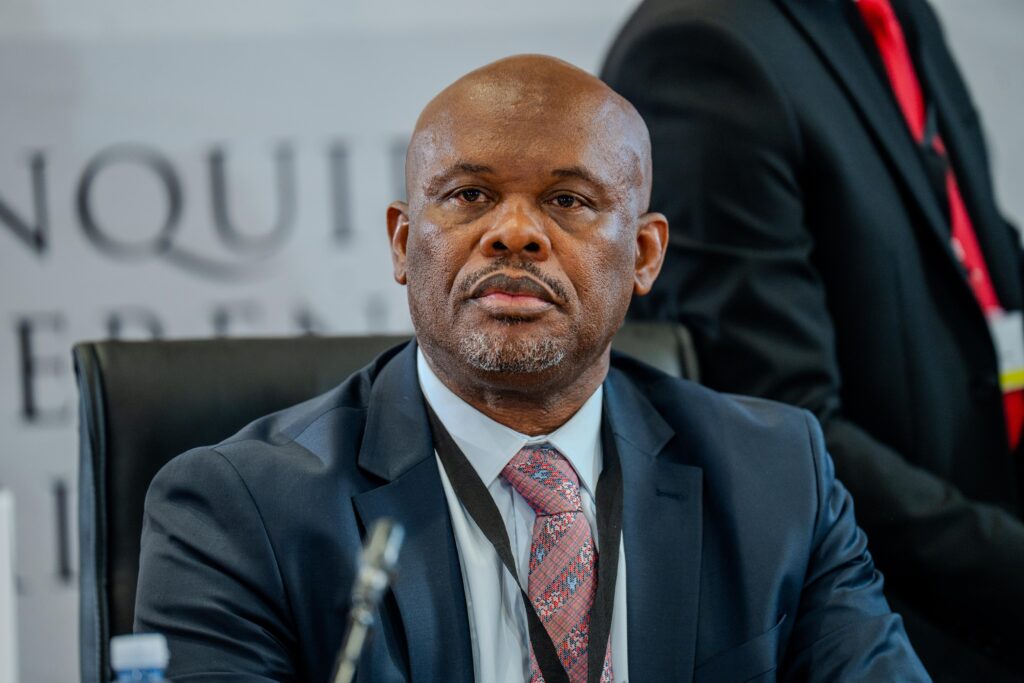
South Africa’s suspended deputy national police commissioner, Shadrack Sibiya, has resigned while facing criminal charges and scrutiny from a judicial inquiry examining alleged corruption, political interference and organised-crime influence within the country’s justice system.
Sibiya’s lawyers submitted his resignation on Monday, 12 October, at the start of a disciplinary hearing that had been scheduled by the South African Police Service. Police spokesperson Athlenda Mathe said the service regarded his departure as a dishonourable discharge because the disciplinary case was still active when he resigned.
The former deputy commissioner for crime detection has been suspended since September 2025. He is currently in custody following his arrest last month on charges that include rape and the alleged grooming of a minor. He has denied wrongdoing, and the allegations have not been determined at trial. His bail application was due to return to court on 13 October.
The resignation removes one of South Africa’s most senior police officers from the service, but it does not end the criminal proceedings or the wider examination of his conduct. It also arrives at a sensitive moment for a police force under intense pressure to show that senior rank does not place an officer beyond accountability.
A resignation during an unfinished disciplinary case
Sibiya had been expected to answer an internal misconduct case when his legal team delivered the resignation letter. Mathe said that because the process was unresolved, his exit would be recorded as a dishonourable discharge.
That distinction matters. A voluntary retirement can allow an official to leave quietly, while a recorded dishonourable departure signals that serious institutional questions remained outstanding. Police authorities will still need to explain what happens to the evidence collected for the disciplinary proceedings and whether any findings will be preserved for other investigations.
The criminal charges must be handled separately under South African law. Sibiya retains the presumption of innocence and is entitled to challenge the prosecution’s evidence in court. The identity and welfare of any minor connected to the case must also remain protected.
For the public, the larger test is whether investigators and prosecutors can proceed independently when the accused person previously held authority over national crime detection. Clear safeguards are needed to prevent real or perceived interference with witnesses, evidence and police records.
Madlanga inquiry keeps the wider questions open
Sibiya has also appeared before the Madlanga Commission of Inquiry, which is investigating alleged criminality, political interference and corruption in South Africa’s criminal justice system. The commission is chaired by retired Constitutional Court justice Mbuyiseni Madlanga.
During the inquiry, allegations were made that Sibiya received cash and gifts from people linked to criminal networks and interfered with politically sensitive investigations. He denied those claims during his testimony and disputed suggestions that he had improper relationships with alleged criminals.
One major strand of scrutiny concerns the handling of 121 case dockets previously assigned to a task team investigating political killings in KwaZulu-Natal. Sibiya has denied acting improperly in relation to the files and has challenged accounts of his role in decisions affecting the unit.
The commission is examining a much broader institutional problem than the conduct of one official. Its mandate reaches possible cartel influence, political pressure and failures across policing and the justice system. President Cyril Ramaphosa has extended the deadline for its final report to 16 November 2026, giving the inquiry additional time to complete evidence and recommendations.
Sibiya’s resignation should not prevent the commission from reaching findings about events that occurred while he was in office. Nor should it stop Parliament, police management or prosecutors from examining any evidence that points to failures by other officials.
Public confidence is the central issue
Senior police officers exercise exceptional power. They influence which cases receive resources, who leads investigations and how evidence moves through the system. When an officer at deputy commissioner level becomes the subject of criminal and corruption allegations, the damage can extend beyond one career to public confidence in the institution itself.
That confidence is especially important in South Africa, where communities regularly confront violent crime, gender-based violence and concerns about the effectiveness of policing. Victims must be able to believe that reports will be investigated without favour, while honest officers need assurance that professional standards apply consistently across the ranks.
Restoring trust will require more than replacing Sibiya. Police leaders should disclose how his responsibilities will be reassigned, protect the continuity of sensitive investigations and cooperate fully with the commission. They should also clarify the employment and pension consequences of the dishonourable discharge within the limits of labour and privacy law.
The government must avoid treating resignation as a substitute for accountability. Internal disciplinary processes, criminal prosecutions and commissions of inquiry serve different purposes. One determines workplace conduct, another tests criminal liability, and the commission is intended to expose wider institutional failures and recommend reform.
South Africans should watch both the court proceedings and the Madlanga Commission’s final report. The lasting significance of Sibiya’s departure will depend on whether it produces transparent answers, protects complainants and witnesses, and leads to stronger safeguards against criminal or political influence in policing.