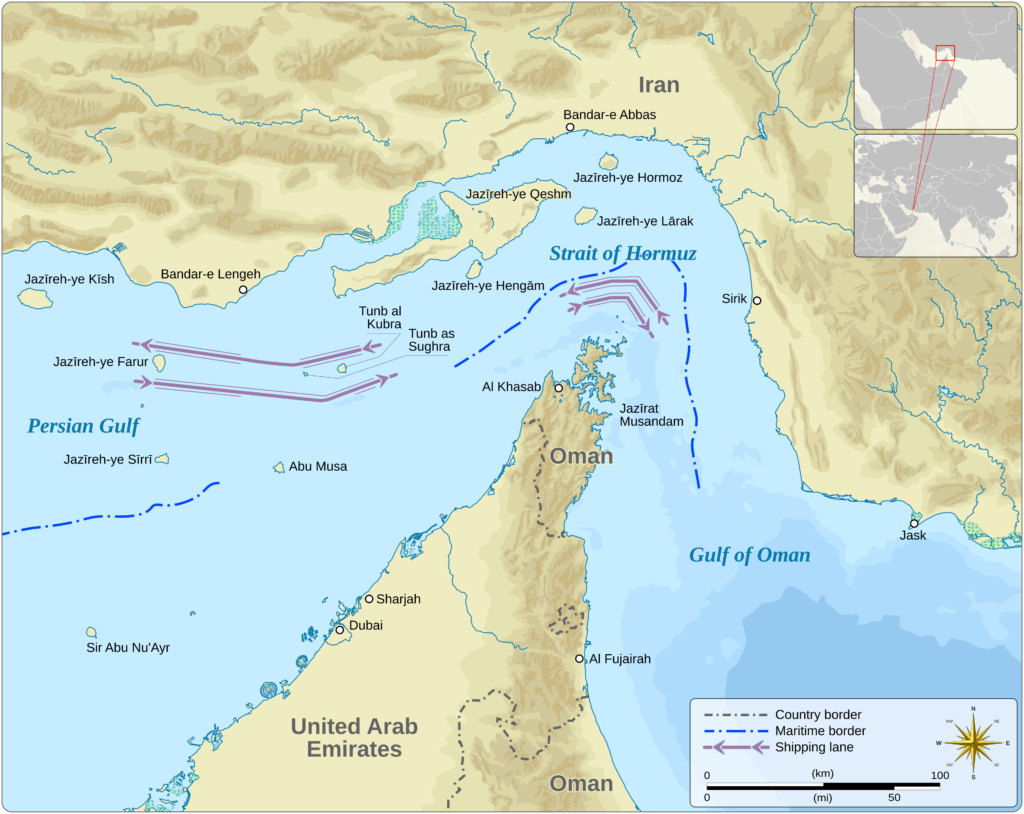
A new wave of attacks on commercial vessels has deepened the shipping crisis around the Strait of Hormuz, with crews reported safe after two ships were struck off Saudi Arabia while Iranian authorities said two oil tankers carrying about two million barrels of crude caught fire after hitting naval mines.
The incidents add to a sharp rise in attacks across the Persian Gulf, the Strait of Hormuz and nearby waters, increasing risks for seafarers and placing renewed pressure on a route that carried about a fifth of global oil and liquefied natural gas trade before the current conflict.
Two crews reported safe
The United Kingdom Maritime Trade Operations, a British monitoring organisation, said two vessels transiting the Persian Gulf off Saudi Arabia were struck on Friday. According to a report carried by the Associated Press, one tanker was fired upon with a rocket-propelled grenade from a small boat, damaging its aft port quarter. A second vessel was hit by an unknown projectile.
UKMTO said the crews of both ships were safe. The organisation did not identify the vessels, and no group immediately claimed responsibility for the attacks.
A separate incident in the Arabian Sea off Yemen involved armed men in a skiff opening fire on a tanker carrying liquefied natural gas, the Associated Press reported, citing UKMTO. There were no reported casualties and no immediate claim of responsibility.
Iranian state media, meanwhile, cited the Islamic Revolutionary Guard Corps Navy as saying that two oil tankers caught fire after striking naval mines while crossing the Strait of Hormuz. Reuters reported that the two vessels were said to be carrying about two million barrels of crude oil. Independent details about the ships, their crews and the timing of the mine incidents remained limited.
Threat spreads beyond tankers
The latest incidents follow the sinking of two commercial ships near Hormuz earlier in the week. Reuters reported that the Singapore-flagged container vessel GFS Pride and the Antigua and Barbuda-flagged dry bulk carrier Cape Dao sank after separate projectile strikes.
All 21 crew members on GFS Pride were evacuated safely and no injuries were reported, according to Singapore’s Maritime and Port Authority. One crew member was killed in the earlier strike on Cape Dao, while the remaining crew were evacuated.
Those losses underline that the danger is no longer confined to oil tankers. Container ships, bulk carriers and vessels carrying liquefied natural gas are also navigating a rapidly deteriorating security environment. That widens the possible consequences from oil prices to food supplies, manufactured goods, freight costs and marine insurance.
Reuters reported that attacks on commercial ships around Hormuz have surged over recent days. Maritime security sources and incidents reported to UKMTO pointed to at least five incidents within one 48-hour period. The US Navy-led Joint Maritime Information Center has assessed the threat to merchant shipping in the strait as severe.
Why Hormuz matters beyond the Gulf
The Strait of Hormuz is a narrow passage between Iran and Oman that links the Persian Gulf to the Gulf of Oman and the Arabian Sea. Disruption there can travel quickly through the global economy because producers including Saudi Arabia, the United Arab Emirates, Kuwait, Iraq and Qatar depend heavily on Gulf export routes.
For African economies, the danger is not remote. Higher crude prices can benefit exporters in revenue terms, but the wider effects may be painful. Nigeria, despite being an oil producer, remains exposed to movements in refined petroleum prices, shipping charges and foreign exchange demand. Airlines, manufacturers and households can also feel the impact when energy and freight costs rise.
Import-dependent African countries face an even more direct vulnerability. More expensive fuel and shipping can raise the cost of food, fertiliser, machinery and consumer goods. Longer voyages, insurance surcharges or delays at sea can add pressure to already stretched public finances and household budgets.
Attribution remains important
The rapid pace of events requires caution. Some accounts come from parties to the conflict, while the identities of attackers in several incidents have not been independently established. Claims about responsibility should therefore remain separate from verified information about damage, crew safety and the location of attacks.
That distinction matters as governments and shipping companies decide whether to reroute vessels, suspend voyages or increase naval protection. Misattribution could fuel a wider confrontation in a region already under severe strain.
The immediate priority is the safety of crews and the protection of commercial navigation. The broader test is whether regional and international powers can prevent repeated attacks from turning the world’s most important energy chokepoint into an even wider economic emergency.
Podium News will continue to track verified maritime notices, official statements and developments affecting energy and trade. Readers and industry stakeholders with confirmed information may contact the newsroom.