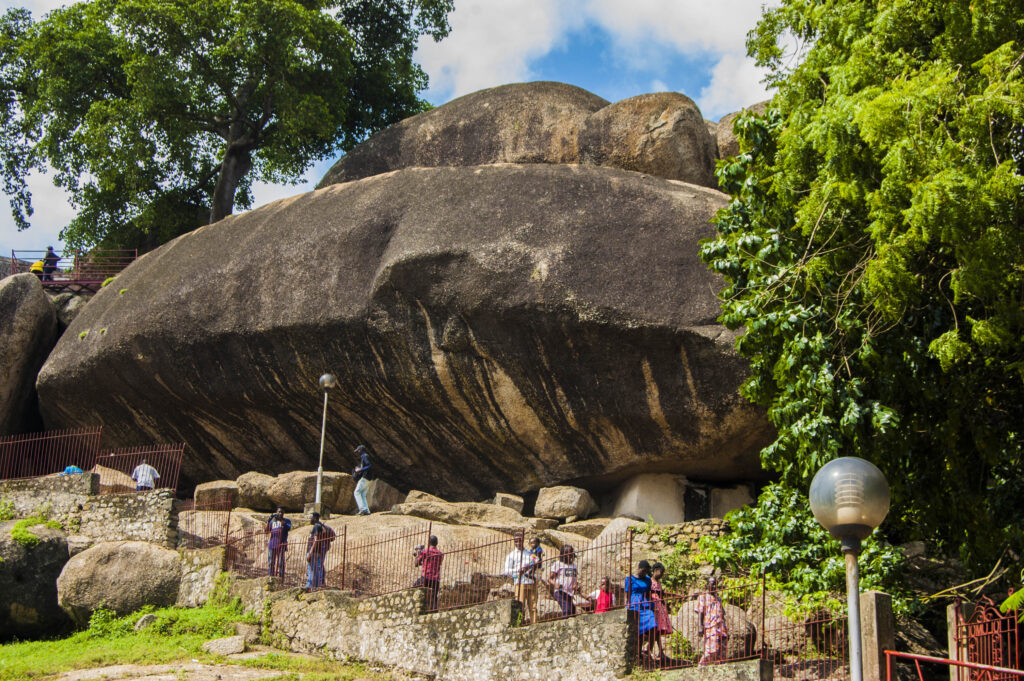
Olumo Rock in Abeokuta is far more than a dramatic granite outcrop or a place to photograph the city from above. It is a living record of Egba survival, a landmark woven into the identity of Ogun State and one of Nigeria’s most recognisable heritage destinations.
The name Abeokuta is commonly translated as “under the rock”, a description that points directly to the city’s beginnings. During the turbulence of the nineteenth century, the natural formations around Olumo provided refuge and a defensive position for Egba people seeking safety. The rock’s crevices, shelters and commanding views were practical assets at a time when security depended on knowing the landscape and seeing danger before it arrived.
That history gives a visit a different weight. The ascent is not simply a climb towards a broad view of red roofs, roads and modern neighbourhoods. It is a journey through a place where geology, memory and community meet. Visitors move between massive stone surfaces and narrow passages while learning how the formation became associated with protection and the eventual growth of Abeokuta around it.
Olumo’s strength as a destination lies in this combination of spectacle and story. The granite formation rises prominently above the surrounding city, offering wide views across Abeokuta from its upper sections. At ground level and along the route, the rock reveals overhangs and natural spaces that help explain how it could once function as shelter. Steps, pathways and railings make parts of the climb more manageable, although the experience still calls for sensible footwear and an unhurried pace.
A guided visit is especially valuable. Without cultural interpretation, a visitor may see only an impressive formation. A knowledgeable guide can connect visible features to Egba history, explain the significance of particular shelters and help distinguish documented heritage from folklore. This human layer is important because Olumo Rock is not a museum object separated from daily life. It stands inside a living city whose identity continues to be shaped by the history it represents.
The wider Abeokuta experience should not end at the rock. The city is closely associated with adire, the indigo-dyed textile tradition that has travelled from Yoruba communities to wardrobes and galleries around the world. Visitors can explore markets and workshops where patterns, dyeing methods and contemporary designs show how a heritage craft continues to evolve. Podium News has also examined the wider importance of preserving Yoruba traditions through its feature on Egungun and sacred ancestral masquerades.
Food offers another route into the area’s character. Ogun State is widely associated with ofada rice, often served with a deeply flavoured pepper sauce and assorted meat. Travellers who want more than a rushed day trip should make time for a meal, local shopping and conversations with residents. Spending locally allows tourism income to reach guides, food vendors, drivers, artisans and traders rather than stopping at the entrance of a single attraction.
Practical preparation can make the difference between a rewarding visit and a difficult one. Shoes with reliable grip are advisable, particularly because exposed rock can become slippery after rain. Light clothing, drinking water and sun protection are sensible in warm weather. Earlier hours may offer a cooler and calmer climb, while visitors with mobility limitations should contact the attraction before travelling to confirm which access facilities are currently operating.
Opening times, admission charges and site facilities can change, so travellers should verify current arrangements directly with the tourist complex before departure. Visitors arriving from Lagos can reach Abeokuta by road, while rail may also be an option depending on current Nigerian Railway Corporation schedules. Whichever route is chosen, arranging onward local transport and allowing sufficient daylight for the visit will reduce unnecessary pressure.
Respect for the site matters as much as convenience. Visitors should follow marked routes and local instructions, avoid leaving litter and treat culturally significant spaces with care. The long-term value of Olumo Rock depends on protecting both its physical landscape and the stories attached to it. Conservation is not only the responsibility of government or attraction managers. It is also shaped by the behaviour of every person who climbs, photographs and shares the place.
Olumo Rock also demonstrates why domestic tourism deserves serious attention. Nigeria’s heritage economy is often discussed in terms of untapped potential, but destinations become sustainable only when maintenance, interpretation, safety and community participation receive consistent support. A well-run heritage site can preserve history while generating work for local people and encouraging visitors to explore beyond the country’s largest commercial centres.
Abeokuta’s cultural calendar strengthens that appeal. Events such as the Ojude Oba festival in neighbouring Ijebuland show how Ogun State’s ceremonies, fashion, music and community institutions can attract audiences at home and abroad. Olumo Rock offers a complementary experience: quieter than a major festival, but equally rooted in place, memory and Yoruba identity.
For travellers planning a Nigerian heritage journey, Olumo Rock rewards those who arrive curious and give the site enough time. The best visit is not merely about reaching the highest point. It is about understanding why generations regarded the rock as protection, how a city grew around that memory and why the landmark still matters today.
Have you visited Olumo Rock or another Nigerian heritage destination? Share your experience with Podium News. Tourism businesses, cultural organisations and destination managers may also contact Podium News about Business Showcase features, media partnerships and event coverage.