Veteran Nigerian actor Nkem Owoh has said Yoruba filmmakers helped pioneer the country’s home-video tradition but rejected the claim that he credited them with founding Nollywood, drawing a distinction between early film production and the industry name adopted later.
Owoh, widely known as Osuofia, made the clarification during an appearance on Curiosity Made Me Ask, the interview programme hosted by comedian Adebayo Abidemi, also known as Bae U. The episode was released on Saturday, 7 November 2026.
The actor was responding to a question about reports that he had previously said Yoruba filmmakers, rather than Igbo filmmakers, started Nollywood. He said that interpretation did not reflect his position because Nigerian film production predated the widespread use of the name Nollywood.
“The Yoruba did not start Nollywood. They started Home video,” Owoh said during the conversation, according to accounts of the interview published on Sunday.
He named the late theatre and film pioneer Hubert Ogunde and an earlier performer he referred to as Adebayo Papa among the Yoruba artists whose work he admired. Owoh said those performers helped make filmed entertainment popular before the industry acquired its internationally recognised name.
The clarification follows renewed discussion about the origins of Nigerian cinema and the contributions of different language communities. That debate intensified in August after actor Francis Duru discussed the role of Igbo entrepreneurs in building the commercial film industry during the 1990s and early 2000s.
Duru, who died in October, had argued that Igbo businesspeople played a central part in establishing the modern industry while Yoruba filmmakers subsequently strengthened their position through organisation and promotion. His remarks prompted responses about the longer history of Yoruba theatre and filmmaking.
That history extends beyond the commercial video boom. Ogunde established a travelling theatre tradition that helped shape modern Yoruba performance, while artists including Duro Ladipo developed theatrical productions rooted in Yoruba history and storytelling. Stage performers later moved into film, television and video as production and distribution methods changed.
The commercial expansion of Nigerian films sold directly on video is closely associated with Living in Bondage, the 1992 Igbo-language production linked to producer Kenneth Nnebue. Its success helped demonstrate the scale of an audience for locally made films distributed outside conventional cinemas.
The earlier Yoruba theatrical and screen traditions and the later commercial video market are therefore different parts of the industry’s development. Owoh’s comments concerned the distinction between those histories, rather than a claim that one ethnic community was solely responsible for Nigerian filmmaking.
During the interview, Owoh also recalled discussions among filmmakers about the identity of the emerging industry before the Nollywood label became established. His recollection was presented as his personal account of those conversations, not as a definitive record of when the term was first coined.
The name Nollywood subsequently became an international shorthand for Nigerian filmmaking across several languages and production traditions. Yoruba-language cinema, Igbo-language productions, English-language films and work from other Nigerian communities now form part of the wider industry.
Owoh’s latest remarks were reported on 8 November by several Nigerian news organisations following the release of the interview. They clarify his stated position without resolving every historical argument about which productions should count as the beginning of Nigeria’s home-video era.
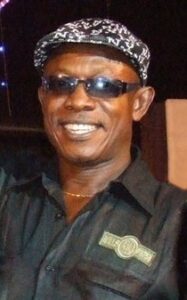
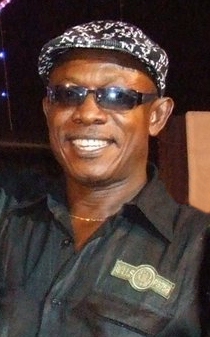
Photograph: Nkem Owoh at the African Movie Academy Awards, Yenagoa, 27 April 2008. Niyi Tabiti, via Wikimedia Commons, CC BY-SA 3.0. Archival photograph.