
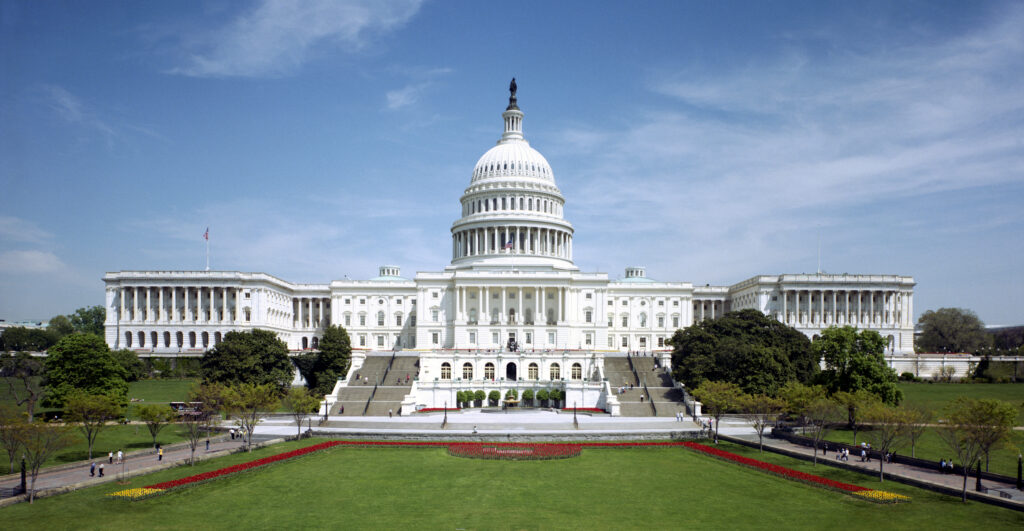
The United States Senate has passed a major bipartisan energy and infrastructure permitting bill by 62 votes to 33, sending it to the House of Representatives for the next stage of consideration. The measure would shorten federal environmental review timelines, speed the development of electricity transmission lines and require large artificial intelligence data centres to pay a greater share of the grid costs associated with their power demand.
The Bipartisan American Affordability and Jobs Act of 2026 cleared the Senate on Thursday, 19 November, after negotiations involving Republican and Democratic lawmakers. Fourteen Democrats and independent Senator Angus King joined most Republicans in supporting it. Republicans Josh Hawley and Mike Rounds were among those who voted against it.
The vote is a significant step for legislation that has been developed over several years as the United States faces rising electricity demand, including from the rapid expansion of AI computing and large data centres. The bill now moves to the Republican-controlled House. President Donald Trump has said he would sign it if Congress sends it to him, but it is not yet law.
What the legislation would change
The bill is designed to reduce delays in federal approval processes for major energy and infrastructure projects. It would impose tighter deadlines on environmental reviews, accelerate planning and construction for electricity transmission lines, and narrow the circumstances in which permits can be revoked or challenged in court.
Its provisions also address the growing electricity requirements of large data centres. Under the measure, major AI data centres would be expected to cover more of the cost of the power facilities and grid upgrades needed to serve their demand. Supporters say this would reduce the risk of households and smaller businesses carrying costs created by energy-intensive computing projects.
The legislation is intended to make it easier to build a range of projects, including power generation, transmission infrastructure and other developments that require federal permits. Its supporters argue that slow approvals and uncertainty have delayed investment, increased costs and made it harder to expand the electricity network.
Senator Shelley Moore Capito of West Virginia, the bill’s lead Republican sponsor, described the vote as a breakthrough for permitting reform and a step towards addressing affordability concerns. She introduced the measure with co-sponsors Mike Lee, Martin Heinrich and Sheldon Whitehouse.
Supporters see a route to more power and lower costs
Supporters from both parties say the United States needs to expand electricity supply and transmission capacity as demand rises. The growth of AI services has increased pressure on utilities and grid operators to connect new data centres, while manufacturers, households and other businesses also depend on reliable and affordable power.
Democratic co-sponsor Martin Heinrich has argued that data centres should pay for the energy they consume and the grid improvements their operations require, rather than transferring those costs to families. Supporters also say that faster approval of long-distance transmission lines could help move electricity from renewable energy projects to major population centres.
Modelling by Rhodium Group, cited during the debate, suggests the legislation could increase renewable energy deployment and reduce household electricity costs over time. It estimated that annual household bills could fall by between $50 and $78 by 2040, while emissions could be around three per cent lower. Those figures are projections, not guaranteed savings. The same modelling indicated that emissions could remain close to current levels, depending on how the provisions are used.
Environmental and tribal concerns remain
The bill has divided environmental organisations and lawmakers who otherwise support faster construction of clean energy infrastructure. Critics argue that the proposed changes could also make it easier to approve oil pipelines and natural gas power plants, while reducing safeguards for wetlands, wildlife, public lands and culturally significant sites.
Some of the most serious objections concern the position of Native American tribes and state authorities. The legislation would change aspects of established environmental laws, including the Clean Water Act and the Endangered Species Act, and could limit the ability of states and tribes to block or impose conditions on certain projects. It would also reduce some consultation requirements for projects that could affect historic or tribal sites.
Democratic Senator Jeff Merkley of Oregon criticised the process, saying tribes had not been adequately consulted. He argued that legislation affecting state authority, tribal rights and energy policy required fuller consideration. Republican Senator Josh Hawley also opposed the bill, raising concerns about the effect of new infrastructure projects on farmers whose land could be crossed by transmission lines or pipelines.
The debate reflects a wider policy conflict over how quickly the United States should build new energy infrastructure and what protections should remain in place. Supporters say delays can hold back renewable projects as well as conventional energy developments. Opponents warn that reducing environmental review and legal safeguards could create long-term costs for communities and ecosystems.
The House will decide the next stage
The House of Representatives must now consider the Senate measure. Its passage there is not assured, and changes made by the House could require the Senate to consider the bill again. The narrow Republican majority in the chamber means that support from some Democrats may be important if the legislation is to advance.
If the House approves the measure in a form acceptable to the Senate, it would go to President Trump for his signature. Until then, the bill remains a proposal rather than an enacted change in federal permitting law.
The Senate vote has moved a long-running bipartisan effort into the next stage of the legislative process. Its final impact will depend on the House decision, the version that reaches the President and how federal agencies apply any new requirements. The central test will be whether faster approvals and new rules for data-centre electricity costs can expand reliable power without weakening protections for communities, tribal interests and the environment.