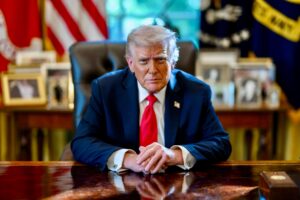
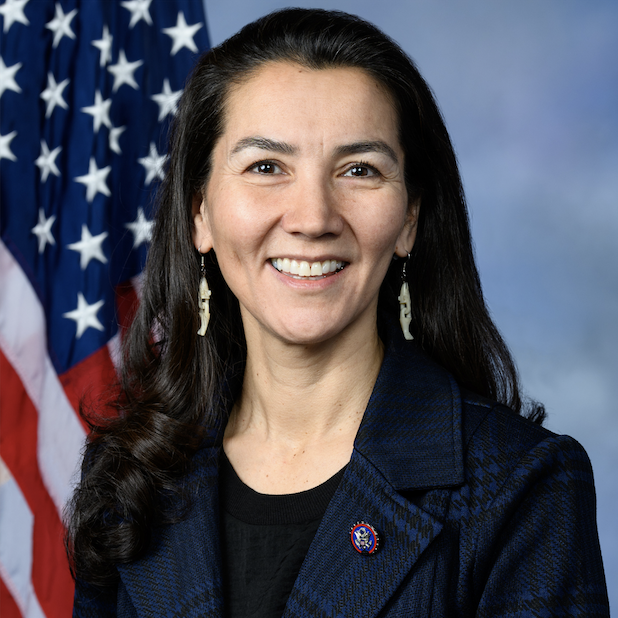
Archival portrait of Mary Peltola at a George Washington University event in March 2025. This is not a photograph of the 2026 Alaska Senate election or the Justice Department's court filing. Source: George Washington University, Institute for International Economic Policy. Reuse permission is not stated on the source page; publisher review required.
The United States Department of Justice has asked a federal appeals court to treat its challenge to Alaska’s Senate election certification as moot after Democrat Mary Peltola defeated Republican incumbent Dan Sullivan, acknowledging that the examination it sought can no longer be carried out now that ballots have been counted.
In a filing submitted on Thursday, 19 November, to the US Court of Appeals for the Ninth Circuit, Justice Department official Stanley Woodward wrote that “this case has become moot”. The department also asked the appeals court to vacate the earlier ruling that dismissed its lawsuit and send the matter back for dismissal on that basis.
The request ends the department’s civil effort to delay certification of the result, if the appeals court grants it. It does not amount to an appellate ruling on the legal merits of the original case, and the court has not yet ruled on the department’s latest request.
The move follows Peltola’s victory in the final unresolved Senate contest of the 2026 midterm elections. Her win gave Democrats a 56-seat majority in the 100-member Senate. Podium News reported the election result in a separate article on 19 November.
Why the Justice Department brought the case
The federal lawsuit was filed at President Donald Trump’s direction before the 3 November election. The department asked a federal judge to prevent Alaska election officials from certifying Peltola as the winner if she defeated Sullivan, while the government investigated whether voters might have confused the incumbent with another candidate named Dan J. Sullivan.
The second Sullivan, a retired teacher, appeared on the ballot as an independent candidate. The Alaska Supreme Court had ruled that he was legally qualified to run. The Justice Department argued that the similarity between the names could have confused voters and affected the result.
Peltola denied knowing about or participating in any plan to recruit the second candidate. Dan J. Sullivan has maintained that his candidacy was legitimate and independent. Allegations about how he entered the race remain separate from the question of whether the state could certify the result.
US District Judge Sharon Gleason dismissed the federal lawsuit on 1 November. Her ruling said the government had not established a workable legal remedy that would allow the proposed inquiry while preserving the secrecy of individual ballots. The Justice Department appealed the decision to the Ninth Circuit.
The department says the vote can no longer be examined in the way it proposed
By the time of the latest filing, Alaska’s ballots had been counted and Peltola’s margin over Sullivan was more than 12,000 votes. The second Sullivan received fewer than 5,000 votes. The department said the ballots were now mixed together, making it impossible to determine whether people who voted for Dan J. Sullivan had intended to vote for the incumbent.
The federal attorneys therefore told the appeals court that the purpose of the civil lawsuit could no longer be achieved. They asked the court not only to dismiss the appeal as moot but also to vacate Judge Gleason’s earlier ruling. That second request is significant because it seeks to remove the lower court decision rather than leave it standing as the final judgment in the case.
The Ninth Circuit must decide whether to grant the department’s request. Until it does, the filing is a request by one party, not a new court order. It does not change the votes counted in Alaska or itself certify the election.
Alaska Division of Elections Director Carol Beecher has said the state plans to certify the results on 25 November, including Peltola’s victory. The state’s position is that certification should proceed under election law following the completion of the count.
A separate criminal investigation continues
The department’s request to end the civil challenge does not end the separate criminal investigation into allegations that Peltola campaign staff or other people recruited the second Sullivan to divert votes from the Republican incumbent. The Alaska Bureau of Investigation and the FBI are continuing to examine whether any laws were broken.
Peltola has denied knowledge of a recruitment scheme, while Dan J. Sullivan has said he ran independently. No finding of criminal wrongdoing has been announced in the reporting reviewed for this article. The existence of an investigation is not evidence that the allegations have been proved.
The civil case concerned whether federal officials could interfere with the state’s certification process while investigating possible voter confusion. The criminal inquiry concerns whether individuals involved in the campaign or candidacy violated federal or state law. The two matters have different legal questions and can proceed separately.
The Justice Department’s latest filing removes its immediate attempt to delay certification through the civil lawsuit, but leaves the appeals court to decide what to do with the lower court ruling. Alaska’s planned certification date is now the next formal milestone in the election process, while investigators continue their separate inquiry.