
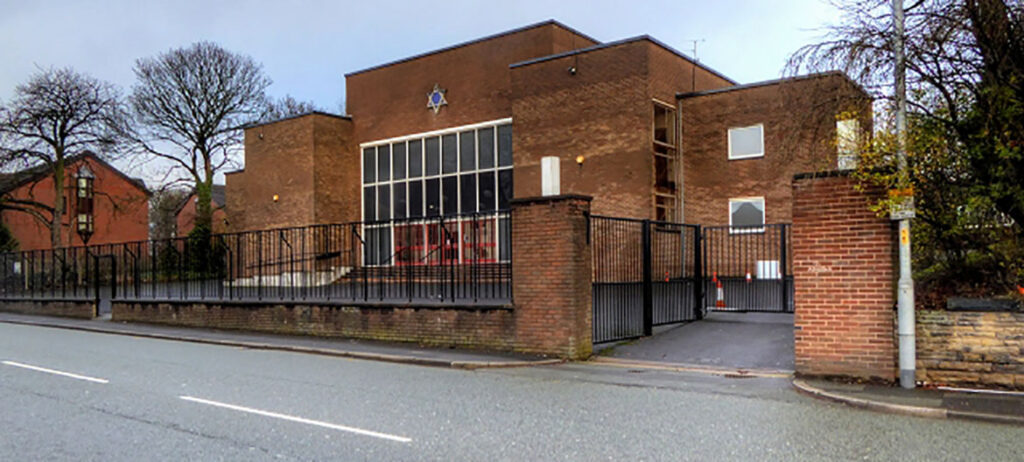
Britain has opened a public inquiry into the October 2025 attack on the Heaton Park Hebrew Congregation Synagogue in Manchester, giving investigators a route to examine sensitive national security evidence as families and the Jewish community continue to seek a full account of the killings.
Home Secretary Shabana Mahmood announced the decision to lawmakers on Monday, 12 October 2026. She said the inquiry would ensure that all relevant evidence could be heard, including national security material that might not otherwise be fully examined in public proceedings.
Adrian Daulby, 53, and Melvin Cravitz, 66, were killed when Jihad Al-Shamie attacked the synagogue on 2 October 2025, during Yom Kippur, the holiest day in the Jewish calendar. Three other members of the congregation suffered serious injuries.
Al-Shamie, a 35-year-old British citizen of Syrian descent, told police that he was acting for Islamic State before armed officers shot him dead. Worshippers barricaded the entrance and prevented him from reaching more people inside, an act that counter-terrorism chiefs later said saved lives.
The announcement marks a significant expansion of the official response to an attack that shook Manchester and intensified concern about threats to Jewish places of worship across Britain. Podium News reported at the time that security was tightened around synagogues and other Jewish sites as authorities assessed the wider risk.
Questions over missed opportunities
The inquiry is likely to face close scrutiny over what agencies knew before the attack and whether warning signs were properly handled. Greater Manchester Police acknowledged in July 2026 that officers had seized Al-Shamie’s mobile phones during earlier arrests but had not examined information on the devices before the synagogue attack.
Chief Constable Sir Stephen Watson described that failure as a missed opportunity and apologised to those affected. He said material on the phones showed an extremist mindset and would have prompted further investigative action had it been reviewed in time.
That disclosure followed the prosecution of Mohammad Bashir, an associate of Al-Shamie who was jailed for life after admitting preparation of a separate terrorist act. According to the Crown Prosecution Service, the pair had conducted hostile reconnaissance at the United Kingdom Defence Academy in Shrivenham in August 2025.
Prosecutors stressed that no evidence linked Bashir to the later synagogue attack, which Al-Shamie carried out alone. The earlier plot nevertheless added urgency to questions about whether information held by law enforcement could have been connected sooner.
A process built for sensitive evidence
A public inquiry can bring together evidence from police, security agencies, government departments and other bodies while establishing procedures for material that cannot safely be disclosed in open court. Mahmood’s emphasis on sensitive evidence indicates that the government wants the review to go beyond the limits of an ordinary inquest.
The attack was declared a major incident by the British government on 3 October 2025, activating an Independent Public Advocate to help victims, relatives and close friends understand their rights and navigate official investigations. The new inquiry now offers a broader forum for testing institutional decisions and explaining them to the families and the public.
For the bereaved, the central questions are both personal and institutional: how two men lost their lives while attending worship, what protection was in place, what intelligence existed before the attack, and whether different action might have prevented it.
At the first anniversary earlier this month, Counter Terrorism Policing said Daulby had shown extraordinary bravery by helping to barricade the entrance. Assistant Commissioner Laurence Taylor said the physical threat facing Jewish communities and Israeli institutions in Britain remained high.
Taylor also said antisemitic grievance had appeared in 42 per cent of terrorism investigations during the preceding year. He cautioned that the figure did not mean nearly half of all casework targeted the Jewish community, but called it deeply troubling.
Why the inquiry matters
The inquiry will be judged on whether it can provide an authoritative chronology, identify failings without hiding behind institutional boundaries, and recommend changes that reduce the risk of another attack. Its credibility will also depend on meaningful participation by victims, survivors and the congregation.
Beyond Manchester, the process will test how Britain balances transparency with the protection of intelligence sources and methods. It may also influence security arrangements at synagogues, mosques, churches and other vulnerable faith sites.
The government has not yet publicly detailed the inquiry’s chair, timetable or full terms of reference. Those decisions will shape how quickly it can begin hearings and how far it can examine the actions of police and security bodies.
Podium News will continue to follow the appointment of the inquiry chair, publication of its terms of reference and any timetable for evidence from survivors, officials and security agencies.





