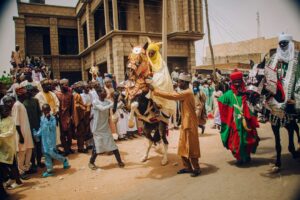
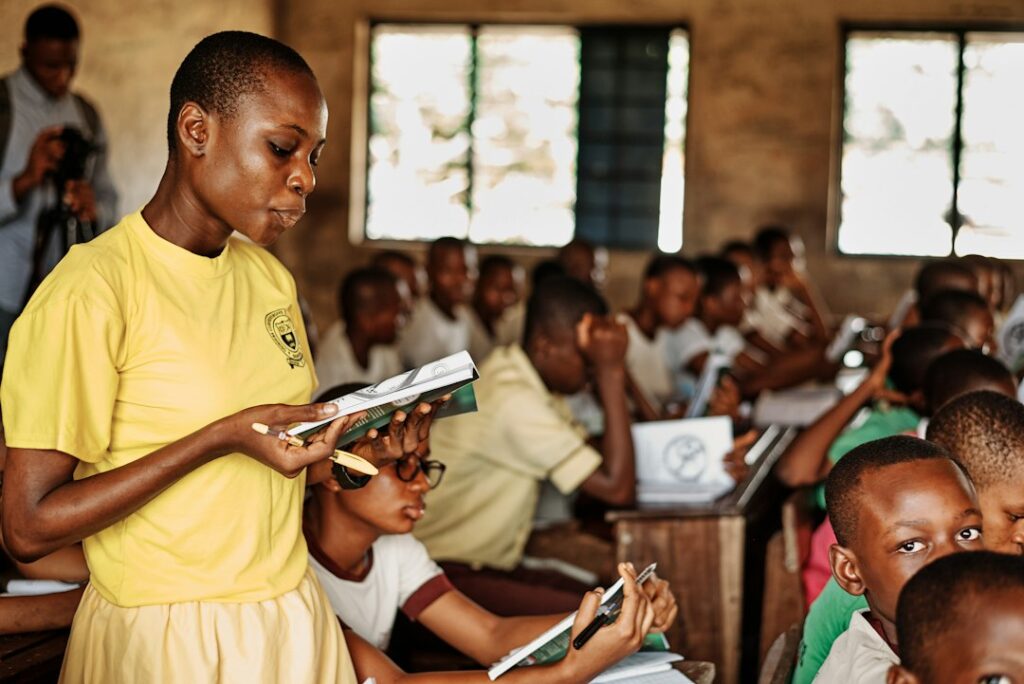
Illustrative photograph from an education outreach in Port Harcourt. Photo: Emmanuel Ikwuegbu / Unsplash.
Nigeria’s academic and cultural communities are reflecting on the life and legacy of Professor Adebowale Omole, whose death has been described as a significant loss to the university system and the country’s public life.
His contribution sits within a wider Yoruba heritage of learning, character and cultural expression. Podium has also explored that heritage in its report on the Yoruba dùndún talking drum.
In an editorial published on Friday, 27 November, The Guardian remembered Omole as a scholar and university administrator who championed education, independent thought and institutional autonomy. He also served as Chairman of the newspaper’s Editorial Board from 2011 until his death in November.
Professor Adebowale Omole’s journey through academia
Omole’s journey began in Ilesa, Osun State, where he attended Ilesa Grammar School. He worked at the Ministry of Agriculture and Natural Resources in Ibadan and took on other jobs to finance his education. He later studied Agriculture and Animal Science at the University of Ife, before earning a doctorate in Nutritional Biochemistry from the University of Alberta in Canada in 1973.
He rose through the academic ranks to become a professor of Animal Science and subsequently the first alumnus of his university to serve as vice-chancellor. He held that position from 1991 to 1999, a period during which he became known for defending the independence of the university and the responsibilities of its leadership.
A voice for institutional independence
Omole believed that universities should be able to discharge their responsibilities without undue political interference. His commitment to that principle was evident long before his appointment as vice-chancellor. As an undergraduate, he challenged his expulsion in court and won, an episode that reflected his willingness to stand up for what he considered right.
He also believed that the purpose of a university extended beyond the award of qualifications. Education, in his view, should develop individual ability and equip people to make a meaningful contribution to society. His own progress, achieved despite financial difficulties, gave particular force to that conviction.
Promoting Omoluabi values
His public contribution also reached into Yoruba cultural preservation. In August 2024, he established the Wale Omole Foundation for Virtues and Ethics in Yoruba Culture. The initiative was conceived to promote ethical values while supporting education, community development and the preservation of cultural heritage.
Central to this work was the Yoruba idea of Omoluabi, a philosophy that places good character, integrity, responsibility and respect at the heart of personal and communal life. Omole saw these values not as a concern for Yoruba people alone, but as principles capable of strengthening society across ethnic, religious and political boundaries.
His death also closes a notable chapter in Nigerian media. As Chairman of The Guardian’s Editorial Board, he brought the perspective of an experienced academic and administrator to discussions about the newspaper’s role and its responsibility to remain independent of sectional interests.
A legacy beyond titles
Professor Omole’s life offers a reminder that leadership is measured not only by positions held, but by the principles defended and the institutions strengthened. His journey from Ilesa to national prominence, his commitment to education and his efforts to preserve Yoruba ethical heritage form an enduring part of his legacy.
For younger Nigerians, particularly those from modest backgrounds, his story is also an example of how perseverance, learning and a sense of public responsibility can shape a life of lasting influence.