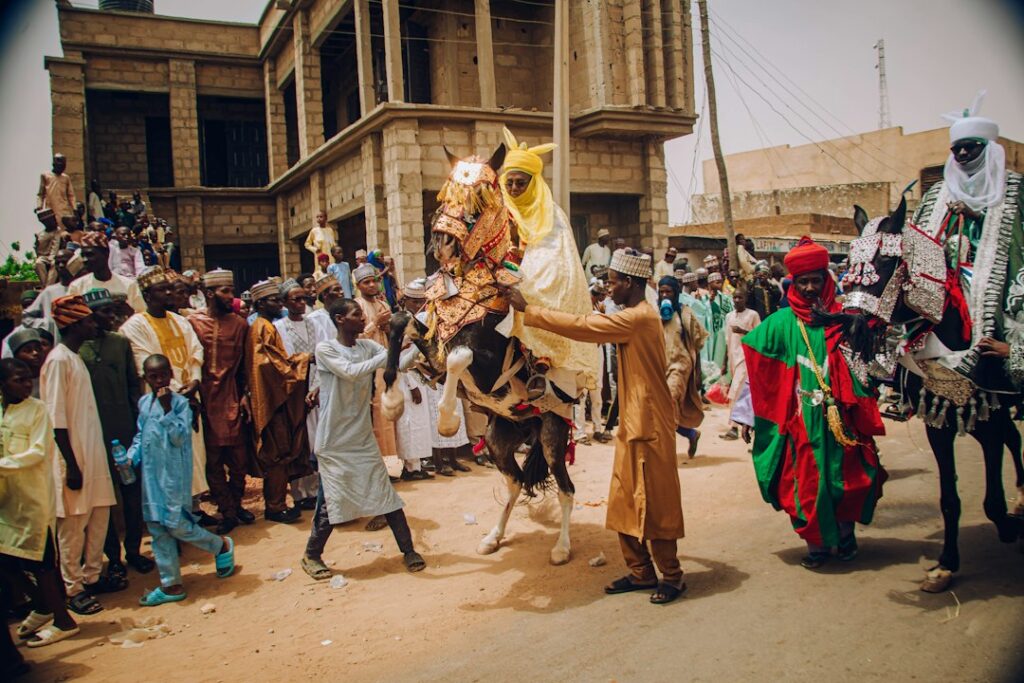
Illustrative photograph of an African cultural celebration. Photo: Ahmad Jaafar / Unsplash.
The Brazilian Descendants Arts and Culture Association (BDACA) has announced a three-day Brazilian-descendant festival in Lagos during Easter 2027. The programme will celebrate the community’s heritage and the historic relationship between Nigeria and Brazil.
The festival builds on a wider cultural conversation about the links between Nigeria and Brazil. Podium previously reported on an Ado-Odo monarch’s proposal for a Nigeria-Brazil heritage partnership.
The Brazilian Descendants Arts and Culture Association (BDACA) said the festival would take place from 26 to 28 March 2027. The programme is intended to preserve the heritage of Brazilian-descendant communities, strengthen cultural ties between the two countries and promote cultural tourism in Lagos.
Brazilian-descendant festival programme
The announcement followed a visit by the association’s delegation to Brazil’s Consul General in Lagos, Ronaldo Vieira, who pledged to collaborate with the group towards the successful hosting of the event.
Bolaji Mendes, convener of the Asiwaju Popo Aguda Community and BDACA, described the engagement as an opportunity to reinforce a shared history and a cultural connection that remains visible in Lagos through family names, religion, food, music, architecture and community traditions.
The association said the festival had been included in the Lagos State Government’s 2027 calendar of activities through the Ministry of Tourism, Arts and Culture.
Three days of food, music and heritage walks
The programme is expected to begin on Good Friday, 26 March, with a Frejon and Brazilian Cuisine Festival at The Pavilion in Popo Aguda, along Igbosere Road on Lagos Island.
Activities on Holy Saturday, 27 March, will include a traditional Judas display and the first BDACA Culture and Heritage Health Walk. The walk is planned to begin at Da Rocha’s House on Kakawa Street and pass historic landmarks associated with the Brazilian-descendant settlement. Organisers also intend to use the activity to promote healthy living and raise awareness about drug abuse.
The festival is scheduled to conclude on Easter Sunday, 28 March, with the seventh Popo Aguda Easter Musical Extravaganza at Campos Mini Stadium. Music, dance and other cultural performances will form part of the closing celebration.
A heritage with deep roots in Lagos
The Brazilian-descendant community is an important part of Lagos’ historical and cultural story. Its heritage reflects generations of movement and exchange between West Africa and Brazil, and has left a visible imprint on the city’s architecture, cuisine, religious life, surnames and social traditions.
BDACA, established in 2019, says its work is focused on preserving and promoting this heritage while helping younger generations understand their ancestral roots. The planned festival provides an opportunity to bring those histories into public view through food, performance, walking tours and community participation.
The association acknowledged the support of Lagos State Governor Babajide Sanwo-Olu, his wife Ibijoke, the Oba of Lagos, Oba Rilwan Akiolu, traditional rulers, community elders and officials of the state’s tourism ministry.
With its combination of cultural activities and historic locations, the Easter festival could also create opportunities for local businesses and heritage tourism on Lagos Island. Its success will depend on sustained community involvement and effective collaboration between organisers and public institutions.