Nigeria’s domestic gas supply has crossed 2 billion cubic feet per day, a milestone the Federal Government says should strengthen fuel availability for power plants, factories and other large users of energy.
Minister of State for Petroleum Resources (Gas), Ekperikpe Ekpo, announced the figure on Friday, 2 October, as the government outlined higher production targets and progress on two major pipeline projects. The development comes at a time when unreliable electricity and high energy costs remain among the biggest pressures on Nigerian households and businesses.
According to figures presented by the minister, national gas production has risen to 7.5 billion cubic feet per day from about 6.8 billion cubic feet per day in 2023. Nigeria’s proven gas reserves have also increased from 208.83 trillion cubic feet to 215.19 trillion cubic feet.
The figures point to a wider resource base and greater output, but the key measure for the domestic economy is how much gas reaches power stations, manufacturers, fertiliser plants and other users inside the country. Nigeria has long possessed large gas reserves while struggling to translate them into dependable electricity and affordable industrial energy.
Pipeline projects move closer to operation
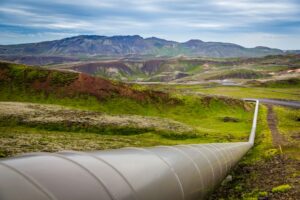
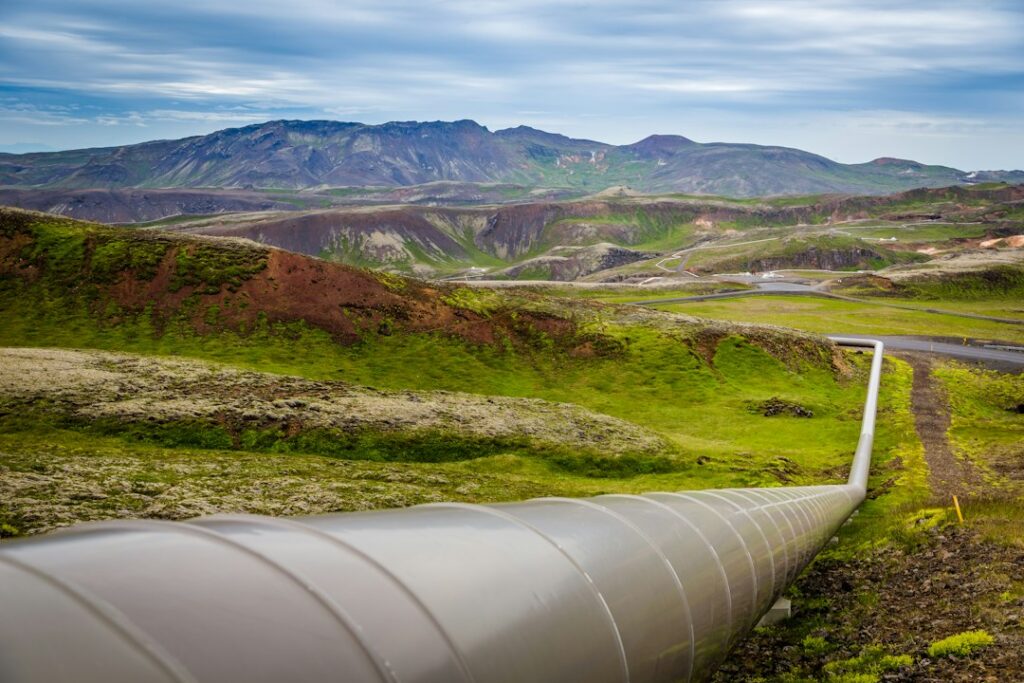
Ekpo said the Obiafu-Obrikom-Oben pipeline, commonly known as the OB3 pipeline, has reached full completion and is being prepared to receive its first gas. The pipeline has capacity to transport 2 billion cubic feet per day and is expected to unlock more than 500 million standard cubic feet per day of additional supply for the domestic market.
The Ajaokuta-Kaduna-Kano pipeline, another major part of Nigeria’s gas infrastructure plan, is about 95 per cent complete, the minister added. The AKK project is designed to move gas northwards, opening the prospect of supplying industries and power projects along its route.
If both projects operate reliably, they could help address a persistent mismatch in Nigeria’s energy sector. Gas-fired power plants account for a large share of the country’s electricity capacity, yet several plants have at different times generated below their potential because of fuel shortages, pipeline constraints or payment problems across the electricity market.
Manufacturers face a similar challenge. Many companies rely on self-generated energy because grid supply is insufficient, raising production costs and making locally produced goods less competitive. More dependable gas supply could reduce that burden for firms able to connect to pipelines or use compressed and liquefied natural gas distribution systems.
Government targets further growth
The government is targeting gas production of 10 billion cubic feet per day by 2027 and 12 billion cubic feet per day by 2030. The planned expansion is intended to serve power generation, industry, fertiliser production, petrochemicals, liquefied natural gas, transportation and export markets.
Ekpo also said ₦671 billion deployed through the Midstream and Downstream Gas Infrastructure Fund had attracted about ₦1.6 trillion in private investment. The money is spread across 31 projects and 205 infrastructure assets, which the government expects to deliver about 475 million standard cubic feet per day to the domestic market when fully operational.
Nigeria is seeking roughly $30 billion in gas-sector investment by 2030. Reaching that goal will require more than announcing production and construction targets. Investors and consumers will be watching whether pipelines are completed on schedule, whether gas suppliers are paid, and whether the regulatory environment supports long-term contracts and predictable returns.
Why the milestone matters
The 2 billion cubic feet per day threshold is significant because gas sits at the centre of several national priorities. It can support more stable electricity generation, feed industrial plants, supply fertiliser producers and provide an alternative transport fuel. It can also earn foreign exchange through liquefied natural gas exports.
There is, however, an important distinction between gas produced and useful energy delivered. Additional supply will have its greatest public value only when it translates into more dependable power, lower production losses and wider access to cleaner cooking and transport fuels. Pipeline security, maintenance, metering and commercial discipline will therefore be as important as new reserves.
The environmental dimension also demands attention. Natural gas produces fewer local air pollutants than heavier petroleum fuels when burned efficiently, but methane leaks can sharply weaken its climate advantage. Strong monitoring, leak detection and transparent reporting will be necessary as Nigeria expands infrastructure.
For households, the immediate question is whether greater gas availability will eventually improve electricity reliability and ease the cost pressures that pass through from energy into food, transport and manufactured goods. For businesses, the test will be whether supply becomes dependable enough to support new investment and jobs.
The latest figures show measurable progress in Nigeria’s effort to build a gas-based economy. The next stage is delivery: bringing the OB3 and AKK pipelines fully into service, completing funded projects and converting rising production into energy that Nigerians can actually use.
Podium News will continue to track the major gas projects, investment commitments and their effect on electricity supply, industry and household costs.