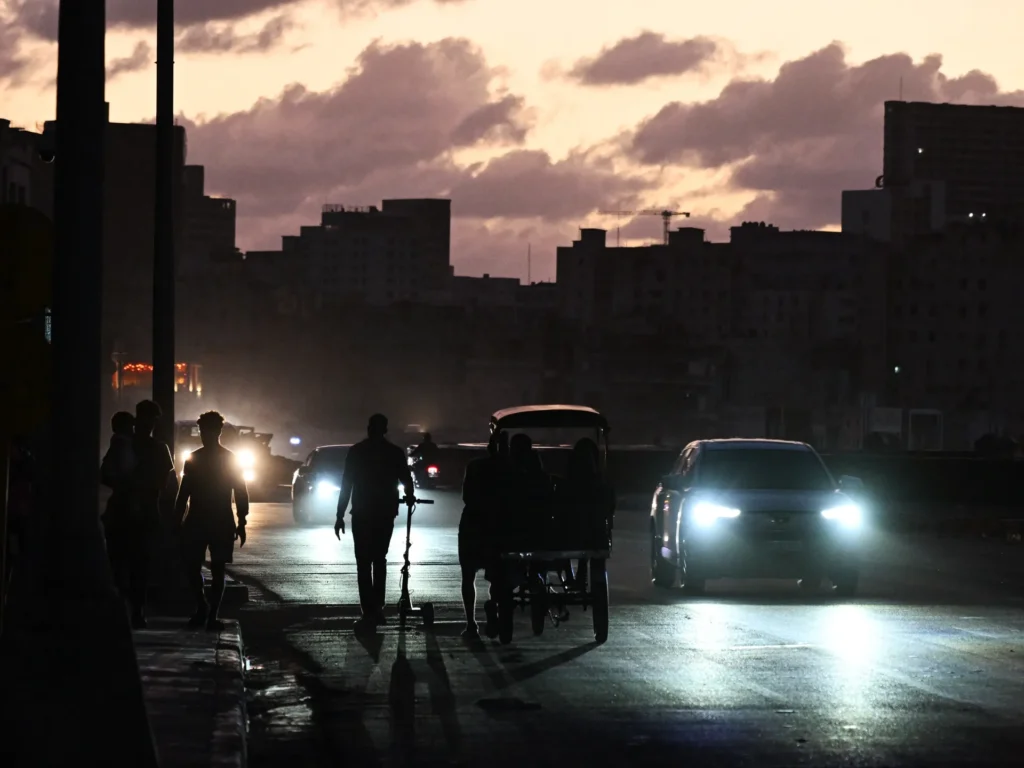
Cuba’s national electricity grid collapsed again on Friday, 18 September, leaving millions of people without power and deepening a crisis that is disrupting water supplies, transport, communications and everyday life across the island.
The Ministry of Energy and Mines announced the nationwide failure through its official social media account and said service restoration procedures had begun. Authorities said a fault affecting high-voltage transmission lines triggered the collapse, with failures spreading through the western and eastern sections of the country.
By Friday evening, electricity had returned to only a small number of areas in Havana, mainly around hospitals and other emergency facilities. Official data indicated that about five per cent of customers in the capital had power, while technicians worked to establish small localised networks in several provinces as a first step towards reconnecting the wider system.
A crisis measured in ordinary routines
The immediate consequences extend far beyond darkened homes. Electricity is needed to pump water, preserve food and medicines, charge telephones, operate businesses and keep public transport moving. When an outage continues for many hours, families must decide which food can still be saved, how to find drinking water and where they can charge a phone to contact relatives.
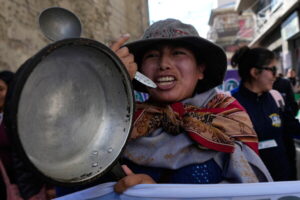
Friday’s collapse came after many households had already endured prolonged power cuts. Across Cuba, outages lasting more than 30 consecutive hours have become increasingly common. Residents in Havana described electricity returning briefly before the entire grid failed again, adding to exhaustion in homes already coping with food shortages, high temperatures and limited transport.
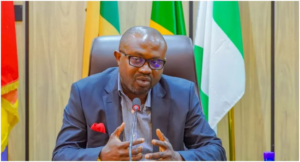
“Protocols are now in place to begin the gradual restoration of the system.”
Felix Estrada, official of Cuba’s National Electrical Union
The latest failure is at least the sixth partial or total collapse of the grid since January. Cuba’s electricity system has struggled for years with ageing thermoelectric plants, deteriorating infrastructure, a shortage of replacement parts and insufficient fuel. The pressure has intensified sharply during 2026 as restrictions on oil supplies have reduced the fuel available to keep generating plants operating.
Hospitals prioritised as restoration begins
Authorities began restoring limited supplies to hospitals and other essential facilities while attempting to rebuild the network in stages. This method creates small islands of electricity that can later be connected, but officials had not given a firm timetable for full restoration by late Friday.

The uncertainty is especially serious for patients who rely on refrigerated medication, electrically powered medical devices or regular access to health services. It also places greater pressure on hospitals, which must maintain emergency power while treating people affected by heat, interrupted water supplies and other consequences of the outage.
Transport services and workplaces have also been affected. Previous blackouts have contributed to reduced working hours and flight disruptions, while failures in mobile phone and internet services can leave communities without reliable information. Small traders, food vendors and self-employed workers face losses when refrigeration, lighting and payment systems stop working.
Fuel pressure and an ageing system
Cuban authorities have repeatedly blamed the country’s energy emergency on restrictions imposed by the United States, which have sharply constrained fuel deliveries and access to equipment. The United States maintains that its pressure campaign is directed at Cuba’s government. United Nations human rights experts have criticised the oil restrictions, warning that worsening shortages threaten basic rights and humanitarian conditions.
The blackout also exposes longstanding domestic weaknesses. Much of Cuba’s generating infrastructure is old, breakdowns are frequent and maintenance has been hampered by scarce foreign currency. Even when the national grid is functioning, available generation has often been insufficient to meet demand.
For Cubans living abroad, the crisis brings another layer of anxiety as families try to reach relatives whose phones may be uncharged or whose internet connection has failed. Remittances can help households buy food or alternative power equipment, but money alone cannot restore water pumps, public transport or an unstable national grid.
What happens next
Engineers must first stabilise local sections of the system before attempting wider reconnection, a delicate process because bringing too much demand online too quickly can cause another failure. The pace of recovery will depend on the condition of transmission lines, the availability of fuel and whether enough generating units can operate reliably.
The government has said restoration work is under way, but the repeated collapses show that returning electricity after one outage will not resolve the structural emergency. Cubans need a dependable system, transparent information about restoration and protection for hospitals, water services and vulnerable households while repairs continue.
Reader call to action: Cubans at home and abroad can share verified information about local restoration, water access and emergency support through trusted community channels. Readers should avoid circulating unconfirmed outage reports that could create confusion during the recovery effort.