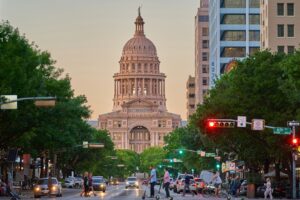
Democrat Gina Hinojosa has defeated Republican Governor Greg Abbott in Texas, delivering one of the most consequential results of the 2026 United States midterm elections and ending more than three decades of Republican control of the governor’s office. The Associated Press called the contest for Hinojosa following Tuesday’s vote, making the Austin state legislator the first Latina elected to lead Texas.
The result denies Abbott a fourth term and represents a significant change in a state that has been central to Republican national politics. Texas last elected a Democratic governor when Ann Richards won in 1990. Hinojosa is expected to take office in January 2027, following the normal transition process.
Hinojosa campaigned principally on the cost of living, public education and the influence of wealthy interests in state government. Her platform included a proposed one-off payment of $1,500 to residents, financed from the state’s emergency savings, as well as measures intended to strengthen public schools. These were campaign proposals, not policies already enacted.
The governor-elect also criticised the expansion of large data centres and called for closer scrutiny of their demands on electricity and water supplies. The issue became prominent during a campaign in which technology investment, household costs and infrastructure were frequently debated.
Abbott, a three-term incumbent with substantial campaign resources, had entered the election seeking to extend Republican control of the state executive. His defeat came during a wider Democratic advance across the country, including the party’s projected capture of both chambers of Congress and several governorships previously held by Republicans.
The Associated Press reported that Abbott conceded the election and pledged to assist with the transition. That concession is distinct from the formal certification of election returns, which remains a separate administrative process.
Hinojosa’s victory has attracted particular attention because of the size and political importance of Texas. The state has a large population, a substantial economy and an influential role in national debates over immigration, energy, education and reproductive rights. Its governor can shape state administration and legislation, although the extent of any policy change will depend on the legislature, the courts and available funding.
Her election does not mean that every part of the Texas government has changed hands. Separate legislative races determine the composition of the state House and Senate, and any account of party control must distinguish those results from the governorship.
The change is also relevant to African and Nigerian communities living in Texas. State decisions on schools, professional regulation, business conditions and access to public services can affect residents across the diaspora. Immigration status and federal immigration enforcement, however, remain subject to federal law and policy. No specific change to those rules follows automatically from a governor’s election.
For Nigerian entrepreneurs and professionals with interests in Houston, Dallas, Austin and other Texas cities, the immediate development is a change in political leadership rather than an enacted change in business or immigration law. Details of the incoming administration’s appointments and legislative programme will become clearer during the transition.
The Texas result forms part of a wider set of Democratic gains in the 3 November midterms. The party also won important contests elsewhere, although a number of close races remained unresolved as election officials continued counting ballots. Media projections and race calls should not be confused with final certified totals.
Hinojosa will now have to turn an election campaign centred on affordability and public services into an administrative programme. Her first budget decisions, appointments and negotiations with lawmakers will offer a clearer measure of how much of her platform can be implemented.
Image credit: Jay Godwin, LBJ Presidential Library, February 2017. Public-domain archival photograph of Gina Hinojosa; not an image of the 2026 election.