Bolivia has approved a $1.9 billion financing agreement with the International Monetary Fund and immediately ended its diesel subsidy, a major economic shift that the government says will restore fuel supplies but unions fear will deepen hardship for working families.
The Senate ratified the agreement on Friday, 18 September, a day after it passed the lower house. The three-year programme is intended to rebuild foreign currency reserves, reduce the fiscal deficit and restore confidence in an economy weakened by high inflation, fuel shortages and declining income from natural gas exports.
The agreement still requires approval from the IMF’s executive board before funds can be released. Bolivian officials say it could help unlock more than $5 billion in additional financing from the World Bank, the Inter-American Development Bank and other international partners.
Diesel moves to international prices
Hours after the congressional vote, President Rodrigo Paz announced that diesel used by trucks, buses, tractors and other commercial vehicles would be sold at international prices. Petrol used mainly by private cars will remain subsidised for now, although support for it has already been reduced.
The diesel decision matters because transport and agriculture sit at the centre of the country’s supply chain. Higher fuel prices can quickly affect the cost of moving food, running buses, harvesting crops and delivering imported goods. That leaves households facing the possibility that an economic measure designed to stabilise national finances could increase the price of daily necessities.
“No one can buy something expensive and sell it cheap.”
President Rodrigo Paz, announcing the end of the diesel subsidy
Paz said charging the international price would end persistent shortages and guarantee continuous supplies. Long queues and unreliable diesel availability have disrupted farming, transport and commerce, while the rise in global energy costs has made the subsidy increasingly expensive for the government.
Cash support promised to cushion the impact
To soften the immediate effect, the president announced approximately $79 million in cash assistance for 2.9 million Bolivians. He also promised preferential loans for truck operators, small businesses and producers who will face higher diesel costs, and said savings from the subsidy would be redirected towards schools, hospitals and roads.
Whether those protections reach people quickly and cover the real increase in costs will be closely watched. Cash payments may provide short-term relief, but families could remain exposed if transport fares and food prices continue rising after the initial support is spent.
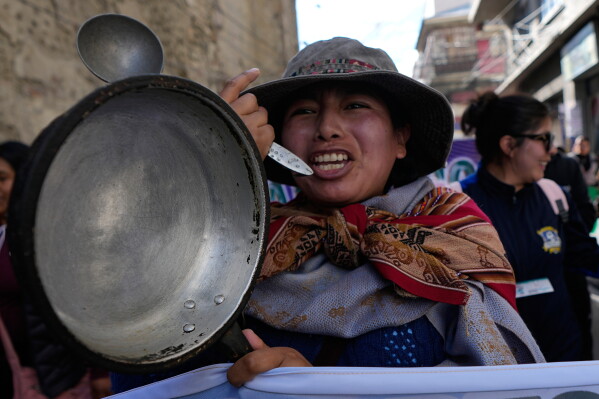
The Bolivian Workers’ Central and other unions have strongly opposed the IMF programme. They argue that subsidy cuts and reductions in public spending will shift the burden of adjustment onto workers and low-income households. Their warning carries political weight after weeks of road blockades earlier this year disrupted movement and commerce across the country.

Congress has extended a state of emergency for another 90 days. The measure, originally introduced during earlier unrest, allows military intervention and the suspension of some civil liberties. That creates a tense backdrop for the government as it begins reforms likely to provoke further demonstrations.
A fragile economy and depleted reserves
Economy Minister Christian Morales told lawmakers that the government inherited $3.17 billion in net international reserves, but only $52 million was liquid. The administration aims to raise reserves to almost $6 billion by the end of 2026, nearly $8 billion by 2028 and about $9.07 billion by 2031.
The fiscal plan seeks to reduce the deficit from 9.1 per cent of gross domestic product in 2026 to 6.4 per cent in 2027 and 3.8 per cent in 2028. It also calls for tighter monetary policy, less central bank financing of government deficits, a more flexible exchange rate and reforms intended to improve productivity and attract investment.
Those targets may reassure lenders, but their social impact will depend on implementation. Bolivia’s recent experience shows that fuel policy is not an abstract debate. Shortages can delay harvests and deliveries, while sudden price increases can erode household income. The government must therefore balance financial credibility with public protection.
Why the decision matters beyond Bolivia
The debate will be familiar in countries, including Nigeria, where governments have argued that costly fuel subsidies divert money from infrastructure and social services. In both cases, the central question is not simply whether a subsidy is affordable. It is whether savings are transparently used, whether alternatives are available and whether vulnerable people receive support before higher prices reach them.
Bolivia now faces two tests at once. It must persuade the IMF’s board that the programme is credible, and it must persuade citizens that economic stabilisation will not leave them carrying an unfair share of the cost.
Reader call to action: Readers should follow the final IMF board decision and the Bolivian government’s publication of eligibility rules for cash support. The most important measure of the programme will be its effect on transport fares, food prices, employment and access to public services.