Americans voted on Tuesday, 3 November, in closely fought midterm elections that will determine whether President Donald Trump’s Republican Party retains control of Congress for the final two years of his second term, with the cost of living, economic uncertainty and public dissatisfaction dominating the contest.
All 435 seats in the House of Representatives were on the ballot, alongside 35 Senate contests and governorship elections in 36 states. Voting stretched across several time zones, leaving some western polling stations open while ballot counting began elsewhere in the country.
The outcome will decide whether Republicans can continue advancing their programme through both chambers of Congress or face a Democratic majority capable of blocking legislation, initiating inquiries and exercising greater scrutiny over the administration. The presidency itself was not on the ballot.
Republicans entered the election with narrow congressional majorities. Democrats needed a net gain of three House seats and four Senate seats to take control, according to election-night assessments by the Associated Press and major US broadcasters. Any Senate outcome split evenly between the two parties would leave Vice President JD Vance able to cast a deciding vote.
More than 59 million Americans voted before election day, according to figures cited by CBS News from the University of Florida’s Election Lab. Early voting offered a substantial indication of public participation, but did not by itself establish which party would win the closely contested races.
One of the central questions was whether widespread dissatisfaction with living costs would translate into a change in congressional leadership. The Associated Press reported that about three-quarters of respondents in its voter survey expressed anger or dissatisfaction with the country’s direction, while economic conditions and inflation remained prominent concerns.
The election also took place against the background of the Trump administration’s policies, the war involving Iran and a sharply divided national political environment. Republicans argued that continuing their majority would give the administration room to pursue its priorities; Democrats presented the vote as an opportunity to impose checks on presidential power.
Preliminary exit-poll findings published by CBS News put Trump’s approval rating at 38 per cent among surveyed voters. Such polling describes the views of respondents and is not a substitute for actual ballots counted. Its interpretation may change as further data become available.
Democrats had multiple paths to gains in the House, where competitive suburban and swing districts were expected to be decisive. Pennsylvania, Michigan, New York and other battleground states attracted particular attention because relatively small changes in voting patterns could affect the national balance.
The Senate battle presented a different challenge. Republicans entered with a larger majority, and Democratic candidates were seeking victories in several states that had supported Trump in the 2024 presidential election. Closely watched races included North Carolina, Maine, Georgia, Ohio, Texas, Michigan, Iowa and Alaska, among others.
In North Carolina, former Democratic governor Roy Cooper was contesting an open Senate seat against Republican Michael Whatley. In Maine, Republican Senator Susan Collins faced a challenge from Democrat Troy Jackson. Those contests formed part of a wider fight that also included states where Democrats were defending seats against Republican challengers.
The political consequences extend beyond party representation. Control of either congressional chamber would affect federal spending negotiations, the administration’s legislative programme, congressional investigations and the confirmation process for appointments that require Senate approval. A divided Congress could produce more confrontations over budgets and major policy proposals.
For Nigerian and other African readers, the election deserves close attention because Congress has responsibilities affecting trade laws, foreign assistance, immigration policy and oversight of the executive branch. Changes in committee leadership or the congressional majority could influence future debates on these issues, although no specific change in policy can be assumed before results and legislative decisions are known.
Nigerians living in the United States also have a direct stake in national and local decisions affecting the economy, public services and immigration. The midterms included races for governors and state legislatures whose powers over schools, transport, housing and other public matters are distinct from those of Congress.
Election officials and news organisations were expected to report results as polls closed across the country, with the first closings in parts of the eastern United States on Tuesday evening. The timetable means that results from some states can be available while voters in others are still casting ballots.
A candidate’s early advantage is not an official victory. Ballots may be counted at different times, including votes cast early or by post, and close contests can remain unresolved while valid ballots are verified. News organisations may project winners before states complete their formal certification, but those projections must be distinguished from certified results.
At the time of this election-night report, the accessible live results pages did not provide a sufficiently consistent, verified national tally to declare control of either chamber. Podium News will report confirmed race calls and any change in the balance of Congress separately as reliable results become available.
The count will test whether dissatisfaction with economic conditions has produced a shift in American political power or whether Republicans have held enough contested seats to preserve their congressional majorities. Either outcome will shape the final two years of Trump’s presidency.
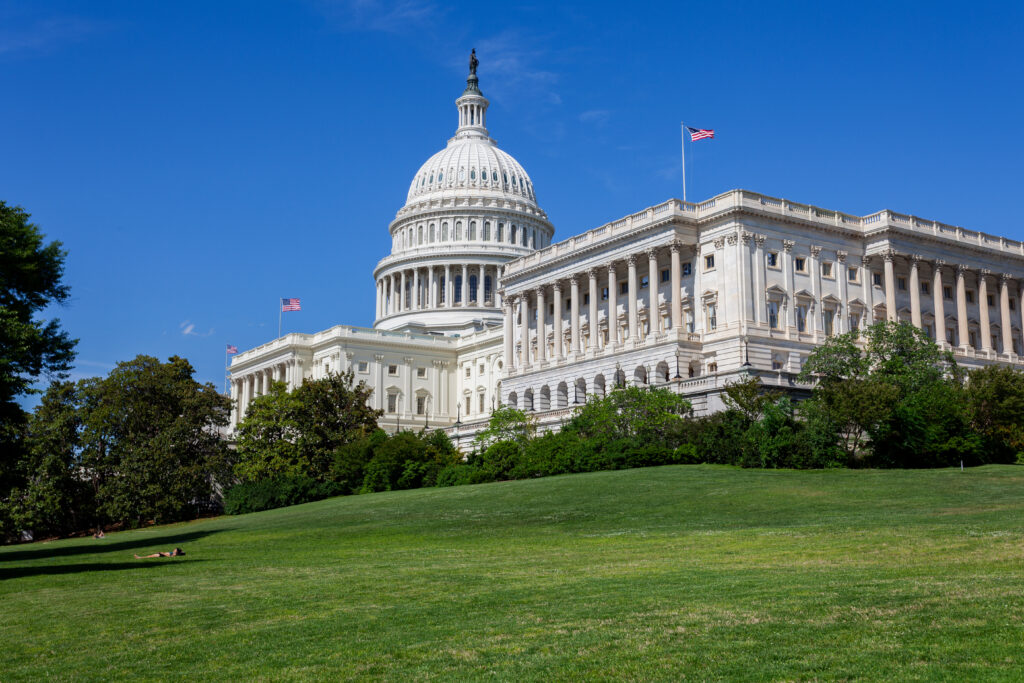
Image: The United States Capitol, photographed in May 2010. Archival photograph by Trendscope (Simon Gagner), Wikimedia Commons, CC BY 4.0. No crop or alteration to the uploaded image.