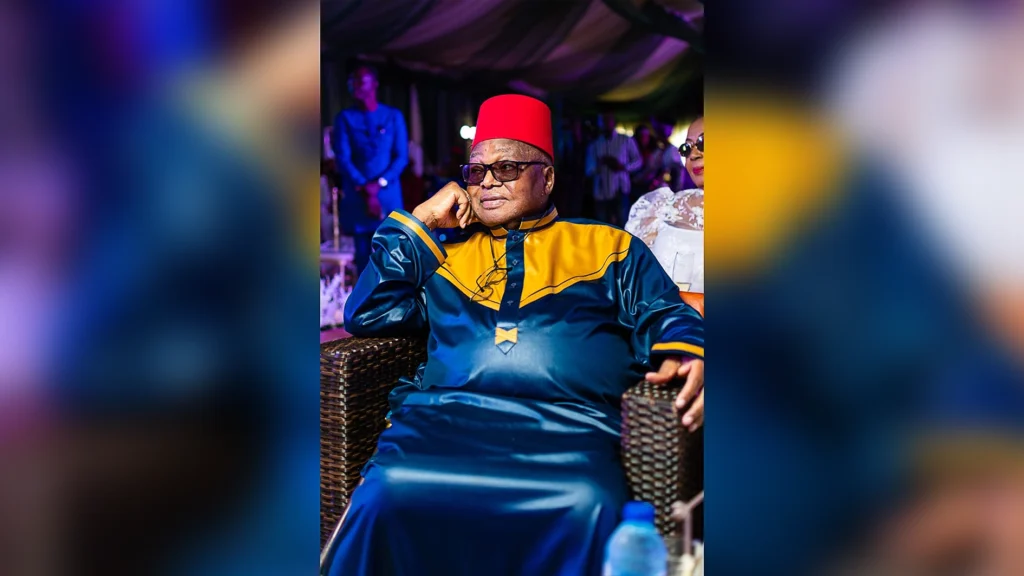
Ambassador Patrick Dele Cole, the historian, journalist, diplomat and elder statesman whose career moved from the newsroom to Nigeria’s foreign service and the heart of public debate, has died in London at the age of 86.
President Bola Tinubu confirmed Cole’s death in a tribute issued by the State House on Saturday, 17 October 2026. The President described him as a distinguished diplomat, journalist, politician and public servant who devoted his life to national service.
The announcement was also supported by family confirmation reported by several Nigerian news organisations. No official cause of death or funeral arrangements had been announced at the time of writing.
Cole’s passing removes one of the surviving figures from a generation of Nigerians whose careers crossed academia, the civil service, journalism, diplomacy and politics. His work was especially significant because he did not treat those fields as separate worlds. History informed his view of power, journalism sharpened his concern for accountability, and diplomacy demanded the patience to negotiate across competing interests.
From Abonnema to international scholarship
Born on 4 August 1940 in Abonnema, in the Kalabari Kingdom of present-day Rivers State, Cole attended St Bartholomew’s School in Enugu, Baptist High School in Port Harcourt and Ibadan Grammar School.
He later studied at the University of Otago in New Zealand before proceeding to the University of Cambridge in Britain. He became a fellow of King’s College, Cambridge, and earned a doctorate in history. He also spent time as a visiting professor at the University of Pennsylvania in the United States before returning to Nigeria and entering public service.
That academic formation remained visible throughout his public career. Cole brought a historian’s attention to institutions and consequences, whether discussing the conduct of government, the responsibilities of the press or Nigeria’s place in the world.
A consequential chapter at the Daily Times
Cole entered the leadership of the Daily Times during a difficult period for one of Africa’s most influential newspaper groups. He first joined its board in the mid-1970s, when government ownership and political pressure had created uncertainty about the organisation’s editorial future.
His most enduring contribution was the development of a more formally structured editorial board. The approach separated the newspaper’s institutional opinions from the daily news operation and helped establish a model later adopted elsewhere in the Nigerian press.
Accounts of the period also credit Cole with defending professional editors when public officials tried to influence coverage. That record gave weight to President Tinubu’s tribute, which said Cole upheld the press’s role in holding public officials accountable, speaking truth to power and strengthening democratic governance.
For Nigerian journalism, that legacy matters beyond the story of one newspaper. Cole’s career demonstrated that a public appointee could recognise limits to political authority and protect the credibility of a media institution. At a time when news organisations still face financial and political pressures, the principle remains urgent.
Diplomacy, politics and public service
Cole later represented Nigeria abroad, including as ambassador to Brazil and Argentina. His diplomatic work placed him at the intersection of Nigeria’s political, economic and international interests, while his training in history offered a broad perspective on relationships between states.
He also served as a presidential adviser on international relations during the civilian administration of President Olusegun Obasanjo. Beyond appointed office, he participated in politics and remained an active contributor to national debate.
In later years, Cole continued to write, speak and serve on The Guardian Editorial Board. He consistently returned to questions of integrity, public responsibility and the duty of institutions to serve citizens rather than office-holders.
At his 86th birthday in August 2026, he urged younger Nigerians to reject corruption, ethnic division and transactional politics. The appeal captured a recurring theme in his public life: national renewal depends not only on new leaders, but also on stronger values and institutions.
A legacy across institutions
President Tinubu said Cole’s career reflected the value of dialogue, tact, mutual respect and the pursuit of shared interests. He extended condolences to the family, friends and professional associates of the late diplomat.
Cole leaves a legacy that cannot be contained within a single title. He was a scholar who entered government, a government appointee who defended editorial independence, a journalist who moved into diplomacy, and an elder statesman who remained engaged with Nigeria’s unfinished questions.
His death is therefore a loss not only to his family and the Kalabari community, but also to the institutions he helped shape. It offers another moment to consider how Nigeria preserves the memory of public figures whose influence lies as much in the standards they defended as in the offices they held.
Readers with verified photographs, documents or first-hand professional recollections of Ambassador Patrick Dele Cole may share them with the Podium News newsroom for future archival coverage of his life and work.