Aafin Ìlù in Ede brings talking drums, visual art and cultural education into a centre dedicated to preserving Yoruba heritage. Led by Prince Adewale Laoye, the Osun State institution also documents the legacy of his father, the late Timi of Ede, Oba John Adetoyese Laoye I.
Known as the “Drummer King”, the former monarch remains central to the centre’s work. Its programme extends beyond performances to guided tours, drum displays, storytelling, training and exhibitions. Laoye, who performs as the “Drummer of Peace”, presents those activities as ways of keeping cultural knowledge accessible to students and visitors.
The centre was unveiled under the Aafin Ìlù name in 2020, following an earlier identity as Rathdrum. At the unveiling, attended by the Timi of Ede, Oba Munirudeen Lawal, Laoye said the venue would offer students and tourists an introduction to Yoruba and African culture, according to Punch’s contemporary report.
He also connected his father’s work with the signature tune of the former Western Nigeria Broadcasting Corporation and Western Nigeria Television. The centre’s stated purpose included cultural presentations and education, alongside preserving the royal father’s artistic legacy.
Laoye described that inheritance in a March 2024 interview with Clement Adeyi for The Insight. He said his father combined drumming with dance and storytelling, using the talking drum to communicate. Laoye traced his own interest to childhood and his learning to his paternal grandmother.
“I can’t do anything without telling his story,” he said of his father.
In the same interview, Laoye described Aafin Ìlù as a place where drums were retained as artefacts for visitors and students undertaking excursions and research. He said its activities encompassed music, songs, local dress and Yoruba language. The language, he explained, remained the medium through which the centre communicated its work.
The visual arts form another part of the institution’s programme. Its current exhibition archive lists shows concerned with textiles, dye, memory, poetry and royal imagery. Among the recorded titles are Aso, Aro, Ati Aworan, translated as Textile, Dye & Imagery, and Awon Akéwì àti Aworan, Poets & Painters.
The archive also lists Àfin Ìrántí, or Palace of Memory, alongside exhibitions drawing on crowns and kingship. Its upcoming exhibition section currently carries a notice to watch for further information, rather than a dated programme.
In May 2025, the centre announced a week-long display of photographs and historical images marking 50 years since Oba Laoye’s death. The announcement invited the public to view material about his life, reign and cultural work. It placed the exhibition within remembrance activities for the former ruler.
Drumming has also carried the institution’s work into civic gatherings. In August 2026, The Guardian reported a peace event organised by Laoye in Ede ahead of the Osun governorship election. Artists, poets, chanters and singers performed, while traditional and religious leaders joined youths and community representatives.
The Ooni of Ife, Oba Adeyeye Ogunwusi, was represented by Olori Aderonke Ogunwusi. Laoye appealed to political leaders to avoid inflammatory language and urged young people to reject recruitment into violence. The event used traditional performance to carry its message of peaceful participation.
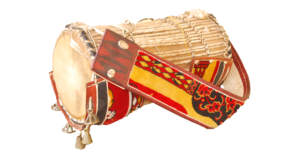
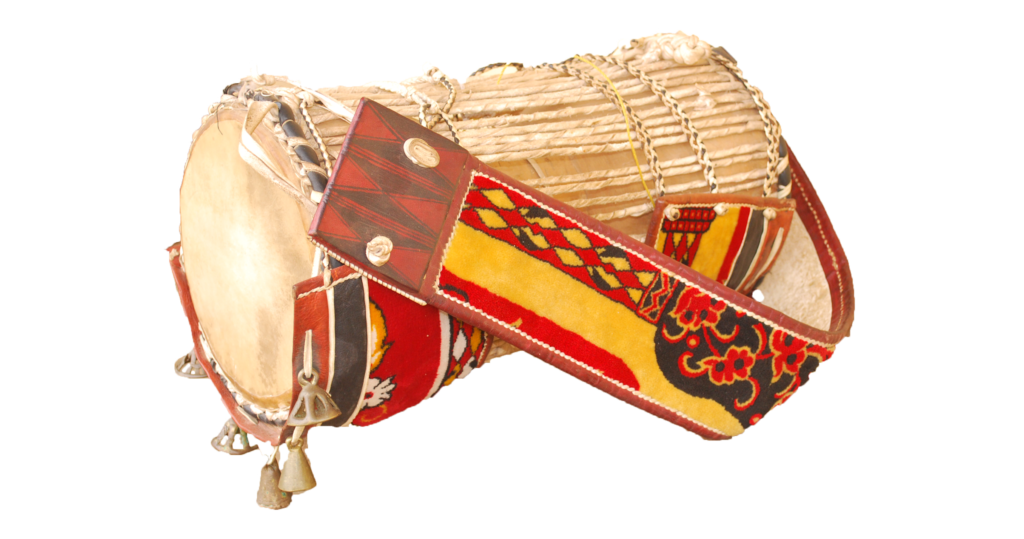
Archival illustrative image: Yoruba talking drum, Mplanetech, 11 January 2017, via Wikimedia Commons, CC BY-SA 4.0. Not an object from Aafin Ìlù or a photograph of its founder.