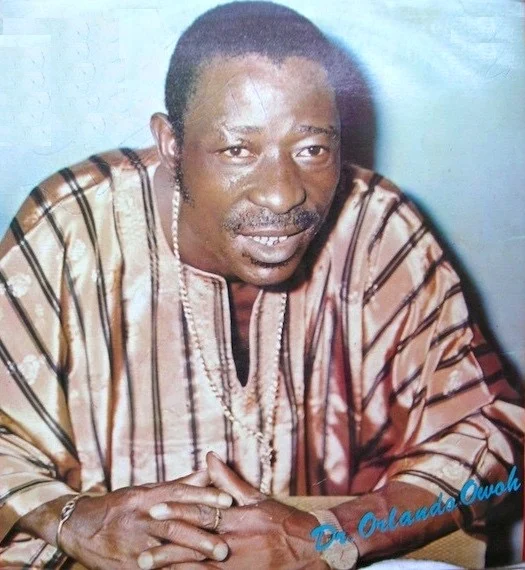
The music and cultural legacy of Yoruba highlife pioneer Orlando Owoh will return to the centre of Lagos nightlife on 7 November, when a festival dedicated to his distinctive Kenery sound brings live bands, storytelling traditions and multiple generations of listeners together in Lekki.
The Orlando Owoh Music Festival 2026 is scheduled for KYMA Beach, Elegushi, from 3pm until 4am. Organisers have announced a programme spanning Kenery music, highlife, juju, Afrobeat, cultural performances and disc jockey sets.
The festival is being presented by Lekan Jimoh, chief executive of LJ Entertainment, and the Orlando Owoh International Foundation, with Kenery Music supporting the programme. It is intended both as a celebration for established fans and an introduction for younger listeners who may know Owoh’s name without having encountered the range of his recordings.
That intergenerational purpose gives the event significance beyond a tribute concert. Orlando Owoh developed a musical voice rooted in Yoruba language, guitar-led highlife, percussion, humour and commentary on everyday life. His songs addressed love, work, morality, politics and the pressures faced by ordinary people, often in language that listeners could immediately recognise.
Owoh, whose birth name was Stephen Oladipupo Olaore Owomoyela, began his professional journey as a drummer and singer with the Kola Ogunmola Theatre Group. He later formed the Omimah Band before leading the Young Kenneries and African Kenneries International.
His approach survived major changes in Nigerian popular taste. As juju and fuji grew in prominence, he retained the earthy guitar, vocal and percussion character that made his music distinctive. The style became widely associated with the name Kenery, and his direct, gravelly delivery helped him build an audience across class and generational lines.
The official Orlando Owoh platform describes his work as a fusion of highlife and Yoruba musical identity, marked by storytelling, humour and social observation. His record company, Blue Pie Records, also notes that he sang mainly in Yoruba and favoured a roots-oriented sound even as electronic production became increasingly common elsewhere.
For Podium News, the most important part of the 2026 festival is the opportunity it creates for cultural transmission. Heritage survives when it is heard, discussed, performed and made accessible, not simply when the name of a late artist is repeated.
Owoh’s music carries vocabulary, proverbs, social memory and ways of interpreting public life. Returning that catalogue to a live setting can help younger musicians and audiences hear how Yoruba expression functioned within highlife before today’s digital Afrobeats economy.
The programme announced for Lagos also places Kenery beside juju, highlife and Afrobeat rather than isolating it. That wider musical frame could help listeners recognise the conversations between Yoruba popular forms, from theatre and palm-wine influences to guitar bands, percussion-led social music and the globally recognised sounds that followed.
Organisers have associated members of Owoh’s family, including his children Orimipe, Kunle and Daisi Owoh, with efforts to sustain the musical heritage. Their involvement reinforces the need for accurate archiving, rights management and credible biographical work around the artist’s catalogue.
Orlando Owoh died in 2008 after a career lasting several decades. His recordings remain valued for their melodic character and for the way they turned social experience into music that could be danced to, remembered and debated.
The festival arrives at a moment when Nigerian audiences are increasingly revisiting earlier musical traditions through reissues, streaming platforms, documentaries and live celebrations. Such renewed attention can expand access, but it also places responsibility on organisers and cultural institutions to preserve original recordings, document contributors and avoid reducing complex careers to nostalgia.
A successful Orlando Owoh festival should therefore do more than reproduce familiar songs. It can create space for musicians to explain the structure of Kenery, for younger performers to reinterpret the material responsibly and for families and archivists to preserve reliable accounts of the people behind the sound.
The beach setting and overnight schedule suggest an entertainment-led programme, but the cultural value will rest on how effectively the performances connect Owoh’s music with the Yoruba experiences, language and social questions from which it emerged.
Prospective attendees should confirm ticket availability, entry conditions and any changes to the announced schedule through the organisers’ official channels before travelling to Elegushi.
Podium News invites readers who grew up with Orlando Owoh’s music to share the songs and memories they believe younger generations should encounter first.