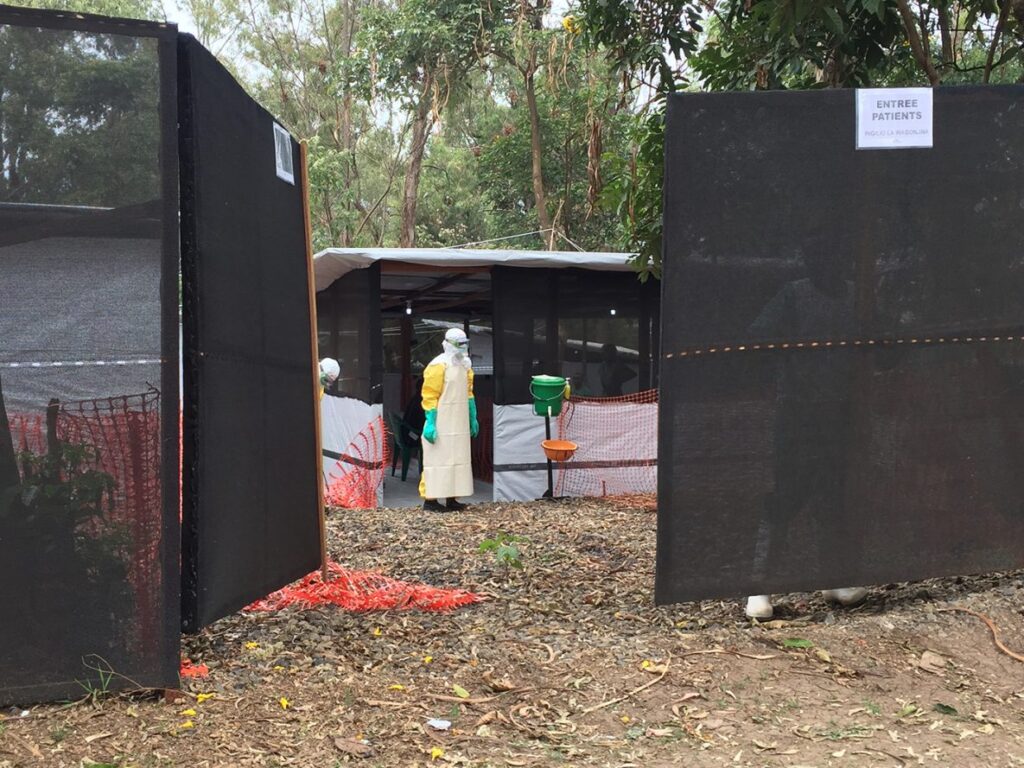
The Democratic Republic of Congo’s record Ebola outbreak has reached an eighth province as Kenya confirmed that its national case count has risen to seven, marking a significant new phase in an epidemic that has already crossed borders and placed health workers at growing risk.
North Ubangi becomes eighth affected province
Congo’s National Institute for Biomedical Research confirmed two infections in North Ubangi province on Sunday, 18 October, including one death. The province borders the Central African Republic, adding another international frontier to an outbreak that health authorities have struggled to contain.
North Ubangi joins North Kivu, Ituri, Haut-Uele, Tshopo, South Kivu, Bas-Uele and South Ubangi on the list of affected provinces. Although the outbreak remains concentrated in eastern Congo, its widening geographical reach complicates surveillance, contact tracing and the movement of patients and health teams.
The latest Congolese situation report recorded 67 new confirmed infections and 26 deaths in the 24 hours to 16 October. That brought the cumulative total since the outbreak began in May to 9,415 confirmed cases and 4,536 deaths. Ituri alone accounted for 44 of the newly recorded infections.
This is now the largest and deadliest Ebola outbreak in Congo’s history. It is caused by the Bundibugyo virus, a relatively rare Ebola virus for which no vaccine or specific treatment has been approved. Medical teams therefore depend heavily on early identification, isolation, supportive care, safe burials and rigorous contact tracing.
Kenyan health workers among new cases
Kenya’s Health Ministry said four additional people had tested positive, raising the country’s total to seven. Three are health workers who cared for Kenya’s first confirmed patient, while the fourth person had already been placed in quarantine because of a known link to that case.
The four newly confirmed patients are in isolation and receiving care. Two other patients were reported to be in stable condition.
Kenya’s first patient, a 40-year-old man who had travelled from Congo, died on 5 October after arriving in the country. Health officials subsequently identified about 130 contacts. The ministry said 128 were in quarantine and two were still being traced.
The infections among health workers underline the occupational dangers created by Ebola, particularly when a patient is treated before the disease is recognised. They also show why infection-control equipment, training and rapid laboratory testing remain essential throughout the health system, not only at specialist treatment centres.
Why cross-border spread matters
Congo’s outbreak has already produced infections outside the country. Uganda recorded 20 cases and two deaths earlier in the year before declaring its outbreak over in August. Kenya’s cases are linked to the current Congolese epidemic, and the confirmation in North Ubangi brings transmission closer to another national border.
The virus spreads through direct contact with the blood or other bodily fluids of an infected person, or with contaminated items such as clothing and bedding. It is not spread through ordinary casual contact in the way many respiratory viruses are. Clear public information is important because fear and misinformation can discourage people from reporting symptoms, identifying contacts or cooperating with safe-care measures.
Kenya has strengthened screening and established an emergency hotline for people who believe they may have been exposed or who develop symptoms after a known contact. Members of the public should use official health-ministry guidance and avoid circulating unverified cures, casualty figures or claims about affected locations.
A response under severe pressure
Containment work in Congo has been weakened by armed conflict, population displacement, shortages of treatment facilities and medical supplies, and difficulties tracing people who have been exposed. Health authorities have also warned that some infections and deaths are occurring outside treatment centres, allowing community transmission to continue.
These conditions make the latest expansion more than a statistical milestone. Every newly affected province requires laboratory capacity, protected health teams, safe transport, reliable local communication and community cooperation. Cases near international borders also demand coordination between neighbouring states rather than isolated national responses.
The most urgent priorities are to protect frontline workers, find the remaining contacts in Kenya, support isolation and treatment, and prevent further movement of the virus into communities and across borders.
Podium News will continue monitoring verified updates from Congo’s public-health institute, Kenya’s Health Ministry, regional health agencies and the World Health Organization. Readers should rely on their national health authorities for current exposure guidance and emergency contact information.