National Security Adviser Nuhu Ribadu has given a 33-member committee until 27 November to draft a new National Security Strategy, reviewing the framework adopted in 2019.
The panel was inaugurated in Abuja on Thursday, 29 October, with a brief covering terrorism, banditry and kidnapping alongside cyber threats, misinformation, food insecurity and other risks.
Ribadu, who was represented at the inauguration by the committee’s chairman, said changes in Nigeria’s domestic, regional and international security environment required an updated approach. He asked members to produce a practical document capable of guiding government institutions through present and emerging challenges.
The assignment is to prepare a proposed 2026 strategy. Submission of the panel’s draft will be a further step in that process, rather than evidence that a completed strategy has already been adopted or implemented.
Ribadu said the framework should connect the protection of lives and national interests with economic development and national cohesion. He also asked the panel to reflect the Tinubu administration’s stated priorities in human security, economic transformation and peace.
The committee includes representatives of the Armed Forces, intelligence agencies, government ministries, civil society and academic institutions. Its work is intended to draw perspectives from beyond the military and security services.
Deputy chairman Major General E.V. Onumajuru, retired, said the country’s security challenges required a reassessment of national priorities. He identified links between armed threats and pressures arising from cybercrime, economic vulnerability, food insecurity and climate change.
Onumajuru called for an approach that would anticipate problems rather than depend only on responses after incidents. He said members would engage relevant institutions, private-sector representatives and traditional leaders during the review, according to PRNigeria’s account of the inauguration.
The Office of the National Security Adviser pledged administrative, technical and logistical support for the exercise. Members were asked to use the four-week period for consultation, analysis and preparation of an actionable draft.
The existing 2019 strategy already describes national security in terms extending beyond territorial defence. Its statement of national interests includes Nigeria’s sovereignty and territorial integrity, the welfare of its people, the preservation of democracy and the protection of human security.
The document also identifies respect for human rights, the rule of law and access to justice among Nigeria’s foundational values. It links security with political inclusion, economic empowerment and social integration, while recognising women’s and minority rights.
Its international objectives include cooperation to prevent and resolve conflicts through regional and multilateral institutions. The document names the Economic Community of West African States, African Union and United Nations among the mechanisms for pursuing those interests.
The State House describes the National Security Adviser’s office as responsible for leadership, management and capacity development within the country’s security architecture.
At the inauguration, Ribadu urged the review panel to consult widely and ensure its proposals were realistic enough to guide policy. Onumajuru pledged the committee’s commitment to the assignment, describing it as a responsibility to protect Nigeria’s sovereignty and territorial integrity.
The committee is expected to submit its final draft to the National Security Adviser on Friday, 27 November 2026.
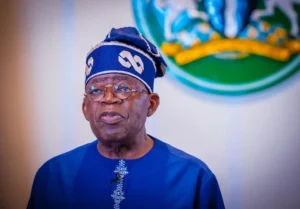
Archive photograph: Nuhu Ribadu, via AIT. Photographer and capture date not identified. Ribadu was represented at the committee inauguration.