
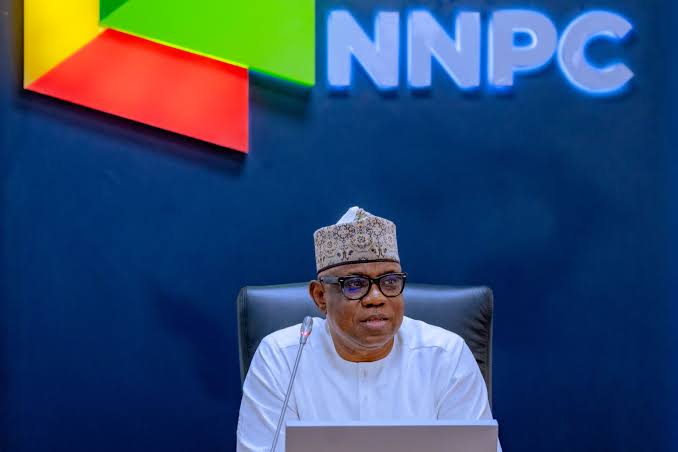
The Nigerian National Petroleum Company Limited continues to anchor the nation’s fiscal stability, reporting a N905 billion profit for June 2025 despite a noticeable 14% decline from May’s N1.054 trillion performance.
This financial disclosure, contained in the company’s latest monthly report, reveals deeper complexities in Nigeria’s petroleum sector where production gains coexist with volatile market realities.
The state oil giant remitted N6.96 trillion to the Federation Account in the first five months of 2025, marking a significant N1.4 trillion increase over the N5.58 trillion recorded in the initial four months, demonstrating its growing contribution to national coffers even as global oil prices fluctuate unpredictably.
Operational metrics present a mixed picture of resilience and challenge. While June’s revenue dipped to N4.57 trillion from May’s N6 trillion due to unfavorable market conditions, production figures tell a more optimistic story.
Crude oil and condensate output climbed to 1.68 million barrels per day – the highest level since January – suggesting gradual recovery in upstream operations. Natural gas production similarly improved to 7.58 billion standard cubic feet daily, reinforcing NNPC’s strategic position in both domestic energy supply and export markets.
The company also reported enhanced petrol availability at its retail stations, with supply reliability improving to 71% in June from 62% the previous month, offering temporary relief to consumers in a nation perennially anxious about fuel scarcity.
Infrastructure development continues at varied paces across critical projects. The Ajaokuta-Kaduna-Kano gas pipeline progressed to 83% completion, with engineers achieving a crucial milestone in crossing the River Niger – a technical feat that reduces completion risks for this strategic energy artery.
The OB3 gas pipeline remains stalled at 96% completion as specialists apply lessons learned from the AKK project to address remaining technical challenges. Meanwhile, rehabilitation work on the Port Harcourt, Warri, and Kaduna refineries persists without clear timelines, maintaining the frustrating paradox of Africa’s largest oil producer relying heavily on fuel imports.
Beyond physical infrastructure, NNPC expanded its corporate social initiatives, training over 67,000 National Youth Service Corps members in financial literacy during June, bringing the program’s total beneficiaries to 870,383 since inception.
These financial and operational disclosures, while provisional and subject to reconciliation, underscore NNPC’s evolving role as both commercial entity and national development partner.
The June figures reflect the delicate balance between Nigeria’s hydrocarbon dependence and the urgent need for economic diversification, between immediate revenue generation and long-term energy transition planning.
As global energy markets continue their unpredictable evolution, NNPC’s performance remains a crucial barometer for Nigeria’s broader economic health and its capacity to translate natural resource wealth into sustainable development for its citizens.
The coming months will reveal whether current production gains can offset market volatility, and whether infrastructure investments will finally translate into tangible improvements in domestic refining capacity and energy security.