
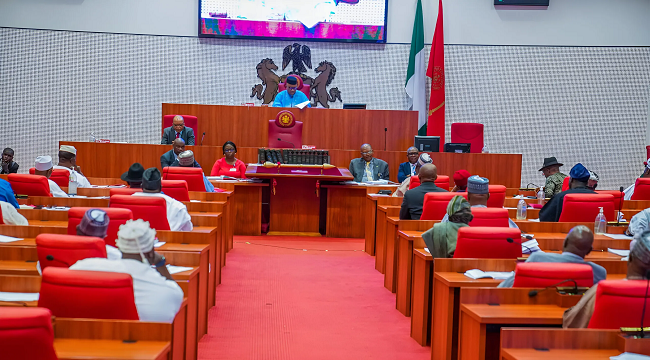
Nigerians earning ₦800,000 or less per year will no longer pay personal income tax, following the signing of four major tax reform bills into law by President Bola Tinubu. This exemption, which takes effect from January 2026, is designed to ease the financial burden on low-income earners and increase their disposable income.
Senator Solomon Adeola, chairman of the Senate Committee on Appropriations, highlighted the reform as a key component of broader efforts to transform Nigeria’s fiscal landscape. He noted that the new laws also zero-rate VAT on essential goods and services such as basic food items, education, healthcare, sanitary products, and locally manufactured pharmaceuticals, making them more accessible and affordable for the general public.
The four new laws—the Nigeria Tax Act, Nigeria Tax Administration Act, Nigeria Revenue Service (Establishment) Act, and Joint Revenue Board (Establishment) Act—aim to simplify tax compliance, eliminate overlapping and burdensome taxes, and foster domestic productivity. The Nigeria Tax Act consolidates tax legislation to reduce duplication and complexity, while the Nigeria Tax Administration Act standardizes procedures for efficient tax administration nationwide.
Small businesses and startups will benefit from higher exemption thresholds, simplified registration, and protection against multiple taxation at all levels. The reforms are also expected to boost infrastructure development in rural and underserved communities by ensuring better allocation of tax revenues.
Senator Adeola urged Nigerians to support the full implementation of the new tax laws, emphasizing that these measures will deliver tangible and far-reaching benefits, promote inclusive growth, and attract foreign investment by improving the ease of doing business in Nigeria.