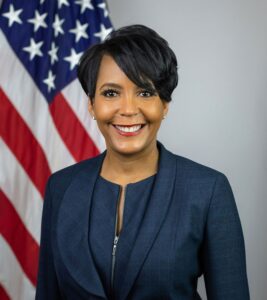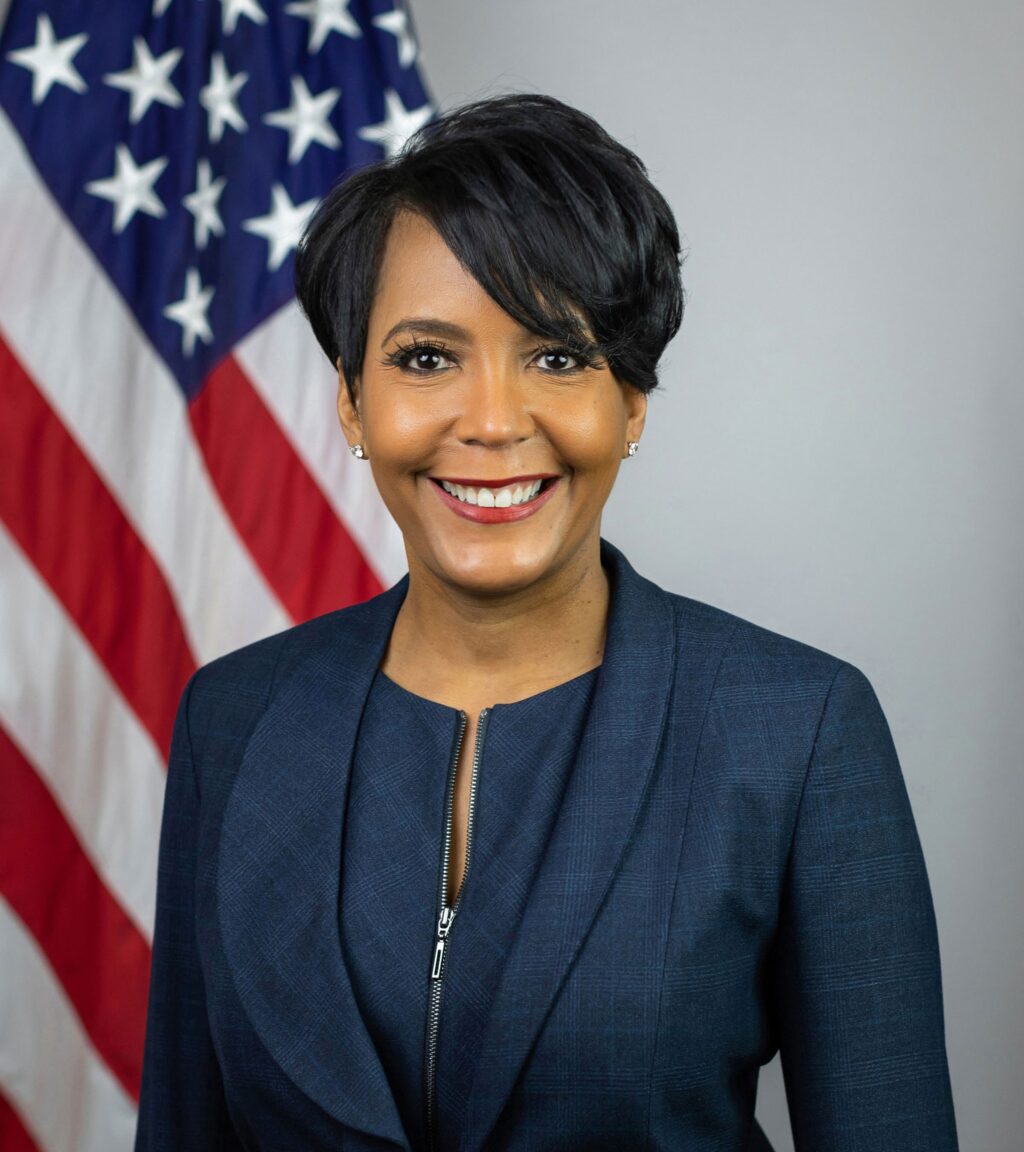
Democrat Keisha Lance Bottoms has won the race for governor of Georgia, defeating Republican businessman Rick Jackson and becoming the first Black woman elected governor of a United States state. The projected result also returns Georgia’s governorship to the Democratic Party for the first time since 1998, ending more than two decades of Republican control of the office.
The Associated Press called the contest for Bottoms following voting on Tuesday, 3 November 2026. The former Atlanta mayor is due to succeed Republican Governor Brian Kemp, who was barred by term limits from seeking another consecutive term. The result is an election projection rather than the state’s final certification of votes.
Bottoms, 56, entered the race with a political career that included service on Atlanta City Council, four years as mayor of the state capital and a senior role in President Joe Biden’s White House. She campaigned on affordability, healthcare, education and opposition to aspects of President Donald Trump’s agenda.
Her victory is particularly significant in a state where the growth of metropolitan Atlanta and the mobilisation of Black voters have made statewide elections increasingly competitive. Georgia supported Biden in the 2020 presidential election, but Republican candidates continued to hold the governor’s office and important positions in state government.
Bottoms’ opponent, Rick Jackson, built his campaign around his business record and proposals on taxation, regulation and public safety. The wealthy healthcare entrepreneur committed substantial personal funds to the race, making it one of the country’s most closely watched and expensive contests for governor.
Despite that spending advantage, Bottoms secured a victory that marks two milestones: Georgia has elected its first woman governor, and no Black woman had previously been elected to govern any of the 50 US states. Her election follows earlier campaigns by Democrat Stacey Abrams, whose unsuccessful bids for the Georgia governorship helped draw national attention to voter participation and representation in the state.
The incoming governor has proposed expanding Medicaid, raising the minimum wage to $15 an hour, improving public-sector pay and seeking changes to Georgia’s abortion restrictions. Delivering those proposals will depend partly on the composition of the state legislature, where Republicans may continue to hold significant power. Winning the governorship does not automatically give Democrats control of the legislative chambers.
Georgia’s result also comes alongside a separate Democratic success in the state’s US Senate election, where incumbent Jon Ossoff won another term. The two outcomes involve different offices: Bottoms’ victory changes the party holding the state governorship, while Ossoff’s re-election retains a Senate seat already held by Democrats.
Governors exercise considerable authority over state budgets, executive appointments and the implementation of state laws. Their decisions can affect education, healthcare, business regulation and the administration of elections. In Georgia, the incoming administration will also confront questions about housing costs, infrastructure and economic growth across the Atlanta region and beyond.
For African and Nigerian communities in the United States, the result represents a notable development in political representation, although it does not by itself establish any change to federal immigration rules. Those remain primarily a matter for Washington. Georgia’s diverse metropolitan communities, including African immigrant families and businesses, will be among the residents affected by the next administration’s state-level policies.
The result forms part of a wider midterm election in which Democrats are seeking gains in Congress and statehouses. However, a governor’s race does not count towards control of the US Senate or House of Representatives. Several closely fought congressional contests were still being counted as election-night results emerged.
Bottoms will take office after the formal transition and certification processes. Her administration’s ability to turn campaign pledges into law will be tested by the balance of power in Georgia’s legislature and by the state’s fiscal and political constraints.
Image: Keisha Lance Bottoms, official 2022 portrait. Executive Office of the President of the United States, public domain, via Wikimedia Commons.