Nigeria is targeting single-digit inflation before the end of 2027, Finance Minister Taiwo Oyedele said on Monday, linking the objective to lower borrowing costs and faster economic growth.
Oyedele set out the target at the 32nd Nigerian Economic Summit in Abuja on 26 October. The announcement is a policy objective, rather than a reduction already achieved or a decision to cut interest rates.
The minister said the government wanted household incomes to grow faster than prices. He argued that cheaper finance would give businesses greater scope to invest and expand, while acknowledging the constraints imposed by current borrowing costs.
Nigeria’s headline inflation rate fell to 14.63 per cent in September from 15.39 per cent in August, according to the figures cited by Nairametrics. That was the fourth consecutive monthly decline, but the rate remained above the government’s proposed destination.
Falling inflation means prices are rising more slowly. It does not mean that the overall price level has returned to where it was before the recent increases in living costs.
Oyedele defended the administration’s foreign exchange and petrol subsidy reforms, saying savings had supported salary increases, wage adjustments, pension arrears payments and subsidised credit for small businesses. Those were the minister’s claims about the use of savings; his remarks did not provide a detailed spending breakdown for each programme.
He said economic growth alone should not be the sole measure of the reforms’ effects. The government also needed to assess whether the changes improved the circumstances of households and businesses.
The minister cited the difficulties some young Nigerians had faced in paying for online applications needed to earn income. His example concerned the cost and availability of foreign exchange for services priced in dollars.
The summit brought together policymakers, business leaders and development institutions to discuss jobs, productivity and shared prosperity. It is taking place on 26 and 27 October at the Transcorp Hilton in Abuja, with virtual participation.
The Nigerian Economic Summit Group has identified the conversion of economic reforms into employment and improved living standards as a central concern. Its programme includes discussions on productivity, human capital and social protection.
Oyedele’s announcement puts a clearer end-2027 horizon on the government’s inflation ambition. However, the statement did not set out a month-by-month path or a new package of measures specifically designed to achieve that target.
Inflation and lending costs are related, but a ministerial target does not itself determine the interest rate a bank charges a customer. Businesses will still need to consider the terms of individual loans and their ability to service them.
President Bola Tinubu’s administration removed the petrol subsidy and changed the foreign exchange system after taking office in 2023. The measures form the background to the government’s reform programme and the continuing debate over household purchasing power.
The World Bank’s Nigeria Development Update, released on 8 October, reported growth of 4.2 per cent in the first half of 2026, compared with 3.9 per cent a year earlier. Services drove growth, alongside a stronger contribution from agriculture.
The summit continues on Tuesday, with the government’s inflation objective remaining a target against which subsequent price data and policy decisions can be assessed.
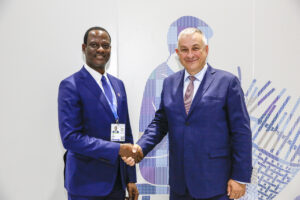
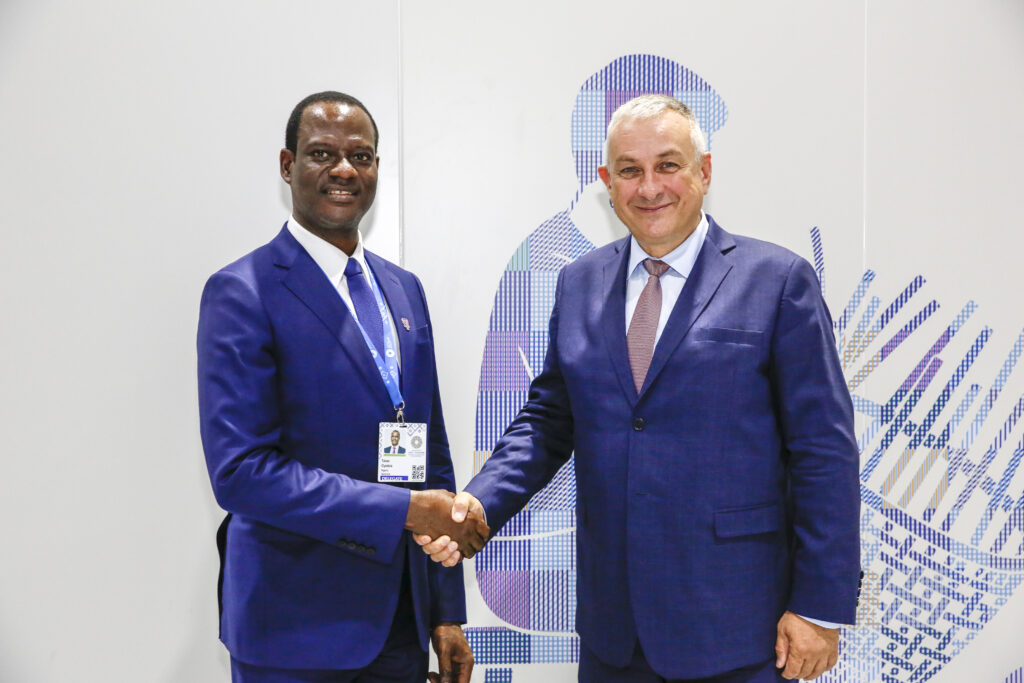
Archival photograph: Taiwo Oyedele, left, with Jozef Síkela in Bangkok, 15 October 2026. Alisa Suwanrumpha / © European Union, 2026, source, CC BY 4.0. Display versions resized. This photograph does not show the Nigerian Economic Summit.