Nigeria has approved new national policies on child protection, menstrual health and care services, while WaterAid has urged the government to provide the resources needed to turn the menstrual-health commitments into practical support for women and girls.
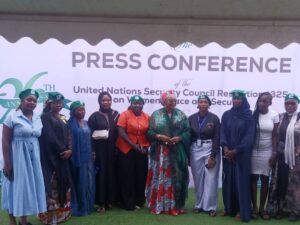
Minister of Women Affairs and Social Development Imaan Sulaiman-Ibrahim announced the approvals at an Abuja briefing marking the anniversary of United Nations Security Council Resolution 1325 on Women, Peace and Security.
She identified the instruments as the National Action Plan on Ending Violence Against Children, the National Policy on Menstrual Health and Hygiene Management for 2026 to 2030, and the National Care Policy and Implementation Plan for the same period.
The minister said the Federal Executive Council, chaired by President Bola Tinubu, had approved the measures. Their adoption sets out a policy framework; it does not establish that the proposed services have already reached households.
Under the child-protection plan, she said interventions would extend across the 36 states and the Federal Capital Territory through a Pathfinder State Model. The menstrual-health policy would address barriers to school attendance caused by inadequate access to sanitary products.
Sulaiman-Ibrahim also outlined support for local production of sanitary products through women-owned businesses and plans for pad banks in public spaces. The care policy would recognise unpaid caregiving and promote regulated childcare and elderly-care services.
WaterAid Nigeria country director Evelyn Mere welcomed the menstrual-health policy in a statement issued on Friday, 30 October, but called for prompt implementation and stronger accountability.
She said the framework addressed access to reliable information, affordable menstrual products and suitable sanitation and hygiene facilities. It should also support environments in schools, workplaces and communities where menstruation does not restrict participation.
Mere urged the ministry, the National Technical Working Group and other stakeholders to publicise the policy and commit staff, materials and funding to its implementation. She said these steps were needed to make products accessible and affordable.
WaterAid said it had contributed to developing the policy by engaging a consultant, organising consultation sessions and participating in validation of the draft. Mere attributed the final framework to collaboration among government, development partners, civil society and technical specialists.
The care-policy approval follows earlier work on the economic consequences of unpaid domestic responsibilities. At a September workshop, Sulaiman-Ibrahim said a shortage of affordable care services forced some women to choose between earning an income and supporting their families.
In remarks delivered on her behalf by the ministry’s permanent secretary, Esuabana Nko-Asanye, she called for better recognition of unpaid care and stronger links between care provision and social protection.
At the latest briefing, the minister acknowledged shortages in support for survivors of sexual and gender-based violence. She said Nigeria had 52 sexual assault referral centres serving more than 200 million people and needed additional facilities.
UN Women representative to Nigeria and ECOWAS Beatrice Eyong, represented by programme manager Peter Mancha, also identified continuing barriers to women’s participation in peacebuilding and decision-making.
The ministry’s proposals include professionalising social work through a national council and training and certifying social workers. Sulaiman-Ibrahim said a World Bank-assisted project would support their deployment to help women escaping violence, children at risk and families in crisis.
Photograph: Voice of Nigeria, Abuja Women, Peace and Security anniversary briefing.