Nigeria and Rwanda have signed a three-year roadmap to expand an air cargo corridor offering Nigerian exporters lower freight rates to five African destinations, following a pilot programme that began in June. The agreement was announced at the Creative Africa Nexus (CANEX) WKND 2026 gathering in Lagos, where officials also inaugurated a trade intelligence portal.
Minister of Industry, Trade and Investment Jumoke Oduwole said the arrangement covers shipments from Lagos through Kigali to Nairobi, Johannesburg, Harare and Lusaka. She put the negotiated freight charges at between $1.20 and $1.90 per kilogramme, compared with the $3 to $10 per kilogramme that she said exporters had previously paid on routes to African markets.
Oduwole described the new charges as 50 to 70 per cent below comparable commercial rates. The figures are government-reported comparisons rather than independently published tariffs for every shipment, and exporters will need to establish which goods, routes and booking conditions qualify.
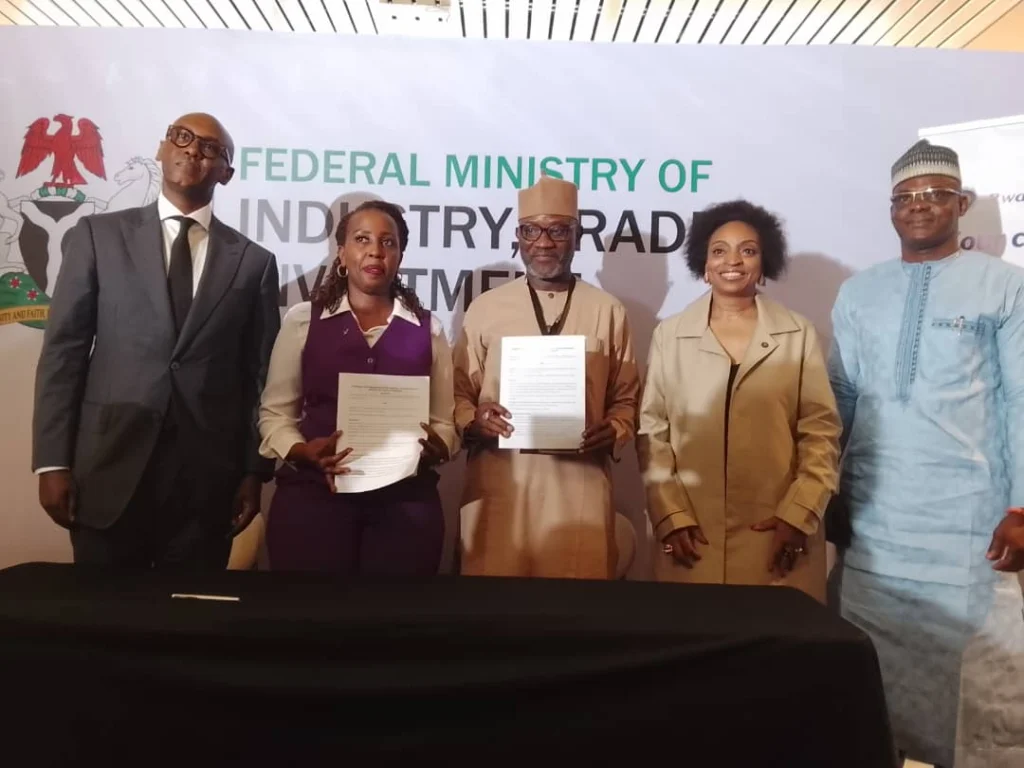
The agreement was signed on Friday, 6 November, alongside the four-day CANEX event at the Wole Soyinka Centre for Culture and Creative Arts. The gathering, organised by the African Export-Import Bank and hosted by Nigeria, brings together businesses and participants from film, music, fashion, publishing, sport and other creative industries.
The minister said negotiations with Rwanda began in April, with support from the United Nations Development Programme’s Regional Bureau for Africa. She also linked the initiative to bilateral discussions between President Bola Tinubu and Rwanda’s President Paul Kagame in May. Those discussions preceded the operational trial and the latest formal roadmap.
According to Oduwole, the first shipment under the corridor was flagged off on 19 June and involved nine exporters sending goods to four destinations. Following a four-month pilot, Nigerian businesses holding certificates of origin under the African Continental Free Trade Area can access the corridor, she said.
Rwanda’s High Commissioner to Nigeria, Moses Rugema, gave a further indication of the pilot’s scale. He said nearly 20 shipments of Nigerian goods had reached Kigali, Nairobi, Johannesburg and Lusaka since the first RwandAir cargo export flight from Lagos in June.
Rugema cited rates of $1.20 to $1.70 per kilogramme, a narrower range than the minister’s $1.20 to $1.90. Both figures were presented at the signing, but the officials did not publish a route-by-route tariff schedule in the accounts available from the event. The distinction matters to exporters comparing costs for individual destinations.
The initiative is intended to address one of the obstacles facing businesses seeking customers elsewhere on the continent: the cost of moving relatively small consignments quickly and reliably. Air freight can be particularly relevant to time-sensitive and higher-value products, although transport charges are only one part of the expense of reaching a foreign market.
The roadmap provides for continued government-to-government work on cargo pricing, distribution challenges and wider trade cooperation. Nigeria also plans to explore Rwandan participation in trade capacity-building programmes. The officials did not announce a guaranteed volume of future exports or a completion date for all elements of the roadmap.
The countries also launched a Trade Intelligence Portal intended to provide market and investment information to companies and prospective investors. Its usefulness will depend on the availability and quality of the data and on whether businesses can use it to identify buyers and navigate market requirements.
Oduwole said Nigeria’s non-oil exports reached $6.1 billion in 2025, an 11.5 per cent increase on the previous year. That national figure provides context for the government’s export ambitions, but it is not evidence of revenue generated by the newly signed corridor.
The corridor agreement forms part of broader efforts to make the African Continental Free Trade Area more practical for businesses. Preferential trade arrangements do not automatically remove freight, customs, distribution or documentation costs, and exporters still have to comply with applicable rules in destination markets.
At the signing, Rugema encouraged Nigerian businesses to engage with RwandAir about the available cargo arrangements. The immediate measure of the partnership will be whether qualifying exporters can obtain the announced rates and build regular trade beyond the limited shipments recorded during the pilot.
Photograph: News Agency of Nigeria, CANEX WKND 2026 roadmap signing in Lagos.