Yoruba bàtá and Indian mrdanga traditions will be discussed in Miami on Saturday, 24 October 2026, in a programme combining sacred music, cultural history and live demonstration. Ancient Roots, Common Resonance is scheduled for 5pm to 7pm at the Marshall L. Davis, Sr. African Heritage Cultural Arts Center.
Sacred Vedic Arts is presenting the event as part of its Song of the Soul speaker series. Its announcement places Mukunda das at the centre of a discussion about rhythmic connections between West African and Indian traditions.
The Greater Miami Convention & Visitors Bureau lists the programme among the city’s cultural events. Its description emphasises both points of connection and the distinct histories and cultural settings of the two traditions.
According to the bureau’s account, Mukunda das spent years living and teaching in West, Central and East Africa. His background also includes study within the Bhakti tradition and time in India, where he helped sustain continuous kirtan at the Krishna Balaram Temple in Vrindavan.
The Yoruba bàtá belongs to an ensemble tradition with a substantial religious and social repertoire. The Metropolitan Museum of Art describes the ìyáàlù, or mother bàtá, as the largest instrument in a set typically comprising three or four drums.
Its account identifies bàtá as a means of reproducing aspects of speech and associates the ensemble with Ṣàngó and other Yoruba òrìṣà traditions. It also records the drums’ place in sacred and secular performance in Cuba, Puerto Rico and the United States.
An early twentieth-century Yoruba example in the museum’s collection is made from wood, hide and fabric. Classified as a double-headed conical drum, it measures 61 centimetres long. Its two heads differ in diameter, at approximately 27.9 and 17.8 centimetres.
The Miami discussion sits within a wider exhibition linking devotional painting, photography, sound and digital media. Song of the Soul is curated by Ludlow E. Bailey and Manjari Dasi and draws on the art and music of bhakti-yoga.
Sacred Vedic Arts identifies kirtan, or devotional chanting and sacred song, as a central part of that exhibition. It includes paintings by Śyāmarānī Dāsī, an animated video installation and photographic and audio material documenting the international movement’s communities and practitioners.
The organisers place the exhibition’s emphasis on chant, rhythm and devotion in conversation with African and Afro-Caribbean spiritual traditions. The October programme offers a specific occasion to examine those connections through musical examples, alongside the exhibition’s visual material.
The host centre also maintains a broader programme of arts training in Miami. Its activities include after-school classes, youth apprenticeships, exhibitions and artist residencies. Its facilities include music rooms, a concert hall, a performing arts theatre and the Amadlozi Gallery.
The centre celebrated its fiftieth anniversary in September 2025. Its current website describes programmes supporting local and emerging artists, alongside training in classical, contemporary and other art forms.
The event’s booking listing identifies an in-person programme suitable for all ages, with free parking and doors opening at 4.30pm. Registration is linked from Sacred Vedic Arts’ exhibition page. The venue is at 6161 Northwest 22nd Avenue, Miami.
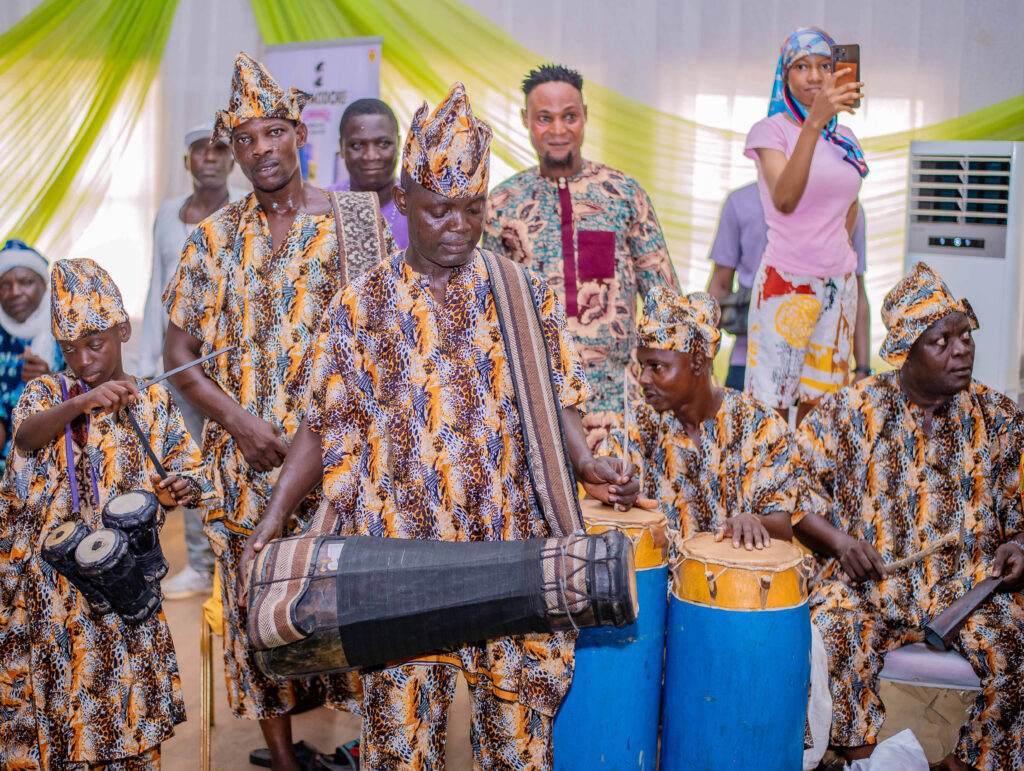
Archive photograph: Posh Photography, bàtá musicians at an Ibadan cultural festival, 15 April 2026. This image does not show Mukunda das or the Miami programme. Source, CC BY-SA 4.0. Prepared website and social versions are cropped around the bàtá drum; photographic adaptations retain the same licence.