
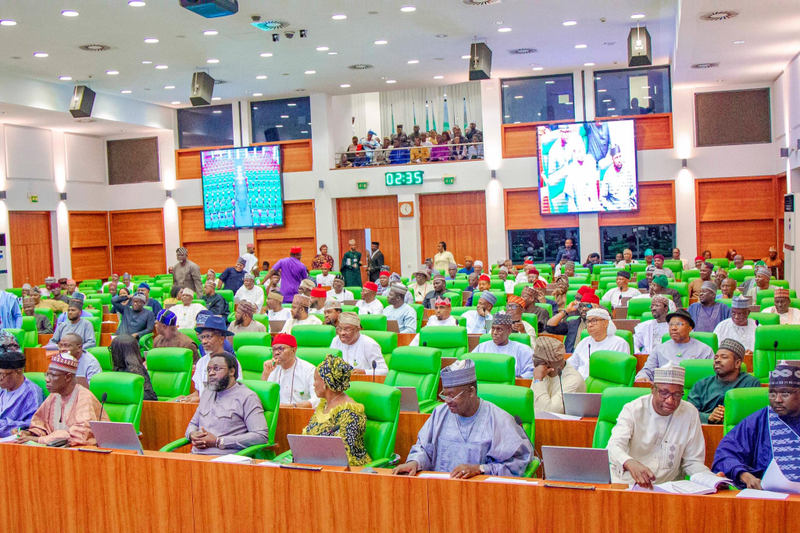
The Nigerian House of Representatives on Tuesday rejected several constitutional amendment bills, including one seeking to establish a rotational presidency and vice presidency among the country’s six geopolitical zones-North-Central, North-East, North-West, South-East, South-South, and South-West. The bill, sponsored by Deputy Speaker Benjamin Kalu, aimed to enshrine the principle of rotation in the 1999 Constitution but was voted down following a voice vote during plenary.
Another key bill rejected sought to strip the Independent National Electoral Commission (INEC) of its power to register and regulate political parties, proposing instead to transfer these responsibilities to the Office of the Registrar-General of Political Parties. This bill was co-sponsored by Speaker Abbas Tajudeen and Francis Waive but failed to pass the second reading.
Other constitutional alteration bills turned down included proposals to:
- Establish independent Offices of State Auditors-General for Local Governments and the Federal Capital Territory Area Councils to strengthen fiscal oversight and promote accountability at the grassroots level.
- Increase the number of judges in the Federal High Court to not fewer than 100 and expand its jurisdiction to cover admiralty matters, shipping, navigation on major rivers, federal ports, and carriage by sea.
- Empower the National Judicial Council, in collaboration with the National Salaries, Incomes and Wages Commission, to fix and review salaries and allowances of judicial officers and judiciary staff.
- Create Ughelli East Local Government Area in Delta State.
The bills were initially debated simultaneously after the House temporarily suspended its rules to allow efficient discussion. However, most members opposed the rotational presidency bill, with Deputy Minority Leader Aliyu Madaki arguing that the Federal Character Commission already addresses equitable representation and that rotation should not be constitutionally mandated. Some lawmakers, including Sada Soli (APC, Katsina), warned that constitutionalizing rotation could compromise leadership quality and exacerbate regional and ethnic rivalries.
Following the rejection, the Chairman of the House Committee on Rules and Business appealed for reconsideration, suggesting the bills be addressed individually rather than as a group. However, Deputy Minority Leader Ali Jesse cited procedural rules requiring substantive motions for rescinding votes. The Speaker directed the committee to list the motions for re-presentation on the order paper for the next legislative day.
The House resolved to revisit the bills on Wednesday to consider each on its individual merit. The rejection reflects ongoing debates about Nigeria’s political structure, governance reforms, and the balance between regional representation and meritocracy.