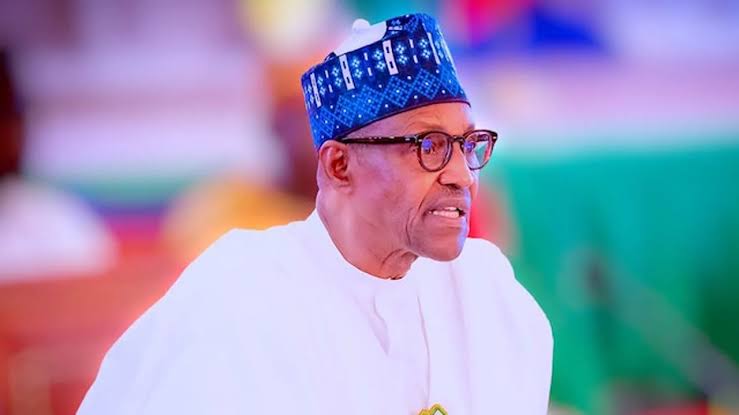
Nigeria’s former President, Muhammadu Buhari, has died at the age of 82 while receiving medical treatment in London, United Kingdom.
The announcement was made by his family and confirmed by his longtime spokesperson, Garba Shehu, on Sunday afternoon.
The former leader, who served as both military head of state and later as democratically elected president, passed away quietly in a private medical facility after what sources described as a protracted but undisclosed illness.
Born on December 17, 1942, in Daura, Katsina State, Buhari rose to prominence as a disciplined military officer and became head of state after a military coup in December 1983, ousting the civilian government of Shehu Shagari.
His military regime was known for its strict anti-corruption stance, infamous decrees, and “War Against Indiscipline,” but was short-lived, ending in August 1985 following a palace coup led by General Ibrahim Babangida.
For years after his ouster, Buhari remained a key figure in Nigerian politics, largely revered by supporters from the northern regions and the military establishment.
After several unsuccessful attempts, Buhari achieved a historic electoral victory in 2015 under the banner of the All Progressives Congress (APC), defeating incumbent President Goodluck Jonathan.
It was the first time in Nigeria’s history that an opposition candidate unseated a sitting president. His presidency, which spanned two terms from 2015 to 2023, was marked by significant national and international attention.
While lauded for his stance against corruption and commitment to infrastructure projects, his administration also faced heavy criticism for rising insecurity, a struggling economy, widespread poverty, suppression of dissent, and increasing debt burdens.
Under his leadership, Nigeria grappled with complex challenges including the Boko Haram insurgency, banditry across the Northwest, separatist agitations in the Southeast, and severe inflation that affected millions of households.
Buhari’s critics often pointed to his long absences due to medical trips abroad, a pattern that persisted throughout his presidency and drew public outcry over transparency and governance.
Despite these controversies, his political base remained fiercely loyal, viewing him as a symbol of integrity in a system they perceived as riddled with corruption.
Following the completion of his second term in May 2023, Buhari retired to his hometown of Daura, occasionally making public statements through aides but largely remaining out of the spotlight.
His death comes as a moment of reflection for many Nigerians, rekindling national debate over his complex legacy as a military disciplinarian, an austere civilian president, and a deeply polarizing figure in the nation’s democratic evolution.
Arrangements for his burial, expected to follow Islamic rites, are being coordinated by the Nigerian government and the Buhari family.
Tributes have already begun pouring in from across Nigeria and abroad, with many world leaders, former colleagues, and political opponents offering their condolences