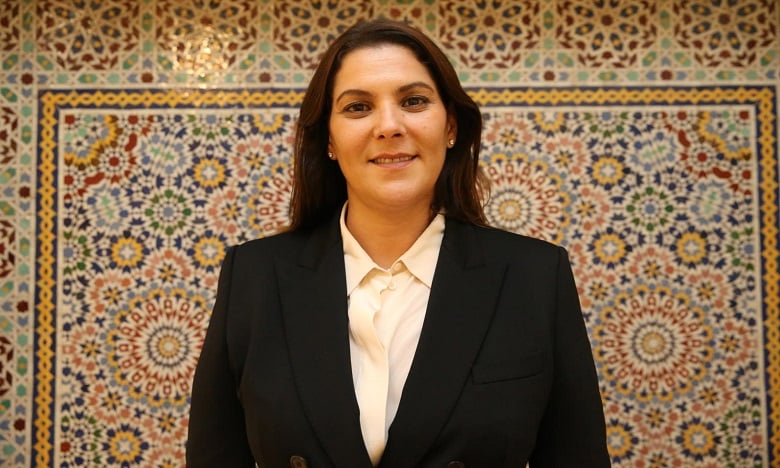
Morocco has appointed Fatima Ezzahra El Mansouri as its first woman prime minister, marking a historic change in the country’s political leadership after her party won the largest number of seats in the September parliamentary election.
King Mohammed VI appointed El Mansouri on Tuesday and asked her to form a new government. The appointment follows the 23 September election, in which her Authenticity and Modernity Party, known as PAM, secured 97 seats in the 395-member House of Representatives.
PAM did not win an outright majority, leaving the incoming prime minister with the immediate task of negotiating a governing coalition and submitting proposed cabinet members for royal approval. The National Rally of Independents won 66 seats, Istiqlal took 65 and the Justice and Development Party secured 54.
El Mansouri, a 50-year-old lawyer, served as Minister of National Territory Planning, Urban Development, Housing and City Policy in the outgoing government. She is also mayor of Marrakech and a leading figure in PAM’s collective leadership.
Morocco’s ambassador to the United States, Youssef Amrani, described the appointment as a milestone in the country’s political life and the continuing evolution of its institutions. El Mansouri has called the moment historic, saying it represented a source of pride for Moroccan women.
Her appointment makes her the first woman to lead Morocco’s government and only the second woman to serve as a prime minister in the Arab world, after Tunisia’s Najla Bouden. The symbolism is considerable in a region where women remain underrepresented in senior political office despite advances in education, professional life and local government.
The constitutional process reflects reforms adopted in 2011, when Morocco responded to the wider Arab Spring movement by requiring the king to choose the head of government from the party that wins the most seats in the lower house. The monarch nevertheless retains extensive authority over foreign affairs, defence and other strategic portfolios.
El Mansouri’s first challenge is political arithmetic. PAM will need coalition partners to command a working majority, and negotiations may require former rivals to set aside campaign disputes. During the election period, PAM and the National Rally of Independents blamed one another for shortcomings in government, including the rising cost of food.
After the vote, however, El Mansouri said there would be no red lines in coalition discussions and that the political page had turned. The Justice and Development Party has indicated that it intends to remain in opposition.
The new government will inherit public frustration over inflation, employment, wages and the quality of essential services. Turnout fell to about 38 per cent, compared with roughly half of eligible voters in the previous parliamentary election, an important warning about confidence in elected institutions.
Youth dissatisfaction is particularly pressing. Morocco has experienced protests over economic opportunity and public services, as well as a large movement of people towards the Spanish enclave of Ceuta. The next administration will be judged on whether major national investments produce visible improvements in everyday life.
Among those investments is Morocco’s preparation to co-host the 2030 FIFA World Cup with Spain and Portugal. The country is pursuing an infrastructure programme valued at about $20 billion, covering stadiums, transport and associated development. El Mansouri’s experience in housing, urban planning and municipal government places her at the centre of decisions about how those projects shape cities and communities.
The World Cup presents an opportunity to improve connectivity, tourism and employment, but it also raises questions about public spending, housing pressures and whether benefits will extend beyond major urban centres. Transparent procurement and clear social priorities will be essential if the programme is to strengthen public trust.
Her rise also creates expectations around women’s participation. Morocco had four women ministers in the outgoing government and has placed women in other senior institutional roles, but the appointment of a female prime minister does not by itself remove legal, economic or social inequalities.
The stronger measure of progress will be whether women gain wider access to decision-making, employment, finance, property and political opportunity. El Mansouri’s administration will therefore face scrutiny not only for the milestone it represents, but for the policies it delivers.
For Africa, the appointment adds to a gradual expansion of women’s leadership at the highest level. It also offers another test of whether symbolic breakthroughs can translate into stronger institutions and broader participation rather than remaining exceptional individual achievements.
Coalition negotiations will determine the composition and direction of Morocco’s next government. Citizens and regional observers should watch the final cabinet, its programme for jobs and public services, and the safeguards surrounding World Cup investment. Those decisions will reveal how far the historic appointment changes the substance, as well as the image, of Moroccan politics.